

























































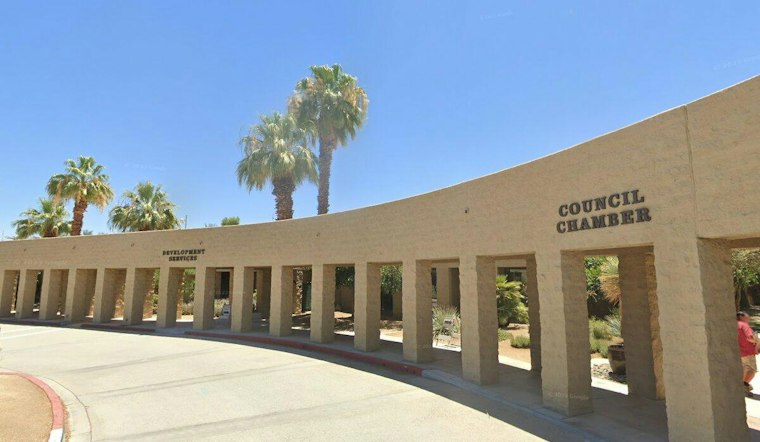
Palm Desert employees could soon face strict new limits on how they use artificial intelligence at work, under a comprehensive policy the City Council is scheduled to take up at its 4 p.m. meeting Thursday at City Hall, 73-510 Fred Waring Drive. The proposal would sort every AI use across city government into low-, moderate- or high-risk categories, with the riskiest applications requiring sign-off from both a department director and the city manager before employees could use them.
The measure, reported by Patch, would establish what the outlet describes as a formal framework governing how municipal staff and officials use AI tools. According to KESQ, the policy would apply broadly to city employees, a category that includes interns, volunteers, elected officials and appointed officials. If the council signs off Thursday, the rules would take effect immediately, replacing interim guidance that had focused mainly on generative AI during the city's early experimentation with the technology, Patch reports.
How the Risk Tiers Would Work
Under the proposal, AI applications are categorized into three distinct risk tiers based on their capabilities, access and potential impact, per Patch's reporting. Low-risk uses — things like drafting documents, conducting research, summarizing material or pulling from read-only data integrations — would require human review of the output but no additional sign-off within established boundaries, the outlet notes.
Moderate-risk uses climb the approval ladder. KESQ reports that uses involving sensitive or restricted city information would fall into this tier. The same reporting indicates that moderate-risk tools involving write-access integrations or automated public communication would need sign-off from a department director before employees could deploy them.
High-risk uses face the toughest bar. Per KESQ, these include AI applications that could materially affect decisions tied to rights, benefits or employment, as well as any autonomous action that creates a legal or financial commitment for the city. Those uses would require both a department director's approval and written authorization from the city manager, the station's report states.
Guardrails Against Fabricated Records
The proposed policy would also draw bright lines around what employees can never do with AI, regardless of risk tier. KESQ reports that staff would be prohibited from using AI to falsify or fabricate a city record or communication, or to falsely attribute a statement or action to a real person or to the city that was never actually made. Employees would also be barred from using AI to circumvent city security controls, access restrictions or required approvals, according to the same reporting.
Transparency requirements round out the proposal. The policy would require the city to maintain a public inventory of approved AI tools and would mandate that AI explicitly identify itself whenever it communicates directly with the public, Patch reports. Routine use of city-approved AI tools by employees would remain allowed under the policy, per KESQ's reporting.
A Governance Role Created Earlier This Year
Palm Desert laid groundwork for Thursday's vote back in March 2026, when the city established a dedicated Artificial Intelligence Officer position, according to Patch. That officer is tasked with administering the AI policy along with the city's broader AI governance and risk classification program, KESQ reports. The city's own staff directory lists an Artificial Intelligence Officer housed within the City Manager's Office, though that listing is the only source identifying the role's placement within city government.
Palm Desert's push toward formal AI governance echoes a broader trend among local governments grappling with the technology's spread into public-sector work. The Silicon Valley Leadership Group released an assessment in June outlining how the state could help local governments responsibly adopt AI, according to SVLG. Elsewhere, smaller municipalities have moved on similar fronts: the town of Quartzsite, Arizona, adopted a draft AI-use policy for municipal employees that limits approved tools and requires staff training, human review of AI-assisted content and public transparency, per a report from Citizen Portal.
Thursday's meeting will determine whether Palm Desert formally joins that wave of cities codifying AI guardrails. The council's vote is expected to hinge on the same risk-tier framework already detailed in the proposal — an approach that would allow routine AI use while requiring layered sign-off wherever the technology touches sensitive data, public-facing communication or binding city commitments.





