

























































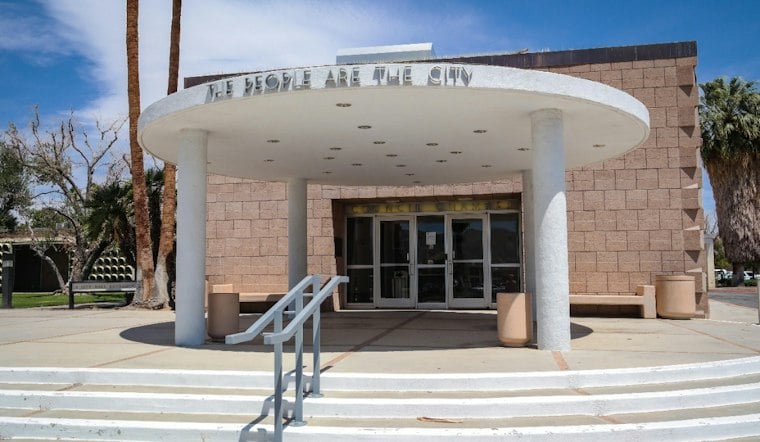
Palm Springs city leaders are asking residents to help decide whether the city should go back to directly electing its mayor, rather than rotating the job among sitting City Council members each year. Two more community meetings are set for Thursday, October 15, and Monday, October 19, giving the public another opportunity to weigh in before the City Council considers next steps.
The city has operated under a rotating mayor system since 2019, in which council members take turns serving a one-year term as mayor, according to KESQ. City leaders have spent months holding community meetings and debating whether to return to a system where residents directly elect the mayor, and the city launched an online survey asking residents how the mayor should be selected and what the position should look like, the station reports.
The debate over mayor selection also includes a citizen push that began in March, when the advocacy group Citizens for an Elected Mayor, chaired by Rich Gordon, filed a notice of intent to circulate petitions for a city charter amendment restoring a directly elected mayor, according to The Palm Springs Post. The City Council had signaled plans to examine the issue during a February meeting, before the group's filing.
A Ceremonial Office, Regardless of How It's Filled
City Attorney Jeff Ballinger told the council in April that under Palm Springs' council-manager structure, the mayor holds no independent executive authority and is “really just ceremonial,” as reported by The Riverside Record. Under that model, policy is set by the full council and carried out by an appointed city manager, meaning a change to how the mayor is chosen would not, on its own, alter the office's legal powers.
Ballinger also warned the council that shifting back to an at-large elected mayor could expose the city to legal challenges under the California Voting Rights Act. In July, he noted that no comparable California charter city offers a legal precedent for reversing a CVRA district rotation system, per the Post's reporting. Palm Springs adopted district elections in 2018 after facing CVRA legal threats over minority voter representation.
Diversity Gains Since the Switch to Districts
Those legal concerns are tied to real outcomes. Since the city moved to district elections and the rotating mayoral system in 2019, Palm Springs appointed its first female mayor, Christy Holstege, in December 2020, and its first Latina mayor, Grace Garner, in December 2022 — milestones that never occurred during more than 80 years of citywide mayoral elections, according to KESQ.
To address concerns that an at-large mayor could dilute district-based representation or run afoul of the CVRA, Citizens for an Elected Mayor revised its proposal in April to push for a directly elected, non-voting mayor instead, pointing to similar structures used in Bakersfield and Long Beach, the Post reported. The proposal describes the mayor as a city spokesperson.
Public Meetings Continue
The city has held community meetings to gather feedback on how Palm Springs should select its mayor. Two additional town halls are scheduled before the City Council considers next steps.
The city adopted district elections in 2018 and began rotating the mayor's role among council members in 2019.
How Palm Springs Compares Statewide and Locally
Palm Springs isn't an outlier for not directly electing its mayor. Research from California Common Cause found that roughly 170 of California's 482 incorporated cities, about 35 percent, directly elect their mayors citywide, while the remaining 65 percent select mayors through council appointment or rotation, according to IE Business Daily.
Palm Springs has also been here before. The city approved an at-large directly elected mayor in 1982 but eliminated the system 12 years later in 1994, when it adopted a municipal charter and fully instituted council-manager government, per the same outlet. Among neighboring Coachella Valley cities, Desert Hot Springs, Indio, and Coachella directly elect their mayors.
With two additional town halls set for Thursday and the following Monday, the City Council is expected to weigh next steps after the meetings. Whether the city sticks with rotation, returns to a direct election, or adopts a non-voting mayor compromise remains an open question heading into the council's deliberations.





