

























































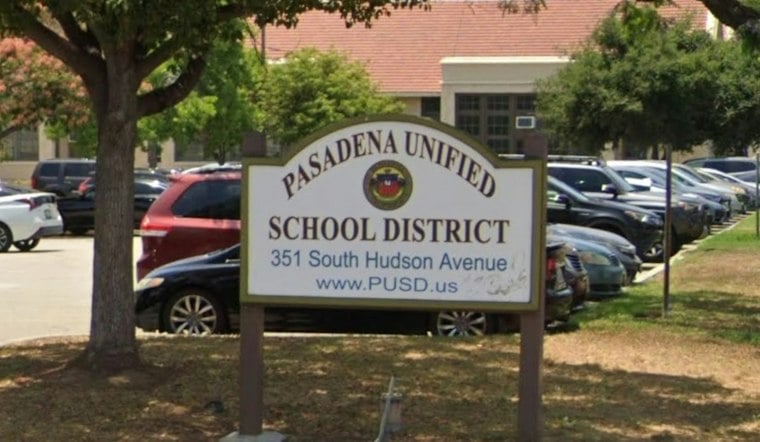
Four candidates vying for seats on the Pasadena Unified School District board faced off Monday evening over whether shuttering more campuses would actually solve the district's budget woes, with enrollment projected to fall from roughly 13,000 students to as low as 8,000 in the years ahead. The forum, held in Pasadena, drew nearly 100 parents, teachers, supporters and community members eager to hear how District 1 and District 7 hopefuls would handle a district still reeling from financial strain.
The event was organized by the Pasadena Education Network and moderated by Dorothy L. Keane, communications director and communications committee chair of the League of Women Voters of the Pasadena Area, according to Pasadena Now. District 1 incumbent Kimberly Kenne faced challenger Felita Kealing, while District 7 saw Cynthia Torres square off against Dennis McNamara. District 3 candidates Veronica Elias and Michelle Richardson Bailey did not attend; statements from both were read. Candidates addressed declining enrollment, school closures, academic achievement, district finances, bullying, safety and trust, per the outlet's account of the evening.
Closures Take Center Stage
School consolidation, financial oversight and declining enrollment produced the sharpest disagreements of the night, according to Colorado Boulevard. Kealing, a PUSD employee and former president of the Pasadena Educational Foundation board, said she had not seen good results from the district's past closures, pointing to 11 schools shuttered over the years as evidence that consolidation hasn't delivered. She described feeling ambivalent about closing more campuses while committing to do whatever is legally, morally and ethically possible to improve the district.
Kenne, who has served on the PUSD board since 2011, said she had reached no decision to close schools but would consider doing so if a future consolidation process supported that conclusion. The incumbent said unreliable financial forecasting has damaged relations with district employees and called for greater financial transparency, adding that parents lose trust when they are treated poorly or when students lack options and preparation for the future.
Torres Cites Stanford Research, McNamara Pushes Back
Torres, a college counselor who has served 11 years on a Santa Monica-Malibu school district financial oversight committee, said a Stanford study found little evidence that school closures actually save money, and warned that closures can drive families out of a district altogether. She said she would consider voting to close schools only if supported by evidence and community backing, and proposed an asset management plan for any closed campus along with a financial oversight committee modeled on the Santa Monica-Malibu panel. Torres said she has met parents anxious about PUSD's future and proposed spending the rest of the year listening to the community before holding off on major decisions until year's end.
McNamara, a retired financial executive and chartered financial analyst, disputed Torres's characterization of the research, saying the Stanford study found closures save money in some cases and not others, and that it did not account for repurposing land or families leaving before a school actually closes. The Stanford research, drawn from California districts between 2011 and 2019, found that districts entering a period of closures did not, on average, improve their financial standing — spending fell, but so did revenue, producing essentially no measurable improvement. Districts that began closing schools lost an average of about 288 students over the study's 10-year window, and large urban districts saw declines of roughly $1,224 per pupil in expenditures against $845 per pupil in revenue, again without a significant financial payoff.
Warnings About Hollowed-Out Campuses
McNamara warned that keeping too many campuses open risks stripping them of the programs that make them viable schools in the first place, noting that some PUSD campuses already lack librarians. He advocated for a top-drawer educational experience with broad electives at every campus and said outside input is needed to determine the best school configuration going forward. McNamara said the district should not rush the decision but must still act quickly, and argued PUSD can rebuild both its schools and community trust.
He also called using one-time funds for ongoing operations a serious misuse of budgeting, saying the district's chief business officer understood that one-time money should not pay for recurring costs. McNamara endorsed a full audit of the central office, a position Elias echoed when she separately proposed the same audit. McNamara also proposed placing academic progress for every student group near the top of every regular board agenda, discussing it at every meeting rather than every six months.
Achievement Gaps and Classroom Trust
Candidates also faced questions about achievement among Black, Latino and other students of color, as well as bullying, school safety and direct communication with students. Kealing, who helped establish the district's African American Parent Council, stressed cultural competency in the classroom and said students should be respected and valued in their learning environments. She emphasized boosting enrollment and attendance as ways to strengthen district revenue.
Kenne called for stronger classroom support and advocated for targeted state and federal funding to reach the students those dollars are intended for, saying she believes in transparency and integrity to maintain stakeholder trust. Torres, for her part, wanted greater attention paid to mathematics alongside literacy instruction.
A District Still Under Financial Pressure
The debate unfolds against a backdrop of real fiscal strain. PUSD has faced financial pressure and a prior fiscal crisis, and the district is in the process of reducing $30-35 million from its 2026-27 budget as part of a fiscal stabilization plan, according to the district's own budget office. The district's board voted unanimously to reduce more than 160 full-time equivalent positions, a move described by EdSource as necessary because of a $30 million budget deficit worsened by the Eaton Fire. The district has since formed a consolidation advisory committee and hired an outside consultant to advise on next steps, per the same report.
District enrollment projections show average daily attendance falling to 11,975 in 2026-27, down from an estimated 12,329 the year before, Pasadena Now has separately reported. Enrollment is projected to decline by about 2.3% annually, even as employee health and welfare costs are expected to rise 9% next year and 7% annually after that, pressuring the General Fund alongside Special Education costs and other unfunded mandates.
Pasadena Unified's enrollment has been declining steeply since 2000, and a demographer's presentation tied the slide to broader housing patterns, finding that affordable housing units contain the most students per unit while homes built so far through the Eaton fire rebuild contain few students, according to the Pasadena Star-News. Trustees have so far opted against merging any schools, instead approving a resolution to begin a broader district transformation process, the outlet reported.



