

























































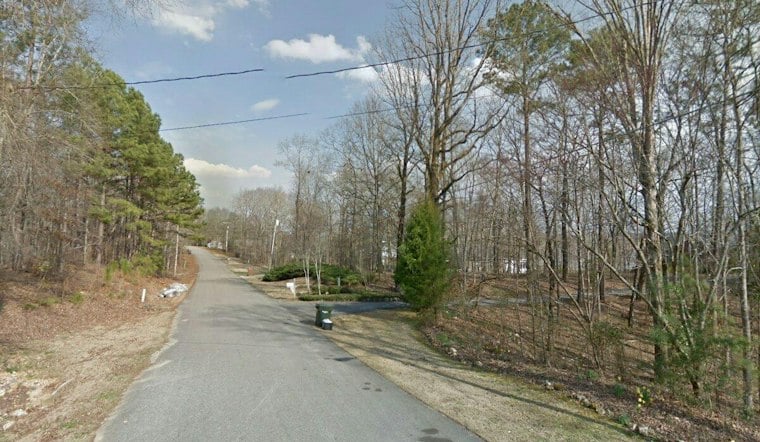
A Pell City woman diagnosed with Alzheimer's disease was found alive near the bottom of an embankment along Seminole Road, not far from where her car had gone into the water below. Her husband told police she slipped out of their home around 2 a.m. and that she hadn't gotten behind the wheel in nearly a decade before taking off that night.
According to ABC 33/40, Pell City police searched the area around Seminole Road. Officers located her vehicle in the water below an embankment and soon after found the woman herself on the bank near the bottom of the slope, per the outlet's report. Police have not released further details about her medical condition following the ordeal.
Pell City Police Chief Justin Cooper credited his officers' fast response and coordinated search for getting the woman back to her family safely, the station's report notes. Cooper was officially named chief in March after serving as interim chief overseeing the department's patrol, criminal investigations and SWAT divisions, according to the St. Clair News-Aegis.
A High-Risk Stretch of Shoreline
The search unfolded along Seminole Road. Medical research and public health data cited by AgingInPlace.org indicate that missing dementia patients face up to a 50 percent risk of serious injury or death if they aren't located within 24 hours of wandering off, with water hazards among the leading dangers.
Project Lifesaver uses radio-frequency tracking technology to help locate people with Alzheimer's or dementia who wander from home.
Why Wandering Remains a Persistent Risk
Wandering is a common feature of Alzheimer's and other dementia diagnoses, not an isolated event. The Alzheimer's Association estimates that roughly 60 percent of people living with Alzheimer's or related dementias will wander away from safety at least once during their illness, often triggered by disorientation or an attempt to retrace a long-familiar routine.
A recent case involved an 86-year-old Ocala woman found safe after an overnight search.



