

























































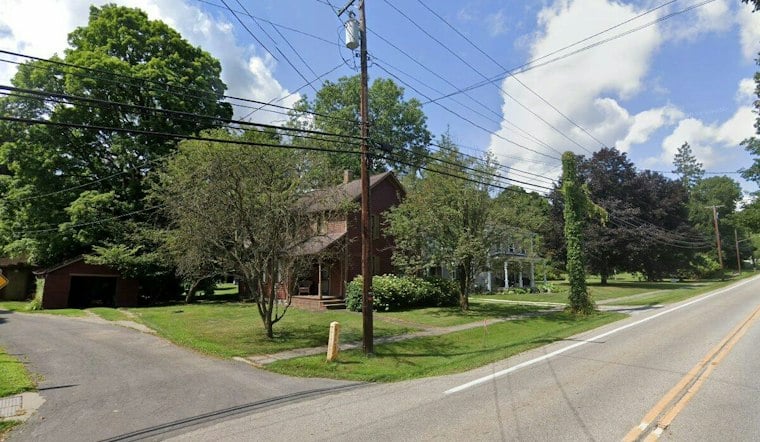
For more than 80 years, the Szalay family has farmed a 32-acre field along Everett Road in Peninsula, growing the sweet corn that stocks their market stand and supplies Giant Eagle stores from Vermilion to Chagrin Falls. Now Summit Metro Parks wants to carve out 12 of those acres to protect what it says is an archaeologically significant site tied to Native American history stretching back 8,000 years, leaving the Szalay family to decide whether a smaller field can keep the farm running.
The dispute, first reported by Cleveland.com, centers on a proposal that would let the Szalay family continue farming 22.5 acres of the field while the park district sets aside the remaining 12 acres for preservation. The current lease runs through the 2027 growing season, and the family has no deadline to accept or reject the new terms. If they decline, the Szalay family may stop leasing the field altogether, according to the outlet's reporting.
John Szalay Sr., the 81-year-old patriarch of the farm, said losing the acreage could be devastating and disrupt sweet-corn production that depends on the field's higher elevation and drainage, which allow planting even when other fields are too wet. The 12 acres represent about 8 percent of the family's total farmland, which spans 141 leased acres across the Cuyahoga Valley. Szalay has said the farm could not survive without the Everett field.
A Site With Roots Going Back Thousands of Years
The Everett Road field sits within the larger Everett Knoll Complex, which contains evidence of Native American presence dating back as far as 8,000 years, including a burial area that archaeologists trace roughly from 100 B.C. to 450 A.D. The complex itself spans more than 67 acres across Summit Metro Parks' Riding Run Conservation Area, Cuyahoga Valley National Park property, and privately held land, according to Summit Metro Parks.
Ancestral human remains were documented at the site in the 1800s, and in the 1850s a prehistoric burial mound there was demolished during construction of a local schoolhouse and nearby roadwork, permanently destroying original surface features and artifacts; 19th-century accounts had described a limestone burial crypt at the mound before it was leveled. The Cleveland Museum of Natural History excavated the site in the 1970s alongside Case Western Reserve University, work that yielded galena crystals, projectile points, and cremation remains from an early limestone crypt. Those findings, documented by the Knowledge Bank at Ohio State University Libraries, helped lead to the complex's listing on the National Register of Historic Places in 1977, and the 12-acre parcel itself has carried that federal historic designation since 1993.
More recent work has only deepened the picture. From 2021 through 2025, Summit Metro Parks and the University of Akron conducted archaeological field schools at the site, uncovering flint tool-making debris, projectile points, beads, and large earth ovens. The park district notes it became, in 2016, the first metropolitan park district in Ohio to employ full-time, permanent cultural resources staff, including dedicated archaeologists and historians who oversee preservation across its holdings.
Tribal Consultation Just Getting Underway
Summit Metro Parks is beginning a process under the federal Native American Graves Protection and Repatriation Act and has contacted several tribal nations, though formal consultation on artifacts recovered during the recent excavations has not yet begun. The Wyandotte Nation previously established a cultural affiliation with ancestral remains found at the site during the 1970s excavations.
Lindsey Smith, the park district's chief of marketing and communications, said the current offer represents the park district's best and final proposal, which would let the Szalay family keep farming two-thirds of the field while 12 acres remain preserved. Megan Shaffer serves as the park district's supervisor of cultural resources, and Heather Miller works as a NAGPRA coordinator for Summit Metro Parks. The district has not yet decided what to do with the 12 acres if they are removed from agricultural use, though it is considering restoring the land to a more natural landscape and interpreting its Indigenous history for visitors.
The broader stakes extend beyond one field. The 2023 UNESCO World Heritage designation of eight Hopewell Ceremonial Earthworks in southern and central Ohio sharpened attention on Hopewell cultural influence farther north, and while southern Ohio's earthworks are massive and well known, sites like Everett Knoll offer rarer evidence of Hopewell settlement and mortuary practices in Summit County, according to Summit Metro Parks.
Family Weighing a Farm's Future
John Szalay Sr. disputes the significance of the archaeological findings and has said he does not believe human remains are located in the area his family actually farms. He has also said he was unaware of the federal repatriation law before the current dispute surfaced. The Szalay family has not decided whether to accept the new lease and is calculating the potential effect on crop yields, wholesale accounts, and the farm's long-term viability.
Szalay's Farm & Market traces back to 1931, when it began as a vegetable farm in Peninsula; it has since grown into a regional agritourism draw known for its fall corn maze, hayrides, and farmer's market near the Towpath Trail, according to Wanderlog. The farm has been in the family since the 1930s, and today John Szalay Sr.'s wife, Paula, along with Johnny Jr. and Georgia, all work at the farm. The family's four children range in age from 8 to 17.
Summit Metro Parks, founded in 1921 as the second-oldest park district in Ohio, manages more than 15,000 acres across 16 parks, six conservation areas, and over 150 miles of trails countywide, funded by a property tax levy voters reapproved in 2020. The Everett field sits within the district's 705-acre Riding Run Conservation Area, a preserve meant to protect natural habitats and rare botanical species such as butternut trees — a designation that, unlike the district's public metro parks, carries restricted access and a priority on resource protection. The property also falls within the boundaries of Cuyahoga Valley National Park, which has run its own agricultural program since 1999 to preserve roughly 1,200 acres of historic farmland by leasing it to private farmers committed to sustainable practices, per the National Park Service.
Summit Metro Parks shortened the farm's lease in 2023, setting the stage for the current negotiation. For now, the Szalay family faces a decision with no fixed deadline: accept a smaller field and adjust decades of planting rhythm, or walk away from acreage that has anchored the farm's sweet corn and its wholesale relationship with Giant Eagle for generations.





