

























































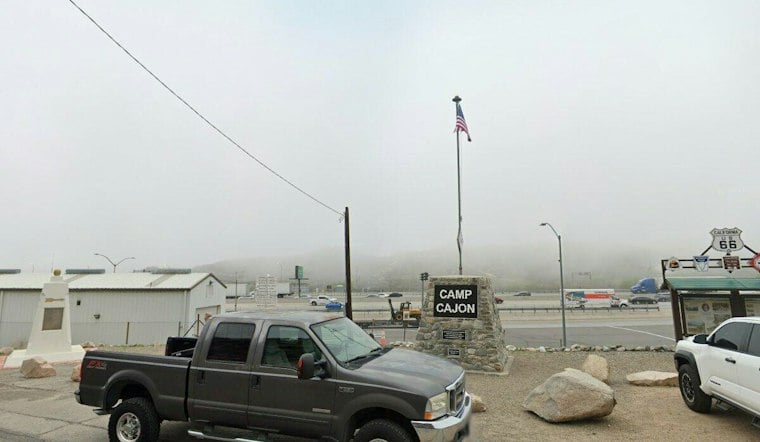
A rest stop that once welcomed road-weary drivers along one of America's most storied highways, then sat abandoned for decades, is getting its moment back in the spotlight. The historic Camp Cajon site in Phelan will host a Route 66 centennial celebration on Nov. 14, 2026, running from 8:30 a.m. to 3 p.m., with presentations, an open house and three optional walking tours through the Cajon Pass, weather permitting.
The gathering is being sponsored by the San Bernardino Historical and Pioneer Society and the Camp Cajon team, according to the San Bernardino Sun. Sign-in begins at 8:30 a.m., with the program itself kicking off at 9 a.m. with a flag salute and an introduction to Camp Cajon's history, per the same report. The celebration will also feature a raffle, and attendees can expect an open house staffed by local history experts.
Several organizations are expected to take part, including the Mohahve Historical Society and the California Historic Route 66 Association, alongside the San Bernardino Historical and Pioneer Society. Participating groups plan to share knowledge of Route 66 and the surrounding area, hand out literature, and sell historic memorabilia, the newspaper's report notes.
From Forgotten Flood Damage to Revived Landmark
Camp Cajon's own story stretches back long before this year's festivities. The camp opened on July 4, 1919, as a free rest stop for drivers on National Old Trails Road, a route that officially became part of Route 66 in 1926, according to sbsun.com. That road itself traces back to 1913, when it was adopted as a transcontinental automobile route, and through San Bernardino County it largely followed the same corridor that Route 66 later took through the Cajon Pass.
The camp was the vision of William Bristol, described by the outlet as a well-known orange grower, community promoter and author from Highland, who built the site primarily through donated labor and materials. Camp Cajon grew into a nationally recognized destination, becoming known as one of the country's finest public rest stops, with facilities that eventually expanded to both sides of the road. That success didn't last: in 1938, the camp was badly damaged by the Great Flood, and officials ultimately decided to close and abandon it because of rebuilding costs and the need to widen Route 66.
The site then faded from public memory for decades. As Calisphere puts it, Route 66 was eventually realigned, and Camp Cajon was all but forgotten. That changed starting in 2019, when a group of volunteers led by the San Bernardino Historical and Pioneer Society brought the historic site back to life, as the newspaper's earlier report on the revival effort detailed.
What's Left to See on the Ground Today
Visitors to the site today will find a rebuilt Camp Cajon monument, alongside the 1917 Santa Fe and Salt Lake Trail monument and a California state landmark sign. An original 1919 Camp Cajon picnic table is also on-site.
The site also includes a Route 66 directional sign and an informational kiosk featuring photographs, maps and reproductions of historic local signs, additions that Route 66 News has chronicled as part of the site's broader preservation push. The Camp Cajon historic site sits at 3355 Wagon Train Road in Phelan, about a half-mile south of the McDonald's in Cajon Pass; drivers heading there are directed to take the 15 Freeway to Highway 138 east and turn right onto Wagon Train Road.
Three Walking Tours Trace the Old Alignments
Attendees can choose from any of three walking tours offered during the celebration. Tour No. 1 covers the Camp Cajon facilities and the existing 1953 Route 66 alignment, while Tour No. 2 includes a half-mile round-trip hike up Crowder Canyon that follows National Old Trails Road and the John Brown Toll Road.
Tour No. 3 is optional and begins after the main program wraps up at 12:30 p.m. It covers a three-quarter-mile round-trip hike along the Pacific Crest Trail, giving visitors a look at a section of the 1913 National Old Trails Road and the Stoddard-Waite Monument. Walking tour participants should be prepared for pavement, dirt trails and uneven surfaces, and are advised to bring comfortable walking shoes, hats, water, snacks and chairs.
The centennial event arrives as Route 66 itself celebrates its 100th anniversary this year. Known as America's Main Street, the highway was established as part of the U.S. numbered highway system on Nov. 11, 1926, and once stretched 2,448 miles from Chicago to California's Pacific coast — a legacy that a once-abandoned rest stop in the Cajon Pass is now helping keep alive.





