

























































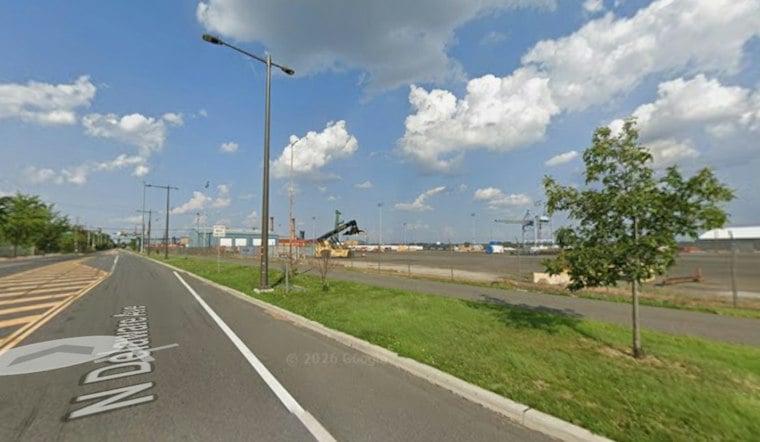
Philadelphia's port is getting an $837 million infusion of public and private money, a package officials say will build a new marine berth, redevelop a former Navy yard and position the city to compete more aggressively with bigger East Coast rivals. The plan, detailed Tuesday, combines state, federal and private funding to overhaul several aging pieces of PhilaPort's infrastructure.
Governor Josh Shapiro and PennDOT officials laid out the investment in South Philadelphia, framing it as a way to help Pennsylvania grow as a global trade leader. According to CBS News Philadelphia, the package includes more than $371 million from the Shapiro administration, $266 million in federal grants and roughly $200 million in private-sector investment. The Shapiro administration said in a press release that PhilaPort is a vital economic engine for the commonwealth and that the expansion will create thousands of jobs statewide.
The centerpiece is a new 2,000-foot berth at the Southport Marine Terminal, funded through state capital dollars and two U.S. Department of Transportation grants. It will be the terminal's first new berth in half a century, per the same CBS Philadelphia report. Pennsylvania's share of the funding also includes $145 million for reclamation work at Southport Berth II and the North Wharf, plus another $58.1 million earmarked for cranes and other equipment.
Mustin Yard and Tioga Upgrades Round Out the Package
PhilaPort is also redeveloping the 152-acre Mustin Yard, a former Navy facility the agency bought from Norfolk Southern Corp. last year for $90 million in state funds, as reported by the Philadelphia Inquirer. Combined with the new berth, the yard purchase is meant to expand how much auto and container cargo the port can move. Separately, improvements planned at the Tioga Marine Terminal will let the facility better handle barges carrying bulk liquids.
Private capital is flowing in alongside the public funds. Holt Logistics Corp. will invest $100 million as part of the expansion, the Inquirer reported, citing the company's own commitment to the project. Officials expect the full package to boost container capacity by 122% and auto capacity by more than 100,000 vehicles, an 18% increase, according to WHYY.
Jobs Could Nearly Double at the Port
The scale of the hiring projections stands out. Officials expect the investments to create more than 6,000 new jobs and generate $45 million in new tax revenue, per CBS Philadelphia's reporting. The Inquirer's figures go further, reporting that the expansion is expected to nearly double employment at the port, from about 8,000 to 14,000 jobs.
Construction timelines remain loose for now. Ground should be broken in early 2027, according to City & State Pennsylvania, once permitting and contracting terms are finalized.
Riding a Record Year of Container Volume
The investment arrives on the heels of a record 2025 for the port. PhilaPort handled 889,268 twenty-foot equivalent units last year, a 6% increase over the prior year and a 39% jump since 2020, according to PhilaPort. Through November of that year, the port posted a 7% increase while other North Atlantic container ports saw more modest growth, the same report noted.
Even with that growth, Philadelphia remains a relative minnow next to the region's biggest hub. The port handled about 889,000 container units in 2025, roughly 10% of the 8.9 million units moved through the Port of New York and New Jersey, the Inquirer reported. WHYY noted the expansion is intended to sharpen the port's competitiveness against rivals in New York, New Jersey and Virginia.
The push follows a broader blueprint PhilaPort laid out in 2024, which identified more than $2 billion in projects and initiatives over a 15-year planning horizon, according to the agency. That plan cited demand growing at a compound annual rate of 8% over the prior decade and projected enough added capacity to handle an extra 2 million TEUs by 2040.
Cruise Traffic and a Broader Economic Push
Port officials are also pointing to gains beyond cargo. Philadelphia resumed operations as a cruise port in April after a 15-year hiatus, and cruise leaders estimate that business could generate $300 million in annual economic output for Pennsylvania, per CBS Philadelphia. The port as a whole already generates $1.2 billion in economic output for the state, the outlet reported.
PhilaPort has also picked up outside recognition for efficiency. The port was ranked the nation's most productive container port for the third consecutive year, based on the 2025 Container Port Productivity Index, which evaluated 403 container ports worldwide using vessel turnaround times and other performance data, according to PhilaPort's own announcement.





