

























































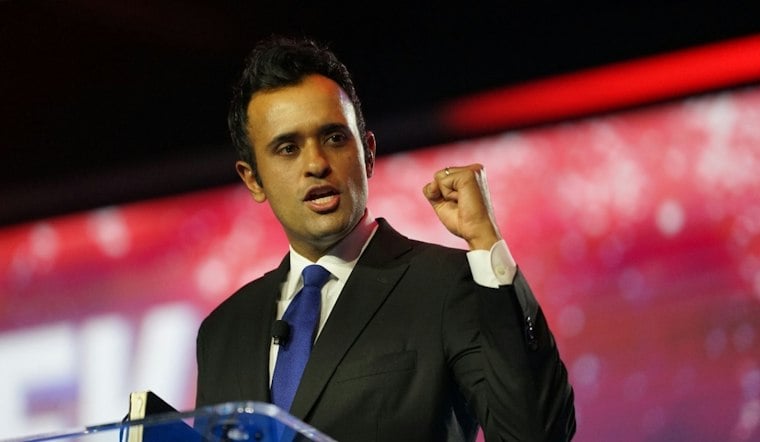
Ohio Republican gubernatorial nominee Vivek Ramaswamy pledged Wednesday to resume executions in Ohio if elected, saying he would reserve capital punishment for the most egregious crimes once the relevant legal and factual issues are fully resolved. Executions in the state have been on hold throughout Gov. Mike DeWine’s eight years in office, largely because officials have struggled to obtain the drugs used in lethal injections.
A Pledge Built Around the Most Serious Cases
Ramaswamy made the remarks as he laid out his position on capital punishment, according to cleveland.com. He said he intends to resume executions in Ohio for the most egregious crimes once facts and legal issues are fully sorted out, and he also signaled an openness to execution methods beyond lethal injection, saying his team is actively studying alternatives. He did not specify which methods he might consider, though he said any method should be ethically appropriate, scientifically sound, effective, swift, and respectful of dignity and life.
Lethal injection is currently the only execution method allowed under Ohio law, per the same cleveland.com report. Ohio officials have been unable to obtain the necessary drugs from pharmaceutical companies reluctant to supply them, a problem that has effectively frozen the state’s death penalty system for years. DeWine, who announced his personal opposition to capital punishment in June, has said state lawmakers would need to pass a so-called shield law before lethal injections could resume.
106 on Death Row, One Execution Already Scheduled
As of Tuesday, there were 106 people on Ohio’s Death Row, the outlet reported — though a separate count from Cleveland 19 News put the figure at 105 inmates and noted the state hasn’t carried out an execution since 2018. Ohio’s next scheduled execution is set for May 19, 2027, for John Stojetz, who headed the Aryan Brotherhood prison gang at Madison Correctional Institution and was sentenced to death for fatally stabbing a fellow inmate in 1997.
The push to find a new execution method isn’t new to the Statehouse. Ohio lawmakers previously proposed authorizing executions using nitrogen gas as an alternative if lethal-injection drugs remain unavailable, according to the Ohio Capital Journal. That proposal, along with a separate idea to seek help from the Trump administration in obtaining lethal-injection drugs, has not advanced into law. Four states explicitly allow nitrogen hypoxia and four more generally permit lethal gas as an execution method, the Capital Journal reported, while Nebraska lawmakers have also considered the nitrogen hypoxia approach. Several other states have carried out executions using nitrogen gas and firing squads after running into the same drug-supply problems Ohio faces.
Referencing Tennessee, Ramaswamy Vows a Different Path
Speaking Wednesday at a Columbus Metropolitan Club event at the National Veterans Memorial and Museum, Ramaswamy invoked a recent botched execution elsewhere as a cautionary tale, according to the Columbus Dispatch. “We will never repeat the mistakes of Tennessee in Ohio,” he said. The Dispatch also noted that Ohio has not executed a death-row inmate at all during DeWine’s administration, with the governor citing ongoing problems accessing the needed drugs.
Beyond the Death Penalty: Kids’ Health and Handgun Age
Ramaswamy also said his administration would make it a priority to continue DeWine-era initiatives aimed at children, including school-based health clinics and the OhioSEE program. OhioSEE provides free eye exams and glasses to students from kindergarten through third grade in underserved areas, using $10 million from the state budget to operate in more than 200 school districts across 15 counties. Ramaswamy described continuing the program as preventative medicine that saves money and improves children’s health, while DeWine has said he hopes his successor keeps OhioSEE running.
On guns, Ramaswamy said he favors lowering Ohio’s minimum age to purchase a handgun to 18. Current state law generally bans handgun purchases by people under 21, with exceptions for certain law-enforcement officers and current or former military members with firearms training, per cleveland.com’s reporting. Ramaswamy’s reasoning centers on the fact that 18-year-olds can serve in the military, which he argues should also qualify them to buy handguns.





