

























































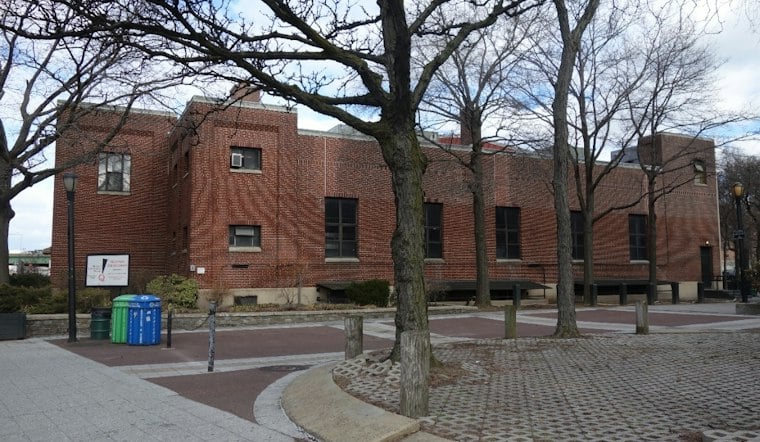
Lost Battalion Hall Recreation Center reopened in Rego Park this week after sitting closed since 2022, its WPA-era walls now wrapped around a reconstructed interior that cost the city $25.9 million to build. Mayor Zohran Mamdani and NYC Parks Commissioner Tricia Shimamura cut the ribbon at the renovated center, capping a project that stretched across four years and transformed nearly every corner of the historic building at 93-29 Queens Blvd.
As QNS reports, the facility reopened with new equipment, accessibility improvements and safety upgrades throughout. The reconstruction included new front entrance doors and a new lobby, rebuilt staircases plus an added staircase on the east side, accessible bathrooms on every floor, and safer routes throughout the building. According to the Forest Hills Times, the $25.9 million capital project also renovated the building entry and fitness and weightlifting facilities, and the upgraded center is now fully accessible and compliant with ADA standards.
Design Began in 2017, Construction Dragged for Years
The project's design phase originated in October 2017, with construction following in July 2022, the Forest Hills Times reported. NYC Parks' capital project tracker lists the reconstruction as a project to rebuild the facility, though the agency's own tracker notes that the completion date has changed, without specifying why.
Inside, the lower level was reconfigured to accommodate dedicated fitness rooms, a spin studio, a weightlifting practice area, multipurpose recreation spaces, and new lockers and changing facilities, according to project architect 1100 Architect. The firm also added a glass-enclosed staircase connecting the upper and lower levels. The weightlifting area, spin room and fitness room were all upgraded as part of the renovation, along with lockers and storage areas throughout the building.
New Systems Replace Decades of Wear
Crews installed a new fire alarm and sprinkler system, a new rooftop generator, a new waterline and water heaters, and a new heating and cooling system during the renovation. The project also modernized stormwater, mechanical, electrical, plumbing, fire-protection and life-safety systems, 1100 Architect notes, while the Forest Hills Times reported that upgrades to deteriorated stormwater systems improved the facility's drainage.
Throughout construction, the building's historic Works Progress Administration murals were carefully covered and protected, the Forest Hills Times reported. The renovation left the 32,640-square-foot recreation center better equipped for accessibility, circulation and program capacity while meeting current energy and code requirements, including certification for public assembly, according to 1100 Architect.
A Building Rooted in Military and Basketball History
The Works Progress Administration constructed Lost Battalion Hall between 1938 and 1939, and the building initially served as a facility for local veterans' groups, complete with a firing range and drill hall. It was named in honor of soldiers of the U.S. Army's 77th Division who fought in the Battle of the Argonne during World War I, a battle in which more than half of the division's 550 soldiers perished. The Parks Department converted the building into a recreational facility in the 1960s, after it came under Parks Department jurisdiction in 1960.
The gym later found a second life in sports history: the New York Knicks used Lost Battalion Hall as an auxiliary practice facility, and former Knicks guard Kenny Smith practiced there. That basketball pedigree adds a layer of local lore to a building whose primary identity has long been as a neighborhood recreation hub.
Officials Tout Timing Ahead of Winter
Mamdani said the center reopened in time for New Yorkers to use its indoor facilities during the colder winter months. Shimamura said the four-year refurbishment improved every corner of the facility, leaving it safer, easier to navigate and more comfortable than before.
The Rego Park reopening follows a similar push elsewhere in the city: St. Mary's Recreation Center in the Bronx reopened following a $20.7 million renovation, according to the NYC Mayor's Office, which described that project as making the historic community center safer, more accessible and better equipped. Together, the two reopenings point to a broader city effort to modernize aging, historically significant recreation centers while preserving the character that made them neighborhood landmarks in the first place.





