

























































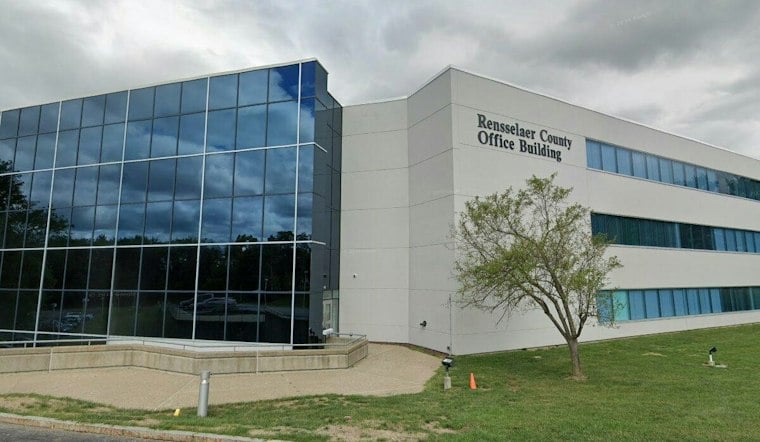
Rensselaer County homeowners are being told to expect a ninth straight year of falling property tax rates, with County Executive Steve McLaughlin unveiling a proposed 2027 budget on Tuesday that calls for a 6.84% property tax rate decrease. The plan sets the county property tax levy at $63 million and pegs the average county tax rate at $3.01 per thousand of assessed value for the coming year.
McLaughlin introduced the spending plan in East Greenbush, framing the proposed cut as the latest in a run of reductions that began when he took office, according to The Record. The county attributes the decrease to controlled spending and preparation for unexpected costs, and McLaughlin said the budget sets overall property value at $20.9 billion for 2027, up from just over $12.5 billion in 2022 and $17.5 billion in 2025, per the same report. He also said the combined property tax rate decreases under his administration now total 55.9%, though a separate county accounting pegged the combined reductions in budgets from 2019 through 2026 at 49%, a discrepancy the sources do not reconcile.
How the Levy Has Shrunk Since 2018
The proposed $63 million levy for 2027 is $1.4 million less than the levy in place when McLaughlin took office, according to NEWS10 ABC. McLaughlin said the levy had fallen from $64.4 million under the previous executive team to $62 million by 2026, the station reported. Historical tax-rate figures vary slightly depending on the source: the Rensselaer County government says the rate dropped from $5.85 per $1,000 in 2018 to $3.23 per $1,000 in 2026, while a separate county statement carried by einpresswire.com put the 2026 figure at $3.22 per thousand, down from $3.55 in 2025.
Sales tax collections have become a central pillar of the county's finances. NEWS10 reports the county is on pace to collect sales tax revenue exceeding $130 million, a figure that lines up with the einpresswire.com account of McLaughlin saying the county will be prudently estimating 2027 revenues at $130 million. The county government's own newsflash shows sales tax revenue climbing from just under $89 million in 2018 to $125.2 million in 2024, and Spectrum News reported the county actually collected more than $131 million in 2025, up from just over $125 million the year before. NEWS10 also noted the county exceeded $100 million in sales tax revenue in 2020 and that New York State recognized Rensselaer County for the highest sales tax growth in 2019, per McLaughlin.
Mandated Costs and SNAP Pressures Loom
Even with the tax cut, the budget acknowledges rising pressure from above. McLaughlin said rising costs, including state and federal mandates, are squeezing local budgets, and the proposal shows mandated expenses climbing to $191 million in 2027, according to the einpresswire.com account of his remarks. He also raised concerns about SNAP-related costs tied to program inefficiencies and changes, estimating those costs could rise by $650,000 in the coming budget year, per NEWS10's report.
That concern echoes a broader statewide trend. New York counties are expected to face more than $1 billion in additional annual SNAP-related costs by fall 2027, with counties likely to absorb most of the increase, according to New York Focus. The outlet reported that counties are likely to respond either by raising property taxes or by cutting other social services and staffing. Washington County already raised its levy by nearly 17% in 2026 and expects to spend $78 of every $100 in tax collections on state and federal mandates, while Warren County's board of supervisors voted to raise its levy by 12%, exceeding its tax cap, citing SNAP, retirement and health-insurance costs, New York Focus reported. Ulster County took a different route, proposing an income-tax surcharge of up to 2% on high earners rather than leaning on property taxes, according to the same report.
Not Overestimating Revenue, Avoiding the Tax Cap
McLaughlin said not overestimating revenues helps the county handle unexpected issues and contingencies affecting residents' well-being, per NEWS10's reporting. He also said Rensselaer County would have exceeded the state's tax cap without its current fiscal position, the station reported. New York's property tax cap generally limits local governments and most school districts to annual levy increases of either 2% or the rate of inflation, whichever is lower, according to the New York State Comptroller's Office. State law also bars local governments from adopting a budget that exceeds the tax levy limit for the coming fiscal year, subject to certain exceptions, per the New York State Senate's text of the statute.
How Neighboring Counties Compare
McLaughlin contrasted Rensselaer County's approach with moves elsewhere in the Capital Region, citing a proposed 43% property tax increase in Schenectady and a 15% increase in Albany, according to The Record's report of his remarks. Albany County's own proposed 2027 budget, however, would actually cut its property tax rate for the 13th consecutive year, lowering the effective rate from $2.56 to $2.48 per $1,000 of assessed value within a $950 million spending plan that represents a 5.32% increase over the prior year's budget, according to WNYT.
Elsewhere in the state, Erie County proposed a $2.408 billion budget for 2027, a 5.5% increase over its 2026 budget, with a property tax rate decrease from $3.09 to $3.01 per $1,000 even as its overall levy would rise 3.6%, or $12.7 million, according to NY State of Politics. The comparisons underscore how differently counties across New York are balancing mandated-cost pressures against taxpayer relief heading into 2027.
Rensselaer County's proposed budget now heads to the County Legislature for review, with NEWS10 reporting a public hearing scheduled for early November. No further detail on the hearing's exact date or the legislature's eventual vote was available in county materials reviewed for this report.



