

























































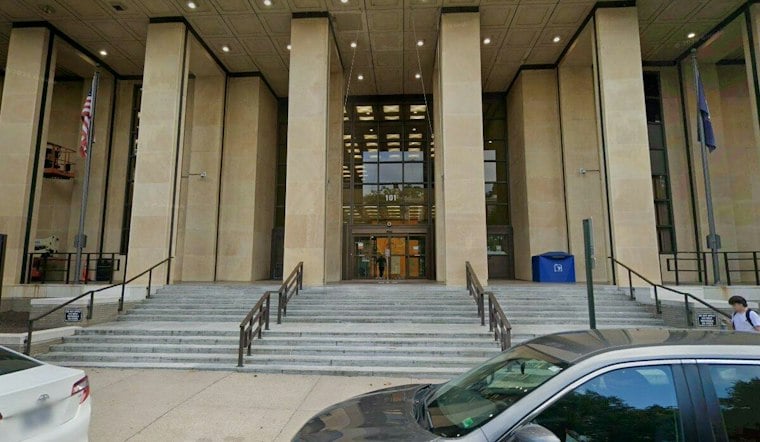
Richmond Mayor Danny Avula has pulled the plug on the city's long-planned solar energy deal, just as a newly opened administrative investigation threatens to unravel what was left of the project. The mayor withdrew his request to revive even a scaled-down version of the plan after learning that a possible relationship inside a city department could jeopardize the deal's legitimacy, even as the remaining buildings faced a vendor deadline just two days away.
According to Axios, Avula told City Council in an email that the potential relationship did not affect the deal's terms but would absolutely color public perception of it. He directed Chief Administrative Officer Odie Donald II to investigate, and Richmond City Hall has since opened its own review of the solar deal, while the city's Inspector General is conducting a separate probe.
A Deal Built on Big Promises
The original proposal called for a 25-year Power Purchase Agreement spanning 39 city-owned facilities, projected to generate more than 5 megawatts of solar power and save Richmond an estimated $20 million compared to standard Dominion Energy rates, according to the Richmonder. Under the arrangement, Secure Solar Futures would have installed and maintained privately owned solar panels on the buildings while Richmond used public dollars to purchase the electricity generated. The deal was meant to serve as a major milestone for RVAgreen 2050, the city's climate equity plan targeting net-zero emissions and a 45 percent cut in community emissions by 2030.
City Council rejected that initial version by a 5-4 vote, per Axios, with opposition rooted in concerns over termination costs, insurance and long-term roof repairs — liabilities that could have eaten into the projected savings. Richmond's Office of Sustainability pushed back hard against those worries. In an internal response to a Risk Management Bureau assessment, sustainability officials argued that the simplest mitigation to risk will always be to say no and do nothing, defending the deal's climate and cost benefits, per the same Richmonder report.
Internal Warnings Preceded the Vote
That Risk Management Bureau assessment, issued in July 2026, had already advised against the contract, warning its terms exposed the city to significant financial loss and recommending redrafted terms or an entirely new bidding process. Fourth District Councilor Sarah Abubaker drafted custom amendments during September deliberations to address the city's liability around roof repairs, but administration officials told council members that tight federal tax-credit deadlines prevented any renegotiation, the Richmonder reported.
Those federal deadlines were central to the project's compressed timeline. The deal missed an October 1 deadline tied to federal tax credits, which removed 22 buildings from the proposal entirely and left just 17 remaining, according to Axios. A September 30 memorandum from Donald showed that scaling the project down to those 17 buildings would yield roughly 3 megawatts of power and $15 million in projected term value, well below the $20 million the full 39-building plan had promised, per a statement from the City of Richmond.
The remaining 17 buildings, which included the main library, community centers and police precincts, faced an October 6 vendor deadline, with each individual project expected to generate at least 92 kilowatts. Solar developers had separately warned city officials in late 2026 that pending federal rollbacks to Investment Tax Credits could push commercial power purchase rates up by as much as 60 percent if construction slipped past late-2026 deadlines.
Last-Minute Push to Revive the Deal Falls Apart
Before Avula withdrew his request, Richmond's administration and council supporters spent days trying to address lingering concerns and build enough votes to bring the scaled-down deal back for reconsideration. Councilors Ellen Robertson and Nicole Jones, who had both voted no on the original deal the previous week, were viewed as the two potential swing votes. But Council Chief of Staff Candice Reid said council lacked the majority needed to even put reconsideration on the agenda for Monday's special meeting, according to Axios — meaning the reconsideration effort was procedurally blocked before Avula pulled his request altogether.
Staffer's Second Job Raises Ethics Questions
The controversy that ultimately sank the deal centers on a part-time city sustainability staffer who, according to reporting by the Richmond Times-Dispatch cited by Axios, worked for Secure Solar Futures during the contract negotiations. ABC 8News reported that the investigation centers on employee Andre Eanes, whose LinkedIn profile showed concurrent employment with Richmond's Office of Sustainability and the vendor during the negotiation period. Secure Solar Futures' CEO has said the staffer was not involved in the talks.
Notably, Councilor Abubaker stated during the September 28 council session that City Hall's Inspector General had already opened an inquiry into the ethics allegations before Avula's October request for an administrative investigation, according to the Richmonder's reporting — meaning scrutiny of the arrangement began inside City Hall before the mayor's public move to halt the project.
Staunton-based Secure Solar Futures, a Certified B Corporation, is no stranger to Virginia public-sector solar work. The company previously completed a 3-megawatt rooftop solar PPA across 10 buildings for Richmond Public Schools in 2019 and secured a $15.2 million school solar project in Roanoke in 2025, according to the company's own background materials.
With the deal now withdrawn and two parallel investigations underway, Richmond's path toward its RVAgreen 2050 solar milestone is uncertain. Deputy Chief Administrative Officer Mira Signer said the city is taking time to find out more about the questions being raised, adding that officials will know more soon, according to Axios.





