

























































Hundreds of Northern California residents lost their CalFresh food benefits overnight on Wednesday as new federal work requirements took full effect, with thousands more cases now under review across the region. Sacramento County reported 55 people cut off that day alone, while Stanislaus County saw 156 residents lose benefits, Placer County reported 106 discontinued, and Yuba County logged 148 residents losing aid.
The cutoffs stem from a federal policy overhaul that reshaped California's Able-Bodied Adults Without Dependents rules, according to KCRA. Under the revised rules, CalFresh recipients ages 18 to 64 who are not disabled and do not have a dependent child under 14 must now meet specific work or community engagement criteria to keep receiving benefits. The federal government revised these work and community engagement requirements in June 2026, formally rolling them out statewide on June 1 under the broader H.R. 1 legislation, according to the California Department of Social Services.
Those rules require non-exempt recipients to document at least 80 hours per month of work, job training, or volunteer service, or face a strict three-month limit on food aid within a 36-month window, per the Western Center on Law & Poverty. Although screening began June 1, the fixed 36-month period started January 1, 2026; October 1, 2026, was the earliest benefits could be terminated, three months after screening began, per the Western Center on Law & Poverty.
Who Lost Protections, Who Still Has Them
The policy marks a sharp reversal from 2023 federal rules. Unhoused individuals and veterans were previously exempt from the CalFresh work requirements, but the 2025 federal legislation revoked those automatic exemptions, along with protections for former foster youth under age 25. Those populations must document work hours or qualify for another applicable exemption, such as one based on pregnancy, caregiving, qualifying programs, or tribal status, the Western Center on Law & Poverty's report notes.
Not everyone is newly exposed, though. H.R. 1 also added an explicit exemption from the time limits for members and descendants of federally recognized Native American tribes, whether Indian, Urban Indian, or California Indian, according to the California Department of Social Services. Tribal exemption screening is performed during annual case recertifications, the same cycle that will determine many other recipients' fates in the months ahead.
Only seven California counties held temporary federal unemployment waivers exempting recipients from the time limits through October 31, 2026, according to Legal Services of Northern California. Sacramento, Stanislaus, Placer, and Yuba were not among them, leaving those counties fully subject to the immediate discontinuances while counties like Alpine, Colusa, Imperial, Merced, Monterey, Plumas, and Tulare were temporarily spared.
Thousands More Cases Still Under Review
The county figures also point to a larger group whose eligibility is still being reviewed. KCRA reported that Sacramento County had 1,500 individuals under review in October, Stanislaus County had 657 cases pending review, and Placer County had 150. Yuba County did not disclose how many residents remained under review.
Sacramento County officials said it is too early to determine which populations are most affected, and the county plans to analyze the geographic distribution of residents losing benefits to identify patterns, KCRA reported. Eligibility and exemptions are determined on a case-by-case basis, with recipients potentially qualifying based on pregnancy, physical or mental health conditions, participation in a substance-use disorder treatment program, caregiving responsibilities, disability status, participation in another qualifying work program, caring for a person with a disability, having a child under 14 in the household, receiving or applying for disability or unemployment benefits, tribal membership, or attending school at least half-time.
Food Banks Brace for a Longer Wave
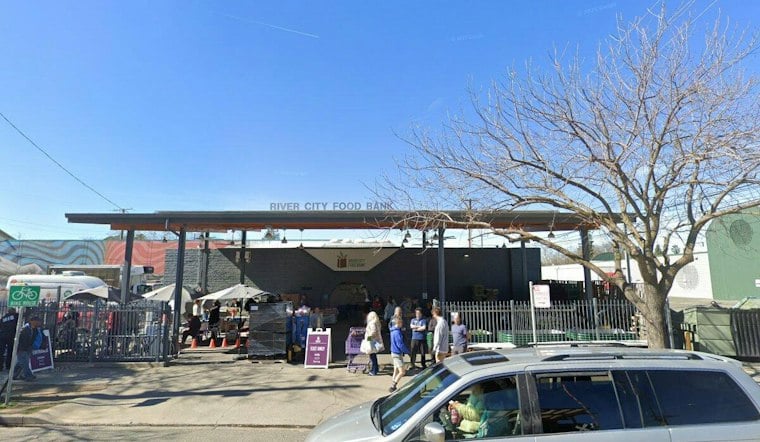
River City Food Bank, which serves about 30,000 people each month at its two Sacramento locations, is preparing for possible changes in demand. Amanda McCarthy, who works for the organization, told KCRA: “People are generally very worried, and there's a lot of uncertainty about what's coming down the pike and when,”
McCarthy expects the number of people losing benefits to grow beyond October as more recipients reach annual recertification and face work-hour verification. Arnita Kennedy, a food-bank client, told KCRA that high food prices make losing CalFresh aid especially difficult for families already stretching grocery budgets.
Counties Face a Staffing Squeeze
The County Welfare Directors Association of California called on state leaders in June to address H.R. 1-related workload in county social services.
That strain is visible in Stanislaus County, where Hoodline previously reported that supervisors were reviewing a budget proposal to eliminate 67 positions within the Community Services Agency, including 39 social workers, to close a $17.9 million deficit. The cuts would shrink administrative capacity at the agency responsible for processing local CalFresh reviews just as the volume of cases expands.
The Statewide Stakes
California officials and legislative human services committee leaders estimated in June that roughly 600,000 to 665,000 CalFresh recipients statewide were placed at risk of losing nutrition assistance under the expanded federal work rules, out of the roughly 5.5 million Californians the program serves. Statewide, CalFresh distributes over $12.5 billion annually in federally funded food assistance, providing an average monthly benefit of about $190 per recipient, according to the Legislative Analyst's Office.
A Statewide Baseline Before the Changes
California provided $12.22 billion in SNAP benefits to over 5.3 million people in FY 2024. That offers a statewide pre-change benchmark.
In Sacramento County alone, SNAP and CalFresh benefits deliver more than $360 million in direct federal food aid annually, supporting an estimated $645 million in total economic activity across local food retailers and farmers markets, per the California Association of Food Banks. That spending also supports roughly 3,500 local jobs in the county, underscoring how the benefit losses ripple beyond individual households and into the broader local economy.





