

























































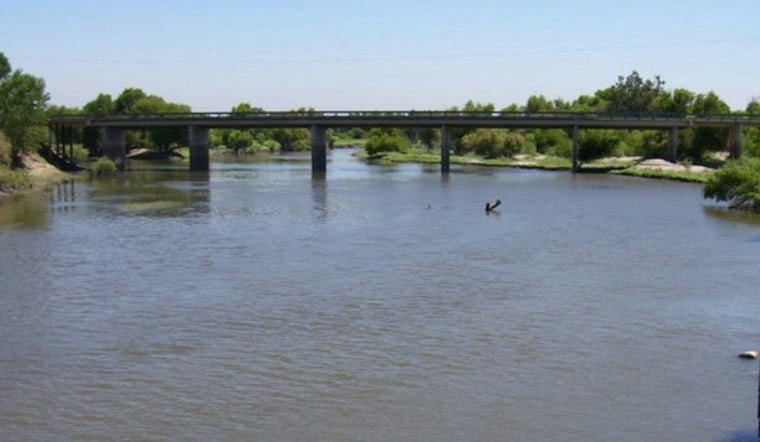
Four hundred forty-eight adult spring-run Chinook salmon swam back into the San Joaquin River Restoration Area in 2025, the highest number of captured returns recorded since the program began reintroducing juvenile fish in 2014. It is a number worth pausing on for a river that, for decades, had none of these fish at all.
The figure comes from the San Joaquin River Restoration Program, which has tracked spring-run Chinook since fertilized eggs from the Feather River hatchery were first transported to the restoration area's facilities in 2014. The 2025 count smashed the previous record of 93 captured natural returns, set in 2021, more than quadrupling it in a single season. As Fresnoland reports, most of the 448 fish were released as juveniles in 2023, according to California Department of Fish and Wildlife spokesperson Krysten Kellum, who said high Friant Dam flood releases likely benefited the young salmon during their out-migration to the ocean.
The program's own account of its milestones underscores how far the effort has come. It took years after the 2014 reintroduction effort for the first confirmed adult return: 23 spring-run Chinook that made it back to the restoration area, marking the first time in more than 65 years that threatened Central Valley spring-run Chinook had completed their full life cycle there, according to the San Joaquin River Restoration Program. Those fish were traced to some of the 38,106 juvenile spring-run released into the river in March 2017.
Why the Numbers Jumped
Salmon are anadromous fish, meaning they begin life in fresh water, migrate out to the ocean to mature, and then return to their native streams to spawn, per the restoration program's own account. The program believes high-water years in 2017 and 2023 likely boosted juvenile survival during out-migration, which in turn produced larger adult returns roughly two years later — a pattern that helps explain why 2025's numbers outpaced anything seen before.
Not every release has produced results at that scale. Fresnoland's reporting notes that only 54 adult salmon returned from roughly 220,000 juveniles released in 2024, a reminder that survival rates vary considerably from year to year and that the program's progress has been uneven rather than steadily climbing.
The River That Went Dry
The scale of what's being rebuilt is hard to overstate. Friant Dam's construction virtually dried up a 150-mile stretch of the San Joaquin River between the dam and the Merced River confluence starting in 1942, according to Fresnoland's reporting, on a river that historically received an estimated 200,000 to 500,000 adult Chinook salmon annually. The restoration program itself resulted from a 2006 legal settlement following an 18-year lawsuit, and restoration flows were supposed to occur by 2014 — timing that undergirds why this year's numbers matter to people who have waited a long time for progress.
The program now comprises five federal and state government agencies, the Friant Water Users Authority, exchange contractors and environmental organizations, per Fresnoland, all working toward restoring a self-sustaining spring-run Chinook population while trying to avoid adverse effects on farmers. Don Portz, who Fresnoland reports has managed the program since 2018, said the effort is making good progress and gaining momentum.
Barriers Still Block the Way
Getting fish home is still a logistical ordeal. Because in-stream structures block upstream migration, returning spring-run Chinook are captured in fyke traps and trucked roughly 120 miles to Reach 1 near Friant Dam, according to the restoration program. Earlier returning fish needed similar help: recently caught spring-run had to be transported via a 500-gallon fish transport tank and released above the barriers to reach spawning habitat, the program has said. Fresnoland adds that adult salmon are captured and trucked from multiple locations to Fresno each summer, while juvenile salmon are transported and released at the Merced River confluence near Newman each early spring.
Construction is underway to eventually remove the need for all that trucking. The Bureau of Reclamation awarded a $93 million contract for a fish screen and bypass project on the Arroyo Canal and Sack Dam near Dos Palos, according to The Merced FOCUS, which reported the project will let spring-run Chinook bypass Sack Dam and complete their journeys downriver to the ocean and upriver to spawn. The canal and dam currently provide agricultural water to roughly 47,000 acres of San Joaquin Valley farmland along with water for wildlife refuges and private duck clubs, the outlet noted.
There is some disagreement over timing. The Merced FOCUS reported construction was scheduled to begin in fall and take about three years, with completion expected in summer 2028, while the restoration program itself said in its own account that it expected to begin construction at the end of summer 2025. Either way, passage at the Eastside Bypass Control Structure is expected to be completed around the same time passage at Sack Dam is finished, in summer 2028, according to the program.
More Work, and More Money, Ahead
Fresnoland reports that salmon restoration on the San Joaquin requires completion of four major fish-passage projects altogether: Sack Dam and Arroyo Canal, Mendota Pool, Eastside Bypass Control Structure and Chowchilla Bifurcation; the latter two are overseen by the California Department of Water Resources and already have approved funding. The Mendota Pool Bypass project is planned to include a half-mile channel around Mendota Pool with flood-capable levees, a fish ladder and screen, a reverse-flow facility, a fish recapture facility and a new dam at the pool's south end, according to Fresnoland's reporting — work Portz said is expected to begin in 2028 and could require up to $700 million in federal funding. Portz separately estimated the Sack Dam and Arroyo Canal project itself could ultimately cost more than $100 million.
In Washington, U.S. Senator Alex Padilla introduced a bill to direct an additional $500 million to the restoration program, which the Senate Committee on Energy and Natural Resources advanced in July 2026, Fresnoland reports; the bill still awaits a full Senate floor vote. Meanwhile, a new Salmon Conservation and Research Facility opened in Friant in May 2025, funded by a $44 million state bond and built with capacity for up to 1 million juvenile salmon; it currently produces spring-run Chinook for the restoration program and plans to release roughly 250,000 juveniles next spring, according to Fresnoland's account.
Portz told Fresnoland he expects the San Joaquin River to become fully navigable to salmon by 2035 during normal and wet years — a horizon that still leaves plenty standing in the way. Restoration efforts remain hampered by drought-related low flows, seepage into adjacent orchards, and predation from bass and other nonnative fish, Fresnoland reports, and California droughts have already reduced river recovery flows during 2007-2009, 2012-2016 and 2020-2022. The program is also broader than spring-run Chinook alone: restoration efforts are intended to provide passage for fall-run Chinook, Pacific lamprey and white sturgeon as well, according to the restoration program's own materials.
Fresnoland's reporting, produced by Climate Solutions Studio — a project of the Central Valley Journalism Collaborative and its partner newsrooms — frames the record 2025 return as a milestone worth celebrating without pretending the job is finished. For a river that ran dry for generations, 448 fish finding their way home is proof of concept. Whether that momentum holds through the next decade of construction, funding fights and drought years remains, by the program's own telling, very much an open question.





