

























































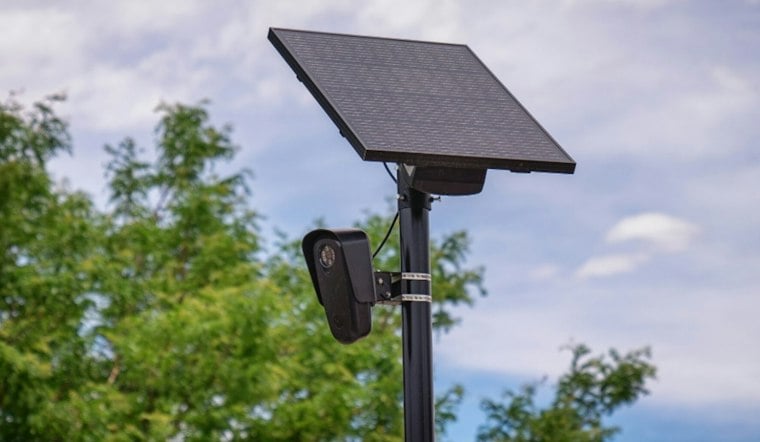
Sens. Bernie Sanders and Jeff Merkley and Rep. Alexandria Ocasio-Cortez unveiled legislation Friday that would ban federal agencies from using automatic license plate readers, pause federal grant funding to state and local governments with contracts for the technology, and let Americans sue the federal government over its use. The bill, called the Ban Flock Act, is the latest effort in Washington to rein in the company behind a camera network that has sparked privacy complaints and documented cases of police misconduct.
Sanders, Merkley and Ocasio-Cortez unveiled the bill on Friday, according to FOX40. Sanders, the independent senator from Vermont, said the country cannot become a surveillance state where, as he put it, AI oligarchs profit from government tracking of Americans' movements. Flock's cameras use artificial intelligence to scan license plates and other vehicle details, according to NPR, which reported the company holds contracts with more than 5,000 law enforcement agencies nationwide.
Beyond recording plate numbers, Flock's readers build what the company calls a vehicle signature, according to WNCT. That profile captures a car's make, model and color along with distinguishing features like bumper stickers, decals and accessories, the outlet reported. The scale of that data collection is a central reason the technology has drawn bipartisan scrutiny this year.
Competing Estimates on Camera Count
Just how big Flock's footprint has become depends on who's counting. WNCT reported the company's network spans more than 120,000 cameras across the country, a figure also cited by CBS News, which put the network at 120,000 cameras in 49 states. ABC News, however, reported that more than 135,000 automated license-plate-recognition cameras have been identified nationwide overall, with roughly four out of five made by Flock, citing data from DeFlock.org. A separate report from The Hill, also citing DeFlock, put the total mapped cameras across the continental U.S. at about 138,000, with roughly 82 percent made by Flock.
Whatever the precise count, the backlash has been substantial. The American Civil Liberties Union's Jay Stanley told ABC News this is the biggest, most grassroots privacy backlash he's seen in more than 20 years working on the issue. At least 30 localities had deactivated their Flock cameras or canceled contracts since the start of 2025, per NPR, while ABC News separately reported more than 50 cities and counties have canceled or deactivated ALPR cameras made by Flock and other manufacturers.
Misuse Allegations Fuel the Pressure
Congress has already begun digging into specific abuse cases. A congressional hearing this year, part of a broader investigation into Flock, heard testimony from lawyers, a sheriff, a cybersecurity engineer and a driver who says she was wrongfully accused of a crime because of the technology, according to WNCT. Sen. Josh Hawley led what the kcur.org report described as the first congressional hearing on AI-powered surveillance camera manufacturers, asking the CEOs of Flock, Axon Enterprise, Motorola and Verkada to testify.
Among the witnesses was Lindsey Isaacs, a Florida woman who, according to CBS News, was wrongfully accused of fleeing a fatal accident and jailed in solitary confinement after her Dodge Durango was misidentified on a Flock camera. Separately, KCUR reported that five Indianapolis police officers were charged this week with abusing Flock data to track ex-partners and stalk strangers. ABC News also reported that a Kentucky police officer was arrested after authorities alleged he used Flock cameras to track his ex-girlfriend more than 2,000 times.
A Crowded Field of Competing Bills
The Ban Flock Act isn't the only legislative effort aimed at the industry. Rep. Thomas Massie has introduced the Flock-Off Act, which would block municipalities and localities from purchasing, installing, maintaining, operating or upgrading automatic license plate readers and biometric surveillance cameras, according to WNCT; that bill would affect companies beyond Flock as well.
Hawley has introduced his own measure, the Stop Flock Abuse Act, which CBS News reported would establish safeguards for Flock cameras and similar AI-powered surveillance technology. The bill would require a documented paper trail whenever police search license plate reader data and mandate that driver data be deleted after 10 days unless it's tied to an active investigation, per the same KCUR report. Sens. Raphael Warnock and Katie Britt have also sent a letter this month to Attorney General Todd Blanche urging the Department of Justice to issue more guidance to prevent misuse of Flock cameras and automatic license plate readers, CBS News reported.
States and Cities Are Already Pulling Back
Some of the strongest action has come outside Congress. In Texas, Gov. Greg Abbott ordered a halt to all state funding for Flock cameras in September, according to the Houston Chronicle. Dallas responded by planning to shut down 321 state-funded automated license plate readers by the end of September while keeping roughly 300 city-funded cameras running, the paper reported. Two dozen Texas cities and counties overall have taken steps to remove the readers or end their Flock contracts, including Austin, which discontinued its ALPR policy in July 2025 after ending its pilot program with the company, and Bastrop, whose city council voted unanimously on Sept. 8 to decommission its Flock system.
Nationally, some cities have simply abandoned Flock's solar-powered readers altogether, while others are switching to systems made by competitors like Axon, according to The Hill.
Flock's Response
Flock has pointed to its own policy changes amid the pressure. The company touted a series of policy changes in a letter to Hawley, and Dan Haley, Flock's chief legal officer, said Americans' privacy should not depend on one vendor's good judgment, leadership or commercial incentives, according to FOX40. Flock did not immediately respond to The Hill's request for comment on the broader debate. Neither Flock's CEO nor the heads of Axon Enterprise, Motorola or Verkada attended the congressional hearing despite Hawley's request that they testify.


