

























































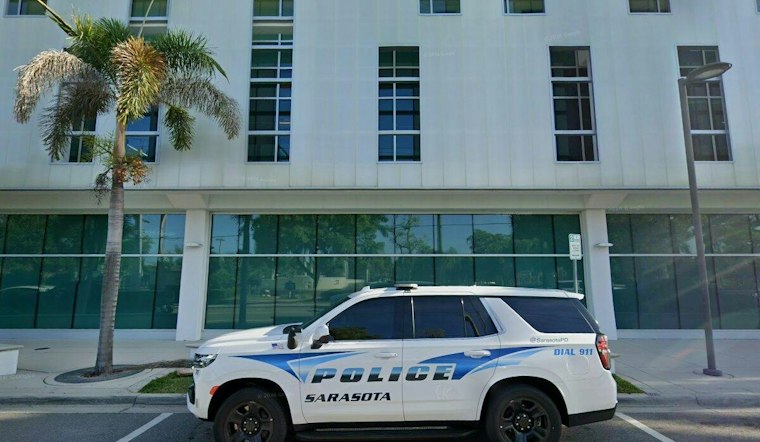
A federal jury convicted 31-year-old Kelvin Undray Cokley II of Sarasota on Wednesday of conspiracy to distribute fentanyl, possession with intent to distribute fentanyl, felon in possession of a firearm, and possession of a machine gun in furtherance of drug trafficking. The convictions stem from a federal investigation that uncovered a drug-processing stash apartment stocked with more than 200 grams of fentanyl mixed with a veterinary tranquilizer and a fully loaded machine gun tucked inside kitchen cabinets.
The verdict carries severe legal consequences. According to the U.S. Attorney's Office for the Middle District of Florida, Cokley now faces a statutory mandatory minimum sentence of 40 years up to life in federal prison, with sentencing scheduled for December 30. Federal drug and firearm convictions of this kind offer no parole and require serving at least 85 percent of any prison term imposed, per the same office's account of the case.
The U.S. Attorney's Office for the Middle District of Florida was amplifying a post from the Sarasota Police Department
, which described the case as an example of agencies working together to protect communities and hold offenders accountable. The Sarasota Police Department said strong partnerships make a difference, framing the conviction as a product of coordinated federal and local enforcement.
A Wiretapped Warning Preceded the Raids
The investigation began in November 2024 under the Drug Enforcement Administration, which placed Cokley under surveillance and intercepted a phone call in which he warned co-defendant Elijah Jones about nearby police activity and told him to “clean house,” according to the Tampa Free Press. Agents had also observed Cokley conducting drug transactions in a Sarasota hotel parking lot before moving to execute search warrants, the outlet reported.
Within hours of that intercepted call, federal agents executed three search warrants and recovered 10 firearms, loose ammunition, and a satchel containing Cokley's wallet, a digital scale, and roughly 12.5 grams of a fentanyl mixture inside his bedroom. The U.S. Attorney's Office noted that agents also found a blender containing fentanyl residue hidden in a tub of male clothing in the same room.
Stash Apartment Held Xylazine-Laced Fentanyl
In a separate Sarasota stash apartment Cokley used to process narcotics, investigators discovered more than 200 grams of fentanyl mixtures blended with xylazine, a non-opioid veterinary tranquilizer, alongside cutting agents, blenders, and a fully loaded machine gun with an extended magazine stored inside kitchen cabinets. The presence of xylazine is especially dangerous, the Tampa Free Press reported, because naloxone does not reverse the effects of non-opioid tranquilizers, raising overdose risk for anyone exposed to the mixture.
Prosecutors also presented forensic evidence tying Cokley directly to the weapons. Trial testimony and physical exhibits showed that Cokley's DNA was matched to the grip of a loaded Pioneer Arms Hellpup rifle recovered during the raids, establishing the felon-in-possession charge against him.
Why the Machine Gun Charge Changes Everything
The math behind Cokley's sentencing exposure traces back to a specific federal statute. Under 18 U.S.C. § 924(c)(1)(B)(ii), possessing a machine gun in furtherance of a drug trafficking crime carries an additional mandatory minimum sentence of 30 years in federal prison that must run consecutively to any sentence for the underlying drug offense, according to the Columbia Law Review. Combined with the 10-year floor tied to the fentanyl conspiracy, that consecutive requirement is what pushes Cokley's minimum to 40 years.
Cases built on that statute are not unusual in federal court, but the outcomes are consistently harsh. Federal courts recorded 2,384 convictions under 18 U.S.C. § 924(c) in fiscal year 2025, and 100 percent of those convicted received prison sentences, averaging nearly 12.5 years, according to the United States Sentencing Commission. Judges have no discretion to reduce those statutory minimums once a conviction is secured.
Part of a Broader Local Crackdown
The conviction lands amid a period of declining crime in Sarasota. Police Chief Rex Troche told the City Commission in April that overall crime in the city fell 18 percent in 2025 compared to 2024, continuing a three-year downward trend that officials credited partly to targeted enforcement units and gunshot detection technology, Hoodline reported.
Federal cases like Cokley's often run alongside local operations targeting the same drug pipelines. In April, a separate Sarasota police raid in the 3000 block of 31st Way seized 90.2 grams of fentanyl, 25.9 grams of cocaine, prescription narcotics, and more than $10,000 in cash from a convicted felon on probation. Together, the cases reflect how federal and local agencies have been pursuing fentanyl supply chains in the city from multiple angles at once.




