

























































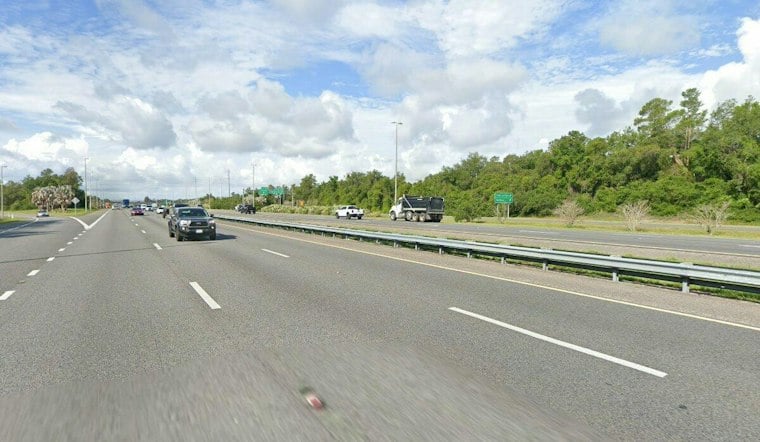
Federal officials have awarded Florida $85 million to widen a notoriously clogged stretch of Interstate 4 running through Seminole and Volusia counties, but drivers who crawl through the corridor every evening shouldn't expect orange barrels anytime soon. The project would add one lane in each direction along roughly 20 miles of I-4 between State Road 434 and State Road 472, and it includes work on the St. Johns River Bridge. No start date or timeline for when drivers might actually see changes has been announced.
The U.S. Department of Transportation announced the grant on October 1, part of a broader $426 million investment spread across 12 states, according to WKMG ClickOrlando. U.S. Transportation Secretary Sean Duffy said the nation's infrastructure is rated a C, and framed the funding as part of an effort to upgrade aging systems and improve how people and goods move around the country. Duffy also said the administration is committed to making supply chains more resilient, tying the I-4 project into a larger push to clear freight bottlenecks nationwide.
For commuters like Mary DiDonato, the announcement is welcome but overdue. DiDonato said her daily commute has grown significantly worse over the last several years, and that her trip from DeBary to downtown Orlando — which used to take about 35 minutes — now stretches anywhere from 45 minutes to an hour and 15 minutes depending on traffic. Kevin Little, who has lived in Volusia County for decades, described I-4 as especially congested around 5 o'clock, when traffic sometimes crawls along at just 10, 12 or 25 miles per hour.
A Grant With No Timeline Attached
Despite the headline-grabbing dollar figure, the project arrives without a construction start date or any public schedule for when drivers might notice a difference. Little said there's no quick fix for the issues plaguing I-4, and that it's too early to determine what kind of impact the project will eventually have. He also pointed to continued population growth across Florida as a reason traffic could remain backed up regardless of how many lanes get added.
That growth concern isn't just anecdotal. More than 85,000 people have moved to Seminole County since 2005, according to ClickOrlando, and the county anticipates its population will climb to 560,100 by 2045 — a 13% increase. Seminole County commissioners have been weighing whether to formally ask the Florida Department of Transportation to prioritize congestion-relief work, including improvements at the St. Johns River Bridge, the outlet reported.
Older Data, New Numbers
Part of the delay traces back to outdated planning data. FDOT has said traffic patterns changed since the corridor's study was last reevaluated in 2016 and 2017 using 2011 traffic counts, making that analysis obsolete, the station's report noted. The agency is now reviewing demand using data collected in 2022 and developing new conceptual plans, per mynews13.com. FDOT has already identified the St. Johns River Bridge as a priority project, and officials say the broader widening effort would likely be built in phases as additional funding is secured rather than all at once.
Rising construction costs and limited funding have already pushed this stretch of I-4 beyond its original timeline, according to the same outlet's earlier coverage. FDOT said it expected to release more detailed revised plans by the end of that year, and separately indicated it expected to wrap up its current review before engaging the community and stakeholders on next steps.
Conflicting Descriptions Of What Gets Built
Exactly what the $85 million buys remains murky. The federal government's own announcement describes the grant-funded work as constructing a general-use lane in each direction along the same 20-mile stretch between State Road 434 and State Road 472. But a Florida project page for a related segment describes a far more expansive build — three general-use lanes, auxiliary lanes, and two special-use lanes in each direction — while that same page states plainly that the project is not funded for construction. It is not clear from available information how the federally announced grant relates to that larger, unfunded segment.
Comparable projects elsewhere in the state show how differently these widenings can take shape. A separate FDOT effort in Hillsborough County would run 17 miles between Tampa and Plant City and add a toll lane in each direction, with construction costs estimated at $495.5 million, according to Equipment World. That project was recently added to the Hillsborough County Transportation Planning Organization's Fiscal Year 2026-2030 Transportation Improvement Program, and Governor Ron DeSantis moved its planned construction start up to 2028 last October. Whether the Seminole-Volusia project follows a similar path remains unclear.
For now, the Florida Department of Transportation has said it will provide answers about the project's start date and what drivers can expect, per a News 6 update. Until then, commuters like DiDonato and Little are left watching the same bottlenecks every evening, waiting to see whether $85 million translates into fewer brake lights on I-4.


