

























































Smithfield police shared license-plate-reader data with the FBI without the court order or subpoena that Virginia law requires, a disclosure that surfaced as investigators traced the gun used in the March 12 shooting at Old Dominion University. The data sharing came as the FBI sought information on the day of the shooting, and the material was later passed from the bureau to the Bureau of Alcohol, Tobacco, Firearms and Explosives rather than handed over directly by Smithfield police.
The episode was reported by The Virginian-Pilot, whose staff writer Peter Dujardin found that a Smithfield police officer provided the Flock data to the FBI even though Virginia law restricts sharing such information with federal agencies and out-of-state police departments without a warrant or subpoena. Chris Meier, representing Smithfield, said the department believed state law permitted the exchange because it considered the FBI a law enforcement agency — an interpretation Virginia's statute does not support, since the law defines eligible agencies as Virginia state and local police only and explicitly excludes the FBI. Chris Kaiser said the data sharing appeared to violate Virginia law, and the ACLU of Virginia pushed for the Smithfield officer involved to face charges.
Commonwealth's Attorney Georgette Phillips said she would not charge the officer, according to the Pilot's reporting; Meier told Phillips about the data sharing roughly 10 days before the story published. Smithfield Police Chief Alonzo Howell did not return a phone call seeking comment, per the same account, and FBI spokeswoman Cassandra Temple declined to explain how the bureau accessed the Smithfield data or whether it had obtained a subpoena or court order. ATF said it received the Flock data from the FBI rather than directly from Smithfield police.
How the Cameras Connected to the ODU Shooting
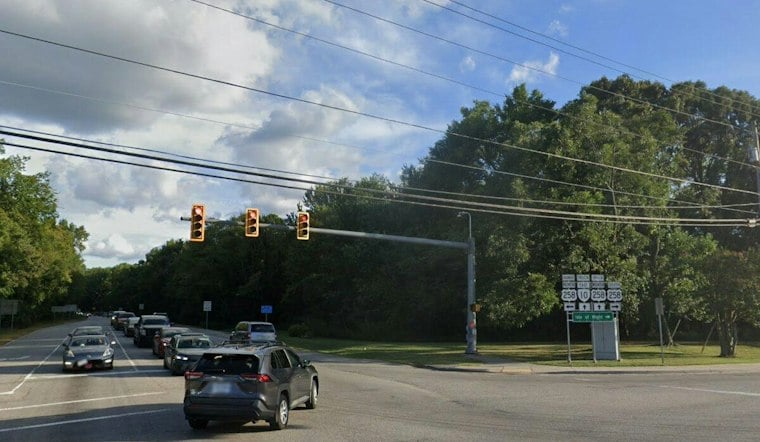
The shooting unfolded March 12 when Mohamed Jalloh, a former ODU student with a prior terrorism-related conviction, opened fire during an ROTC class, killing Army ROTC instructor Lt. Col. Brandon Shah and wounding two cadets before students subdued him and one stabbed him to death. Flock cameras at Route 10 and Main Street in Smithfield captured images on March 5 and March 11 of the rented Nissan Altima that Jalloh drove to the campus, according to The Smithfield Times. An ATF affidavit reported that the two cameras closest to the Smithfield residence of Kenya Chapman, who was charged with selling Jalloh the handgun used in the attack, captured those same images of the rented Altima.
Chapman pleaded guilty to four of seven felony counts against him, including illegally selling firearms and making false statements on federal forms, the Times reported. He is scheduled to be sentenced December 18 in Norfolk federal court. Flock data also backed up cellphone GPS evidence tracking Jalloh's movements before the shooting.
Smithfield's New Transparency Portal and Its Limits
Separately, Smithfield police recently launched a Flock Safety Transparency Portal, according to WAVY.com, giving residents a window into the system's policies, safeguards and examples of how the technology has aided investigations. The town operates 16 cameras at its entrances and exits that captured more than 1.6 million images in July alone, the Times reported, and the department logged 11 searches of the network that same month. Each search requires an offense type, a reason and a case or call-for-service number, per the department's stated safeguards.
Virginia law, which took effect July 1, 2025, requires agencies to purge Flock images after 21 days unless they are tied to an active criminal investigation or civil action, and it limits searches to criminal investigations, missing-persons cases and human trafficking within Virginia. The law also makes willfully and intentionally sharing the data outside those restrictions a class 1 misdemeanor, punishable by up to 12 months in jail and a $2,500 fine. Smithfield police have said they cannot provide federal agencies access under current law without a warrant or subpoena, and that sharing data outside Virginia requires the same.
Smithfield is a small department, with about 22 sworn officers — roughly half the size of the Isle of Wight County Sheriff's Office.
A Pattern Beyond Smithfield
Smithfield is not the only Virginia agency to run into this issue. A Richmond police sergeant shared an image from the department's automated license-plate-reader system with an FBI agent investigating a homicide in Washington, a disclosure that an internal Richmond police audit later found improper, according to the Richmond Times-Dispatch. Richmond Police Chief Rick Edwards said sharing license-plate-reader data with federal partners or agencies outside Virginia is prohibited, and the department revoked the sergeant's access to the Flock system. Commonwealth's Attorney Colette McEachin declined to prosecute the sergeant, saying she did not believe there was criminal intent in the conduct.
A statewide survey late in 2025 found nine agencies continuously shared Flock data with a federal agency. Law enforcement experts cited in the same reporting estimated that obtaining a subpoena through the U.S. Attorney's Office typically takes at least two hours, while a judge's search warrant could take several hours longer — delays that officers in urgent cases have cited as pressure to bypass the process. Phillips and McEachin declined to prosecute the officers involved, though the law currently requires that extra step.
Localities Reassess Flock Contracts
The scrutiny has prompted some Virginia localities to step back from the technology altogether. Harrisonburg's city council voted in July to shut down its Flock camera network by the end of that month, while Henry County suspended its cameras amid privacy concerns, the Smithfield Times reported. Richmond's mayor has announced the city will not renew its Flock Safety contract when it expires next June, and roughly 20 cities and counties statewide are ending their contracts, though none in Hampton Roads has done so yet. Flock's system is networked nationwide and potentially globally.
Kaiser has raised concerns about federal use of local data for immigration enforcement. For now, the Smithfield case stands as another example of how a system built for local policing keeps crossing into federal territory faster than the law meant to contain it.





