

























































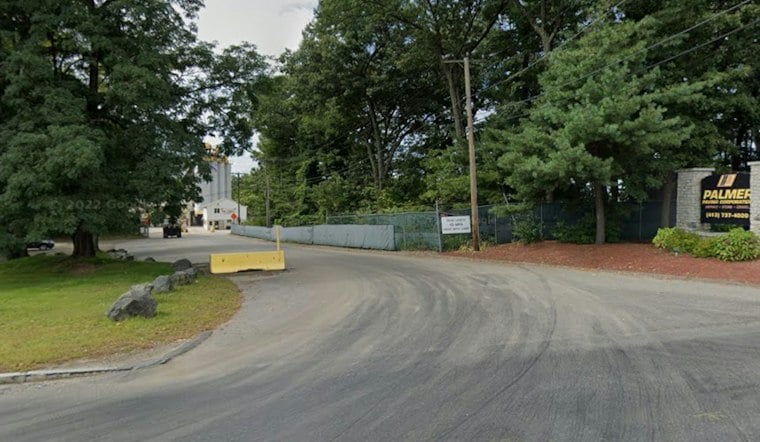
Nearly two decades after it was first proposed, a 35-megawatt wood-burning power plant slated for East Springfield still will not die. Palmer Renewable Energy's building permits were restored by the city's Zoning Board of Appeals in February, and the company continues pressing forward in court for the state air-quality permit it still needs, with two hearings now set for next month and December.
The proposal for 1000 Page Blvd. first won a special permit from the city back in 2008, according to MassLive. Since then it has weathered permit expirations, a 2021 state revocation of its air permit over environmental justice concerns and construction delays, and repeated legal challenges from the city itself — yet it keeps coming back. In May, the Massachusetts Appeals Court ruled in Palmer Renewable Energy's favor, allowing the company to revive the project using permits that had expired more than a decade earlier, and the state's Supreme Judicial Court later declined to take up the city council's case contesting that outcome.
Permits Restored, But Construction Status Unclear
The Zoning Board of Appeals voted 5-0 in February to restore the building permits, a vote one board member described as a formality given the court rulings that preceded it, according to the station's report. Those permits give Palmer Renewable Energy the ability to prepare the site for construction and install a foundation, but no construction had begun, according to MassLive's October 17, 2026 report. City Solicitor Stephen Buoniconti told the outlet that project developers have not been in contact with the city for at least several years.
Buoniconti also raised a separate wrinkle that could still complicate the company's plans. Springfield's city council passed a zoning change in 2013 requiring special permits for industrial projects taller than 150 feet, and the proposed plant would stand 250 feet tall. Whether that rule forces Palmer Renewable Energy back through a new special-permit process remains unsettled, per the same account, though Buoniconti said the city will weigh in on that legal question if and when the project secures its state air permit. City Councilor Michael Fenton said he believes the project needs a new special permit because of its smokestack, and that he would ask the city's law department to review the ordinance if construction appeared to actually be moving forward.
The Fight Isn't Just Legal
Beyond the courtroom, the opposition has been sustained by residents who've lived with the proposal looming over their neighborhood for years. Jacqueline Velez, who moved to Springfield from New York in 2018, said her daughter developed asthma after the move — a condition she connects to the city's air quality, in a city that was ranked the fourth-worst asthma capital in the nation in 2024 and the worst in 2019, according to The Reminder. Velez, a Springfield Climate Justice Coalition member and campaigns director for the Massachusetts Public Health Alliance, said she received no reply after requesting a meeting with Mayor Domenic J. Sarno's office this year.
Advocates argue the plant would worsen air quality in a neighborhood already classified as an environmental justice population. Springfield's Public Health Council sent a letter in July to Mayor Sarno and Commissioner Helen Caulton-Harris outlining concerns about the project, and Caulton-Harris recommended the coalition bring its case directly to the city council. She has said the plant would bring additional harm to its proposed neighborhood. Dozens of healthcare providers signed a separate letter to Sarno this week listing their own concerns, and Fenton said the community continues to oppose the project and will not stop opposing it. Activists plan to speak against the plant before the city council Monday night.
Sarno Calls It Dead — The Law Says Otherwise
Asked about the project's status, Mayor Sarno did not mince words. “As far as I am concerned, it's dead,” he said Friday, October 16, 2026. But the legal record tells a messier story: the Appeals Court decision upholding the permits has stood since 2025, and Palmer Renewable Energy continues to pursue its state air permit in court, with hearings scheduled for Nov. 9 and Dec. 8 in Suffolk Superior Court. The Massachusetts Department of Environmental Protection has indicated the air-quality permit is the only remaining state approval the project needs, according to an agency spokesperson cited in the outlet's reporting.
Springfield has been down this road before. The city council voted 7-0 last year to appeal a court ruling that could have allowed the project to proceed, a fight detailed by Western Mass News. A separate Appeals Court opinion, reviewed by CourtListener, found that the four-year extension on the building permits began running only after litigation-related delays had ended — a technical ruling that has repeatedly worked in the developer's favor.
State Lawmakers Try To Cut Off The Money
While the legal fight grinds on, state legislators have been trying to choke off the project's financing. Massachusetts removed woody biomass from its Renewable Portfolio Standard in 2022, stripping its eligibility for one set of clean-energy subsidies. State Senators Adam Gomez and Orlando Ramos filed legislation to also end biomass eligibility for municipal light plant subsidies, closing a loophole that still lets biomass energy be sold to municipalities as green power, as The Shoestring has reported.
Both the House and Senate have now passed a bill aimed at making biomass projects less financially viable, though the measure remains stuck in a conference committee that has until the end of the year to reach an agreement. The Massachusetts Municipal Wholesale Electric Co., which represents 20 municipal utilities, has backed the legislation. Ramos believes it will make biomass incinerators like Palmer Renewable Energy's less financially viable, but Western Massachusetts Electric Co.'s James McCaffrey cautioned that closing the loophole could have a large impact without necessarily preventing the project from finding other financing. The Massachusetts Senate separately approved an amendment, passed 35-4, removing biomass from the state's Greenhouse Gas Emission Standard category for non-carbon-emitting energy, so it would no longer be classified alongside solar, wind and geothermal power, according to the Greenfield Recorder. The Partnership for Policy Integrity has said biomass power releases 50% to 60% more carbon dioxide per megawatt-hour than modern coal plants, a figure cited in that same coverage.
Palmer Renewable Energy once had power-purchase agreements covering 75% of the facility's output lined up with municipal lighting plants, but those contracts were canceled, per The Reminder's earlier reporting. Attorney Peter F. Durning declined to comment on the project when reached. For residents like Velez and advocates who've spent years fighting the proposal, the legislative maneuvering offers no guarantee the plant won't eventually get built — only another front in a fight that, despite the mayor's declaration, shows no sign of actually ending.





