

























































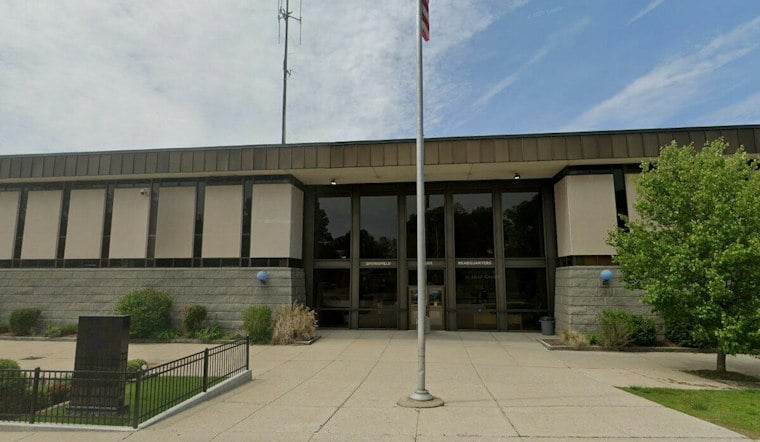
Springfield city councilors are pushing a new ordinance that would force door-to-door sales representatives to register with police, wear identification badges, and stick to set hours, after lawmakers said residents have been cornered and harassed by pushy solicitors who refuse to take no for an answer. The proposal would also raise the fine for aggressive sales tactics from $50 to $300 per infraction.
The push comes from councilors Gerry Martin and Justin Hurst, who are spearheading the ordinance together, according to MassLive. Martin said residents have complained about salespeople who would not accept a refusal, and he singled out one industry in particular: solar panel sellers, who he called the worst offenders alongside pest-control and other pop-up businesses. Hurst described a confrontation in which a solar panel representative would not leave his property even after his wife repeatedly rejected the pitch and the salesman became belligerent. The representative returned the next day and was again difficult to get off the property, Hurst said, summing up his frustration simply: “At some point in time, no has to be no.”
What the Proposed Rules Would Require
As drafted, the ordinance would require door-to-door businesses to register with the Springfield Police Department, limit sales visits to between 10 a.m. and 6 p.m., and mandate that representatives wear identification badges and carry proof of registration. It would also explicitly prohibit aggressive and threatening behavior and require salespeople to leave once a resident says no. The rules would apply only to for-profit sales, with political candidates, nonprofit groups, and charities exempt from city registration.
That carve-out tracks a legal line municipalities cannot cross: in Watchtower Bible & Tract Society v. Village of Stratton, the U.S. Supreme Court ruled 8-1 that requiring permits or registration for non-commercial, political, or religious door-to-door canvassers violates First Amendment speech protections, according to the First Amendment Encyclopedia. Courts have generally allowed cities to regulate the time, place, and manner of commercial solicitation while shielding non-commercial speech from licensing hurdles.
Enforcement and administration of the ordinance would fall to the police department or its designee. Councilor Melvin Edwards said conscientious enforcement is key to the ordinance working as intended, while councilor Brian Santaniello asked that the city go further by banning violators outright from future door-to-door product sales.
Other Ideas Floated, Including a Sunday Ban
Council President Tracye Whitfield backed banning door-to-door sales one day per week and asked that sales representatives' employers be prominently displayed on their identification, not just the worker's name. She warned that declining a pitch doesn't always end the matter: “If you say you don't have time now, they will come back several times,” she said. Councilor Victor Davila suggested banning solicitations specifically on Sundays and recommended that homeowners simply avoid answering the door to people they don't know.
Springfield's proposal borrows from ordinances already on the books in neighboring Western Massachusetts communities. West Springfield and Chicopee have similar ordinances, and the Springfield draft incorporates parts of both, per the same MassLive report. West Springfield's Chapter 211, enacted this past July, requires commercial solicitors to register with police, pass a 10-year criminal background check for felony or fraud convictions, pay a $25 fee, wear town badges, and limit visits to between 9 a.m. and 6 p.m., according to the Town of West Springfield. Chicopee, meanwhile, updated Chapter 188 of its municipal code in April 2025 to require all door-to-door sales representatives to obtain a license directly from the Chief of Police, who assesses their suitability before they're allowed to solicit residents, according to city records.
Why Solar and Utility Sales Draw Extra Scrutiny
Martin's complaint about solar panel sellers lines up with a pattern regulators have flagged statewide. A March 2025 report from the Massachusetts Attorney General's Office found that residential utility customers across the state lost $651 million over nine years to competitive electric suppliers using aggressive marketing tactics, including door-to-door sales, according to Power for Tomorrow. The Massachusetts Department of Public Utilities already requires competitive electricity and gas suppliers doing door-to-door marketing to submit daily state notifications naming up to five target municipalities and supervisor contacts before canvassing, per state guidance.
Massachusetts homeowners already have some statutory protection against high-pressure doorstep deals. Under General Law Chapter 93, Section 48, consumers have the right to cancel any consumer contract signed during an uninvited door-to-door visit exceeding $25 within three business days, and sellers must provide written cancellation notices at the time of signing.
Springfield's $300 proposed fine would put it in line with a broader trend among Massachusetts municipalities. Communities including Haverhill, Methuen, Marlborough, and Malden have adopted local “Do Not Knock” registries that impose fines up to $300 per offense or revoke licenses for unauthorized commercial solicitors, according to The Jacobs Law, LLC. It's part of a wider regional reckoning with door-to-door sales that has also touched schools: Milford Public Schools revised its fundraising policies last month to ban all door-to-door student sales over safety and commercial vendor concerns, as Hoodline reported in its earlier coverage of the Milford ban.
What Happens Next
The Springfield City Council approved a first reading of the ordinance in September. The council's General Government Committee is scheduled to take up the proposal Tuesday at 5 p.m. at City Hall, per the MassLive report. Councilors plan to consult neighborhood councils for input before sending the measure to the full City Council for a final vote.





