

























































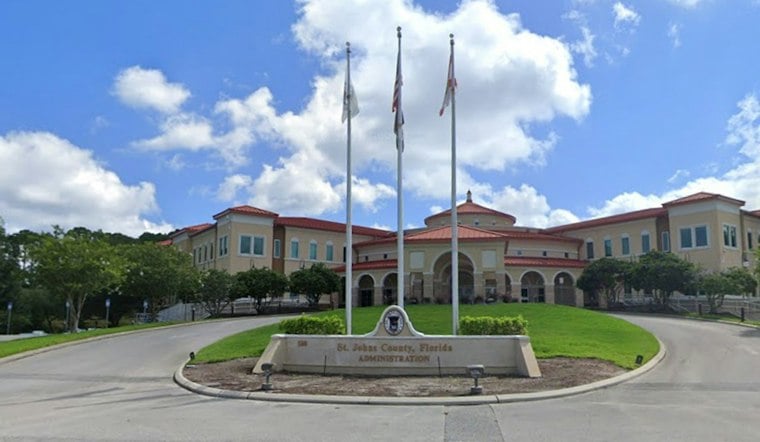
St. Johns County commissioners are set to debate the county's use of Flock Safety automatic license plate reader cameras on Oct. 20, with the discussion centered on whether the devices should keep operating on county rights-of-way. The discussion comes as Sheriff Rob Hardwick pushes to keep cameras running on local roads even as the state orders some removed from highway corridors, and as a resident's records request has drawn attention to the technology.
The Oct. 20 debate will consider whether to permit Flock cameras on county rights-of-way, according to News4JAX. The outlet reports that Sheriff Hardwick has defended the cameras as a crime-fighting tool and wants them to remain in place on county roads even as the broader dispute over the technology intensifies.
A Resident's Records Request
The debate has been fueled in part by St. Johns County resident Debra Campbell, who requested her own license plate records from the sheriff's department, the same report notes.
Campbell's petition against the cameras has drawn more than 1,000 resident signatures, per the same report.
State Order Forces Partial Removal
The scrutiny arrives as the Florida Department of Transportation has revoked permits for Flock cameras installed in state-highway rights-of-way, giving agencies 30 days to remove them.
Hardwick has said the sheriff's office will comply with the state's order, and the agency has approximately 182 Flock cameras, with roughly half expected to come down under the directive. He said the cameras removed from state rights-of-way will not be relocated elsewhere, telling Jaxtoday.org, “We have no plans of putting them back up anywhere else.” For now, license plate readers on county roads remain in place, according to the News4JAX report.
Sheriff Points to Recovery Numbers
The sheriff's office has pointed to its 2026 enforcement figures to argue the cameras are paying off: 29 stolen vehicles recovered, 23 stolen license tags recovered, and 35 missing people recovered, along with 35 wanted people arrested, 62 people charged, and 132 felony charges and 54 misdemeanor charges cleared. Hardwick has said license plate reader data is one investigative lead among many rather than the sole basis for these outcomes.
The agency has also pointed to policy changes meant to address privacy concerns, shortening its data-retention period to 30 days, limiting system access and ending the sharing of data with outside agencies. Officials have said the Flock system does not use facial recognition or collect cellphone data. The sheriff's office has used license plate reader technology since 2017, per Jaxtoday.org's reporting.
Cost and Comparisons Across the Region
Spending on the program has also drawn attention: the sheriff's office budgeted $908,000 for the cameras in fiscal year 2026 but spent only $481,000 from its own budget, with grants covering the remainder, Jaxtoday.org reported.
St. Johns County isn't alone in grappling with the fallout from the state's directive. The Jacksonville Sheriff's Office announced it would discontinue using license plate reader technology following FDOT's order, and Jacksonville Sheriff T.K. Waters discontinued license-plate-reader use throughout Duval County, according to St. Johns Citizen. Putnam County's sheriff's office disconnected all 18 of its cameras and canceled its program entirely.
Whitehurst Calls for a Moratorium
At a Sept. 15 hearing, Commissioner Christian Whitehurst called for an immediate moratorium on Flock cameras, according to News4JAX.
With the Oct. 20 meeting now on the calendar, commissioners are expected to weigh not just whether to permit Flock cameras on county rights-of-way, but also the county's broader legal authority over a system that operates under the sheriff's independent control. For residents like Campbell, and for a sheriff defending a program he credits with dozens of recoveries and arrests, the outcome will shape whether St. Johns County's roads keep watching — and recording — who drives through.



