

























































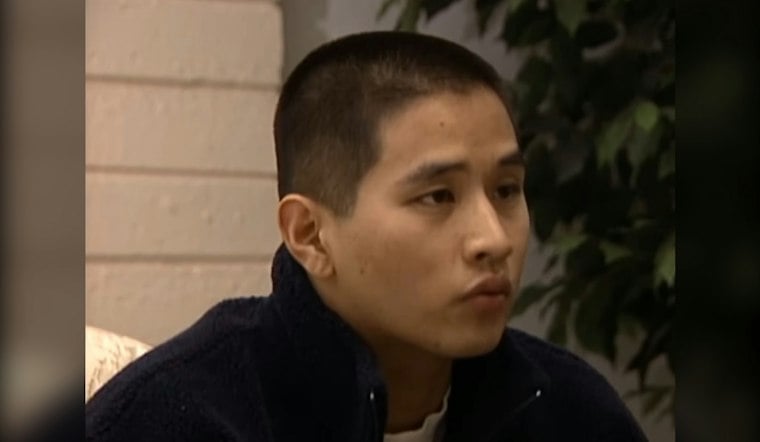
Steve Yoo, the Korean American singer once known as Yoo Seung-jun, has won an appeal in his third lawsuit over a denied entry visa, with the Seoul High Court ruling that the South Korean Consulate General in Los Angeles must revoke its decision to deny him one. The 48-year-old has now technically prevailed in court three separate times since 2015, yet still finds himself fighting the same battle more than two decades after renouncing his Korean citizenship.
The high court upheld a ruling issued by the Seoul Administrative Court in August 2025, which found that denying Yoo an F-4 visa was illegal and an abuse of discretion, according to Yonhap News Agency. Notably, the appellate panel did not explain its reasoning this time around — Yonhap reported plainly that “the high court did not provide a specific explanation for its ruling.” As first detailed by Korea JoongAng Daily, the decision marks the latest twist in a dispute that has outlasted three separate rounds of litigation.
A Visa Fight Rooted in a 2002 Decision
Yoo became a U.S. citizen and renounced his Korean citizenship in 2002, a move that triggered a long-standing entry ban into South Korea, per the same Yonhap account. He first sued over the issue in 2015 after the Los Angeles consulate refused to issue him a visa, then filed a second lawsuit in 2020 after another denial. In 2020, the Supreme Court ruled that the visa refusal had been procedurally flawed, and the court again ruled in Yoo's favor in November 2023 — yet the consulate denied him once more in June 2024, pushing him into a third lawsuit three months later.
The F-4 visa at the center of the dispute is reserved for foreign nationals of Korean descent who either previously held South Korean nationality or have a parent or grandparent who did, according to The Korea Herald. In this latest ruling, the court rejected officials' argument that keeping Yoo out of the country was necessary for the public good, the outlet reported.
Competing Accounts of What the Ruling Actually Means
Exactly what Yoo's court wins mean for his ability to set foot in South Korea remains contested. The Korea Herald reported that this ruling does not lift what it described as a 23-year-old entry ban, and that the court explicitly declined to decide whether the Ministry of Justice's original 2002 ban was even valid, stating “it is not up to the court to decide on the matter.” That account stands in contrast to earlier reporting from The DONG-A ILBO, which wrote after the Supreme Court's December 2023 ruling that Yoo “will now be allowed to enter Korea after 21 years.” The two accounts diverge on whether Yoo's legal victories have actually restored his ability to enter the country he left as a young performer.
The Korea Herald also noted that, as a general matter, a Korean man who renounces his nationality without completing mandatory military service cannot be issued an F-4 visa until he turns 41 — a detail relevant to a case long shadowed by accusations that Yoo gave up his citizenship specifically to dodge service.
Government Moves to Close the Loophole Yoo's Case Exposed
Even as Yoo keeps winning in court, South Korea's government is moving to make sure future cases like his can't happen the same way again. The Justice Ministry announced plans to codify a permanent entry ban for people who evade mandatory military service and generate public controversy, explicitly citing Yoo's case as the impetus, according to Korea JoongAng Daily. Korea Immigration Service Commissioner Cha Yong-ho said officials intend to tighten the law directly: “We will clearly define the legal grounds of the Immigration Act to bar entry for those who evade military service,” he said, per the outlet's reporting.
That legislative push underscores how Yoo's decades-long legal odyssey has become something larger than one singer's visa paperwork — it has become the test case shaping how Seoul writes the rules for everyone who follows him. For now, Yoo has won his appeal, but whether he can actually board a flight to Seoul remains an open question the courts have so far declined to answer directly.



