

























































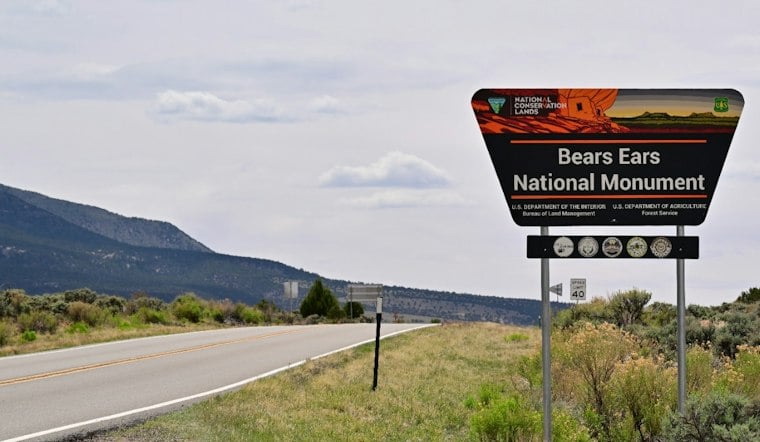
About 70 runners and volunteers spent a cold, soaked night stranded on the course of Utah's Moab 240 ultramarathon after a storm tore through the Bears Ears region, knocking down trees and flooding sections of the 241.8-mile route. Organizers called off the rest of the race Sunday and scrambled to get everyone out safely by bus.
The race, which was scheduled to run from October 9 through October 13 and start and finish in Moab, was canceled because of extreme weather and unsafe course conditions, according to the Denver Gazette. Race organizers cited unsafe conditions across multiple areas of the course as the storm intensified, with the La Sal Mountains and Geyser Pass among the hardest-hit stretches. The extreme weather included heavy rain, high winds, falling trees and frigid temperatures, forcing runners at the Bridger Jack Aid Station who arrived Saturday night to stay put rather than press on.
Conditions at that aid station had not improved by Sunday morning, and flash flooding remained a key concern for organizers as they weighed how to get people out. At least 70 runners and volunteers were stranded after storm-related flooding made Cottonwood Creek unsafe to cross, according to KSL. The outlet reported that aid station structures were blowing away and trees were falling as wind, rain and freezing temperatures piled on top of each other.
Overnight Shelter Before the Buses Rolled In
Despite the chaos, stranded runners and volunteers had access to heated tents, hot food and drinking water through the night, the same KSL report noted. Grand County Emergency Services was notified, and a helicopter surveyed the area early Sunday before buses were sent out around 11 a.m. to begin pulling people off the course.
Race organizers conducted a mass evacuation Sunday morning, working alongside local authorities to move people out of the backcountry. The San Juan County Sheriff's Office coordinated with race organizers to assist the stranded runners who could not safely leave affected areas on their own, according to ABC News. That report said the final group of affected participants was evacuated by bus from an aid station near Bridger Jack Mesa, inside the Bears Ears National Monument.
Accounts differed slightly on when the last runners actually made it out. The sheriff's office posted that everyone stranded on the route had been safely evacuated by 12:45 p.m., according to The Salt Lake Tribune, while Fox 13 reported that the last of the runners were evacuated safely by 1 p.m. Race organizers reported that all impacted runners needing evacuation were safely brought out.
A Race Cut Short Mid-Stride
Destination Trail, which organizes the Moab 240, said the weather had become too dangerous to safely continue, per the same KSL account. The race had no declared winner at the time of the latest reports, with Aaron Kubala serving as the men's race leader when the event was canceled and Ashley Paulson leading the women's field. Kubala had already won the Tahoe 200 and Bigfoot 200 earlier in 2026, per the Denver Gazette.
Organizers said the cancellation was not how anyone wanted the race to end, acknowledging that runners had trained for months and that support crews had invested substantial time and effort into the event. Destination Trail said it was deeply disappointed for everyone involved, while stressing that the safety of runners, volunteers, crews, pacers and staff came first once course conditions turned unsafe.
Flood Watch Still in Effect Across the State
The storm that upended the Moab 240 was tied to a broader weather pattern moving through Utah. The National Weather Service issued a flood watch for most of the state through Monday afternoon, according to the Salt Lake Tribune's report. A hazardous weather outlook from the National Weather Service noted that periods of heavy rainfall tied to remnants of Tropical Storm Rachel were expected to produce numerous showers and embedded thunderstorms, with heavy rain on saturated soils and burn scars potentially triggering localized flash flooding and rises on local rivers.
The Moab 240 is known for sending runners through desert, canyons, slick-rock formations and two mountain ranges over the course of its roughly 242-mile route, a test of endurance that typically stretches across several days. This year, the storm proved the bigger obstacle, cutting the race short before any champion could be crowned.





