

























































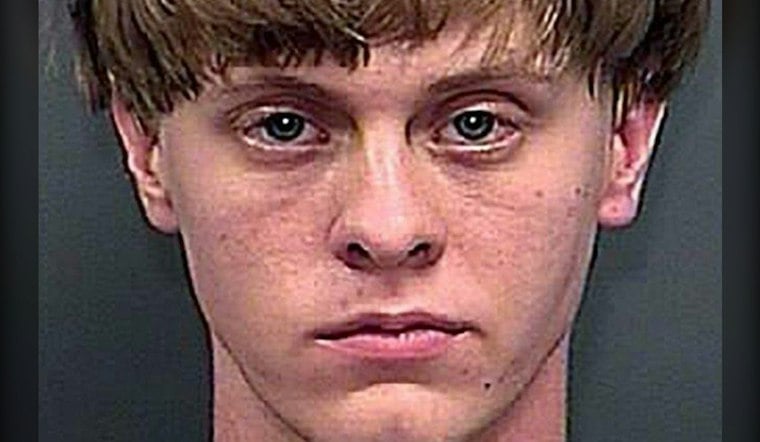
The Supreme Court has declined to hear Dylann Roof's attempt to disqualify the judge who presided over his federal death-penalty case, leaving intact a lower court ruling that found no basis to remove him. The decision closes off, for now, one more avenue in Roof's yearslong effort to overturn his conviction and sentence for the 2015 massacre at Mother Emanuel AME Church in Charleston.
The justices' refusal to take up the case leaves standing an appeals court ruling finding no basis to remove U.S. District Judge Richard Gergel from Roof's death-penalty case, according to The Hill. Roof's lawyers had argued that Gergel should be removed because of an appearance of bias, alleging he expressed a desire to handle the trial himself. As reported by The Post and Courier, the filing included contemporaneous accounts of Gergel saying he wanted to be the judge presiding over the case.
The U.S. Court of Appeals for the Fourth Circuit had already weighed in on the bias allegations before the matter reached the justices. In an opinion filed in August 2025, the appeals court found that allegations claiming Gergel wanted the case from the beginning were insufficient and based on hearsay, and it ruled that Roof had not shown a clear and indisputable right to recusal. Even taking the claim at face value, the court concluded that a negative view of Roof, if it existed, would not amount to the kind of bias or partiality that legally requires a judge to step aside, per the U.S. Court of Appeals for the Fourth Circuit.
A Years-Long Fight Over Counsel and the Judge
Roof's newest petition also leaned on claims about his trial counsel, arguing that his attorneys failed to make a record of the judge's alleged bias and failed to address conflicts that had developed with him, the Post and Courier's reporting notes. His lawyers wrote that the petition would preserve the convictions and sentence while addressing confidence in the judiciary, according to the seed facts tied to the case.
The post-conviction fight marks just the latest chapter in a legal saga that has run for nearly a decade. Roof fired his attorneys and represented himself during jury selection and during the sentencing phase of his 2017 federal capital trial, the same account from the Post and Courier states. He has since made multiple unsuccessful attempts to overturn his conviction and obtain a new trial, including a prior request the Supreme Court declined to take up in 2022.
The Massacre and Its Aftermath
Roof was convicted of federal hate crime and related charges after opening fire on parishioners gathered for Bible study at Mother Emanuel AME Church in Charleston, South Carolina. He confessed that the massacre was intended to spark a race war. A federal jury sentenced him to death in 2017 on all eighteen capital counts, including nine counts involving obstruction of the exercise of religion resulting in death, according to the U.S. Department of Justice.
Accounts of the attack's exact timing differ in the record: the Post and Courier's reporting places the killings in June 2015, while seed facts tied to the case describe the attack occurring in May 2015. Roof, now 32, remains housed in a maximum-security prison in Terre Haute, Indiana, per the Post and Courier's account of his new appeal.
Why the Case Stayed Alive on Federal Death Row
Roof's case has also drawn attention because of his place among federal death-row inmates whose sentences were not altered during the broader clemency actions of the prior administration; he was one of three federal death-row inmates whose sentence former President Joe Biden did not commute to life in prison. That status has kept his case squarely in the federal system rather than shifting it toward the kind of commutation relief some other death-row inmates received.
With the Supreme Court's latest refusal to intervene, the Fourth Circuit's findings on judicial bias stand as the final word on that specific claim for now. Roof's broader post-conviction proceedings, which have spanned challenges to his conviction, his sentence, and the conduct of both the trial judge and his own former attorneys, remain active in the federal courts.



