

























































Fort Worth City Council member Elizabeth Beck and Tarrant County Commissioner Matt Krause are on opposite sides of a fight over who should write the rules for data centers sprouting across North Texas. Krause wants local governments to hold off and let state lawmakers take the lead when the Texas Legislature convenes in January 2027. Beck says that is too long to wait, especially with a controversial project already drawing fire just across the county line in Westlake.
Two Different Strategies, One Looming Deadline
The disagreement played out at the Fort Worth Report's 2026 Growth Summit, which included three panels on the region's building boom, according to Fort Worth Report. Krause, who is also hosting a separate town hall to gather resident feedback on data centers, told the summit that local governments should retain authority to regulate local aspects of the industry, but cautioned against spending time and resources drafting rules the state could simply override. Krause said he plans to carry what he hears from Tarrant County residents to Austin lawmakers as they shape a regulatory framework, according to The Texan.
Beck, who has served on Fort Worth City Council since 2021, flatly disagreed with that wait-and-see approach. She said she did not want Fort Worth governed by people whose future actions were unknown, according to the Fort Worth Report's account of the summit. Fort Worth is a home-rule city, meaning its leaders can adopt regulations not explicitly prohibited by the state — and Beck argued the city shouldn't sit on that authority while Austin deliberates.
Westlake's Circle T Project Looms Over the Debate
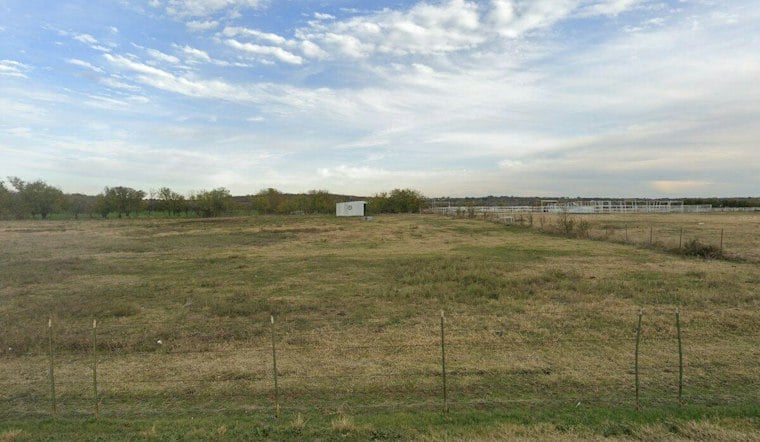
The argument isn't theoretical. The proposed Circle T data center complex, planned on 87.9 acres at 13580 Denton Highway in Westlake, has drawn criticism from residents and leaders in both Westlake and neighboring Keller. Per the Star-Telegram, the 1.1 million-square-foot complex would sit just 506 feet from homes in Keller's Lakes at Marshall Ridge neighborhood and roughly two miles from Ridgeview Elementary School. Westlake amended its Circle T Ranch planned development district in January 2025 to allow data centers there, subjecting future projects to specific-use permits.
Keller's City Council didn't take that quietly. In August, the council unanimously passed a resolution opposing the Circle T project and authorized legal action if Westlake moves forward with construction, the Star-Telegram reported. At a town hall on the issue, one Keller resident called for limits on how close data centers can be built to residential areas, along with protections for wetlands and natural habitats and at least three community meetings before any project advances, according to The Texan. Realtor Hilarie Finfrock told attendees that homes near data centers could lose up to 20 percent of their value, per the same account.
Tax Breaks, Incentives and Who Pays
Money is as much a flashpoint as proximity. Beck said data centers do not lack funding and argued Fort Worth should end business incentives for the industry altogether, telling the Fort Worth Report she doesn't think it's good city policy to hand out economic incentives to these operations. Tarrant County has asked the Legislature to eliminate data-center tax abatements entirely, though Krause cautioned that incentives for other industries shouldn't be scrapped wholesale in the process.
The stakes are substantial. Texas already has more than 300 operating data centers and over 100 more planned or under development, and the state is projected to lose $3.2 billion in sales tax revenue over the next two years because of its data-center exemption, according to the Texas Tribune. At least 121 data centers currently receive that sales-tax break, and the comptroller's office forecasts its annual value will climb to nearly $1.8 billion by fiscal year 2030, the Tribune reported. Public sentiment isn't exactly welcoming, either — a University of Texas/Texas Politics Project poll found 57% of Texas voters oppose building a data center in their own community, a separate Tribune report noted.
What Local Officials Can — and Can't — Control
Under current law, Texas alone regulates data-center water supply and planning, air quality, energy and state sales taxes, which sharply limits what cities and counties can do on their own. Krause pointed to a historical precedent: when Denton officials enacted a fracking ban in 2014, the state sued the city over it, a cautionary tale he's cited in urging restraint. Dozens of Texas counties have passed resolutions urging timely legislative action on data centers, while some county officials elsewhere have proposed outright moratoriums or bans, reflecting the same split on display in Tarrant County.
Fort Worth's own attempt at local rules has already hit friction. City staff proposed zoning, noise, water-use and wastewater regulations earlier this year, including a requirement that new developments use closed-loop cooling systems, according to the Star-Telegram. As of June, the city had four operating data centers made up of 10 buildings totaling about 3 million square feet. The zoning commission later sent the proposed ordinance back to the Fort Worth City Council rather than approving it, according to KERA News.
Notice Gaps and Calls for Regional Coordination
One specific gap frustrates both Beck and outside advocates: Fort Worth code requires mailed notice only to residents within 300 feet of a property seeking a zoning change, and those notice rules don't cover residents in nearby or bordering cities — the exact situation Keller residents found themselves in with the Circle T project. Beck has urged that state law require notice to all impacted residents regardless of which municipality they live in.
Adrian Shelley, Texas director for Public Citizen and with the organization since 2017, pressed local officials to consult residents directly about the data-center industry and carry those views to lawmakers, while urging cities to use the full extent of their existing authority rather than waiting idly. Shelley also said local officials should refuse to sign nondisclosure agreements and called on developers to tell surrounding communities honestly whether a proposed center will have its own power source, stressing that transparency matters enormously. Krause, for his part, floated a different fix: a regional coordination model among local officials modeled on the Regional Transportation Council, the North Texas body that plans long-term public transit, as a way to align data-center policy across jurisdictions without waiting on Austin alone.
State-Level Scrutiny Intensifies
The debate in Tarrant County arrives as state regulators face their own credibility test. Gov. Greg Abbott ordered an audit of data centers connecting to the state's primary power grid and, on October 20, halted environmental permitting for data-center hubs, directing the Texas Commission on Environmental Quality to pause permits sought by data centers until the audit from the Public Utility Commission of Texas and ERCOT is complete, according to the Office of the Texas Governor. Yet a report from FracTracker and Public Citizen found TCEQ took 35 permitting actions for gas power-generation facilities serving energy-hungry data centers after that pause, as reported by KUT News.
Enforcement elsewhere looks similarly thin. Only about 30% of 329 data centers surveyed by the state responded to a required water-use survey last year, even though the Texas Water Development Board uses those responses to plan for water needs 50 years into the future, according to the Texas Tribune. Centers that skip the survey can be charged with a Class C misdemeanor carrying a fine of up to $500, but the water board says it has no authority to prosecute violations itself. Abbott has recommended that data centers pay for their own electric infrastructure, adopt less water-intensive cooling technology and add power generation to the grid — proposals that echo exactly the kind of local concerns Krause and Beck are each trying to get ahead of before lawmakers return to Austin.


