

























































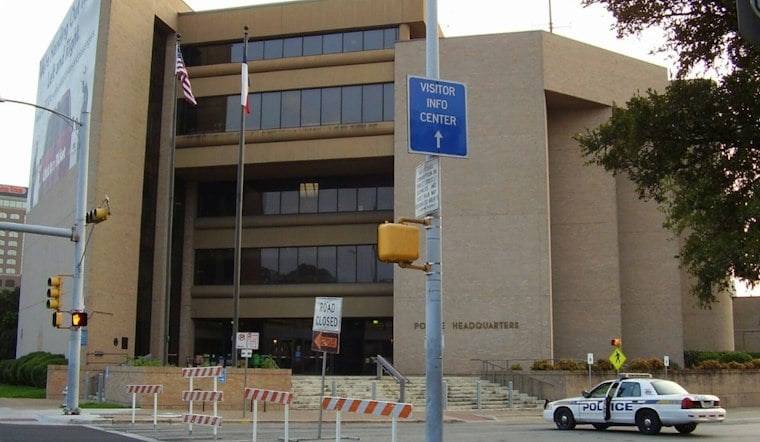
A Texas resident who bought boxes at an estate sale got far more than bargained for after discovering grenades believed to date back to World War II tucked inside. The Austin Police Department Bomb Squad later confirmed the roughly 80-year-old devices were live and active, setting off a scramble to secure the area before technicians safely removed them.
An Austin Police Department public information officer told Chron that six grenades were found; a scene photo appeared to show eight objects, according to Chron, which reported the discovery. Austin police officers responded by securing the scene and establishing a perimeter to protect nearby residents while bomb squad technicians assessed the ordnance. The Austin Police Association shared an account of the incident on Instagram on Monday, confirming the grenades were around 80 years old and that their stability was unknown at the time officers arrived.
The bomb squad ultimately seized and removed the grenades safely, and the police association emphasized that old military ordnance like this should never be touched or moved — people who encounter it should call 911 instead. Despite the unnerving find, the Austin Police Department reported that no crime occurred. Chron reported that it contacted both the Austin Police Association and the Austin Police Department on Tuesday morning seeking additional details on the incident.
Why Decades-Old Grenades Stay Dangerous
The danger in cases like this one isn't just theoretical. World War II-era hand grenades present severe chemical degradation risks after eight decades, as aging TNT filler can exude volatile liquid compounds while primary detonators — materials like lead azide or mercury fulminate — become hyper-sensitive to physical shock or friction, according to expert research cited on Quora. Corroded iron casings and weakened fuse springs can further raise the odds of accidental detonation, which is why federal guidance treats any suspected ordnance as a serious hazard regardless of its outward condition.
The U.S. Department of Defense's 3Rs Explosives Safety Education Program instructs civilians who stumble across military munitions to Recognize, Retreat, and Report — contacting 911 immediately rather than touching or moving the items, per guidance published by DOD DENIX. The program's guidance underscores why anyone who suspects they've found something like a grenade should stop and report it.
Legal Gray Area for Unintended Finds
Texas law takes live explosives seriously on paper. Under Texas Penal Code § 46.05, possessing an unregistered explosive weapon is classified as a third-degree felony, carrying a potential sentence of two to 10 years in prison and fines up to $10,000, according to Justia. Federally, the Bureau of Alcohol, Tobacco, Firearms and Explosives classifies live military hand grenades as destructive devices under the National Firearms Act, meaning they require federal registration to be legally owned or transferred, as outlined by Saputo Toufexis.
Despite those statutes, law enforcement authorities typically prioritize public safety and disposal over criminal charges when citizens report unintended finds like this one — consistent with the Austin Police Department's determination that no crime occurred in this case. State law also criminalizes possession of an unregistered explosive weapon, while the Austin Police Department reported that no crime occurred in this case.
A Recurring Problem Across Austin and Texas
This isn't the first time Austin has dealt with suspected ordnance turning up unexpectedly. In April 2025, the Austin Police Department Bomb Squad conducted a controlled on-site detonation of unstable explosive material discovered inside a residential home on Vintage Stave Road in South Austin, opting for destruction on scene because moving the aged explosives posed excessive transport risk. And in June 2023, Austin police cordoned off streets in the Sixth Street Historic District after a man left a grenade in an alley; technicians later determined that device was a demilitarized shell lacking explosive filler, according to FOX 7 Austin.
The pattern extends beyond Austin. In January 2026, new homeowners in northeast Harris County discovered live World War II-era grenades and explosives left behind in a residence previously owned by a World War II veteran, a trend highlighted by KHOU 11. And in July 2026, Teague Police Department officers in Freestone County responded to a heavily corroded hand grenade found partially buried near a city street before confirming the device was inert, per KWTX. The U.S. Army Corps of Engineers, which manages safety remediation across more than 100 Formerly Used Defense Sites, notes that military souvenirs brought home by veterans represent a primary source of unexpected civilian explosive encounters nationwide.
The Austin Police Department Bomb Squad provides 24/7 hazardous devices response coverage across a 10-county region in Central Texas, with technicians certified through the FBI Hazardous Devices School. As estate sales and property cleanouts continue to surface forgotten wartime keepsakes, officials continue to stress the same message: if you find something that looks like a grenade, don't touch it, don't move it, and call 911.





