

























































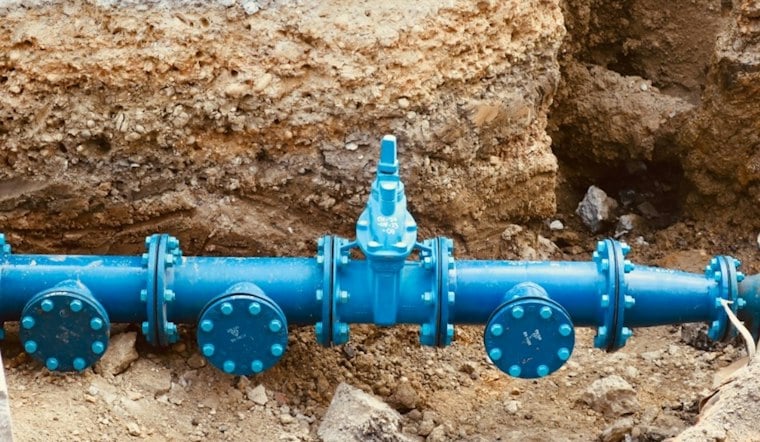
Tiverton, Rhode Island has landed $1 million in federal funding to begin installing an emergency public water line for homes whose private wells tested above the state's PFAS safety limit. The money, approved by the U.S. Department of Agriculture, will route through the North Tiverton Fire District to connect households near Crandall Road that have been living with contaminated groundwater for months.
The scale of the problem is staggering. A USDA Rural Development official called it the largest PFAS problem in Rhode Island's history, according to EastBayRI.com. Well testing in the area recorded a peak PFAS concentration of roughly 4,000 parts per trillion, the highest level ever documented in a private well anywhere in the state, as reported by What's Up Newp. Rhode Island's drinking water limit for six combined PFAS compounds sits at just 20 parts per trillion, making that peak reading 200 times the legal threshold.
At least seven contaminated homes registered PFAS levels exceeding 1,600 parts per trillion, a threshold so high that standard home point-of-entry filtration systems simply cannot function, the outlet's report notes. That is why a public water line, rather than in-home filters, became the emergency fix of choice for the most severely affected households.
How the Contamination Was Discovered
The investigation traces back to May, when the Rhode Island Department of Environmental Management began sampling a public well at Victory Church on Crandall Road as part of a statewide testing initiative, and expanded that testing because of the well's proximity to Tiverton Fire Station 3. The agency has not confirmed that historic use of PFAS-containing firefighting foam at the station is the source of the contamination, even though it remains a suspected link. After positive results at the church, residents went door to door to warn neighbors, while officials offered testing for private wells across adjacent residential streets, per the account from EastBayRI.com.
That door-to-door effort grew fast. As of September 16, 87 of 157 sampled private wells exceeded the 20 parts per trillion safety threshold. Testing expanded across Crandall Road, Bulgarmarsh Road, Stafford Road, and surrounding side streets, and private well testing is still continuing.
Washington Delegation Pushes the Funding Through
Rhode Island's congressional delegation played a direct role in securing the money. Senators Reed and Sheldon Whitehouse, along with Representative Gabe Amo, wrote to the USDA on September 8 supporting Tiverton's funding request through the agency's Emergency Community Water Assistance Program. Whitehouse said federal funding had been secured for the North Tiverton Fire District to install an emergency public water line, calling it an important step forward, and said he remains committed to supporting the town's efforts to restore safe drinking water and peace of mind to residents.
Reed described the grant as a positive step in a multi-step process, adding that continued public outreach is needed so residents understand the assistance available to them. Amo said he will keep working with federal, state, and local leaders to restore safe, clean drinking water to the community.
A Race Against Winter
Construction bids for the Crandall Road line carried strict terms: contractors had to begin work immediately after award and finish connecting residents before the first winter snowfall, according to the same EastBayRI.com report. Town officials set that deadline because frozen ground would halt excavation and leave vulnerable households without a safe water source through the cold months.
Pending completion of that work, the town set up a free emergency public drinking water tap outside Fire Station 3 where affected residents could fill water containers, the outlet's report notes. State environmental officials also provided bottled water deliveries and home filtration units where feasible, though those filters are of little use at the properties with the most extreme contamination levels.
Why Some Wells Are Worse Than Others
Neighboring properties along Crandall Road have returned wildly different test results, and state officials say that is because local bedrock wells draw groundwater through unpredictable, fractured rock formations at varying depths, according to RI.gov. Those fractures do not distribute groundwater uniformly, which is why state officials say individual testing is essential for every household rather than relying on a neighbor's results.
The $1 million grant is only a down payment on a much larger fix. Comprehensive long-term upgrades for the North Tiverton Fire District Water Department, including additional water line extensions, system interconnections, and a new storage tank, are estimated to cost roughly $20 million, according to town documents. Local officials are pursuing additional state and federal funding to close that gap.
The crisis in Tiverton also reflects a statewide vulnerability. Approximately 120,000 Rhode Island residents, roughly 11% of the state's population, rely on private wells for daily household water use, per ecoRI News. Contamination in private wells like those in Tiverton can go undetected until testing is done.
PFAS are man-made compounds used in nonstick coatings, firefighting foam, packaging, and water-repellent textiles, and they persist in soil and water because they break down slowly. They have been linked to potential health impacts. For Tiverton residents who drank from their wells before the contamination was detected, questions about long-term health effects remain unresolved.




