

























































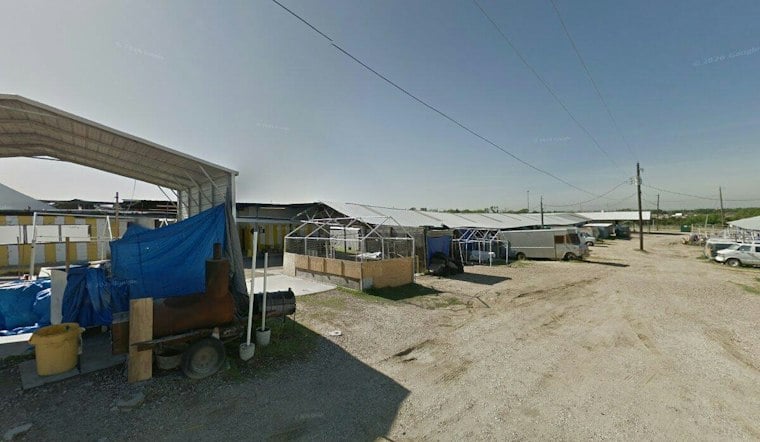
Travis County commissioners voted last Tuesday to approve up to $5.65 million for repairs and legal costs tied to a closed landfill that has been leaking contaminated liquid for decades, a site now caught in overlapping lawsuits involving the state of Texas, a developer, and a flea market built on top of the old dump.
The county operated the landfill off U.S. 290 from 1968 to 1982, and it remains Travis County's largest closed landfill, according to Community Impact. The site has produced large amounts of leachate since it closed more than 40 years ago, and the county is responsible for its post-closure care. A county budget memo cited by the outlet states the landfill was likely built atop areas of natural groundwater seepage, and rain continues to soak through its clay cap, generating leachate that the county collects and pumps into Austin's sewer system to keep it out of nearby creeks.
The Austin Country Flea Market has operated on about 21 acres directly above the landfill since 1986, and the county has said in court filings that some of the leachate may actually originate from the flea market's own wastewater and septic systems, per the same Community Impact report. That overlap has complicated efforts to pin down the source of contamination even as the Texas Commission on Environmental Quality has cited the county multiple times for problems at the site. A county budget memo noted the commission found sinking, ponding, erosion, possible tree damage to the cap, clogged drainage channels and leaking leachate wells as of March 2024.
Decades of Leaks, Limited Fixes
The leachate problem is not new. Former Travis County Judge Bill Aleshire has acknowledged that state health officials first formally alerted the county to leachate escaping the landfill back in 1990, but strategies tried during his nearly decade-long tenure yielded only temporary mitigation rather than a permanent solution, according to FOX 7 Austin. Testing of leachate and groundwater earlier in 2025 detected unsafe levels of heavy metals, including arsenic, barium, and lead, according to court filings cited by The Real Deal.
A December 2024 follow-up inspection by state environmental regulators uncovered exposed holes in the cap from vegetation removal, along with multiple active leachate seeps near an extraction well on the property's south side, the same outlet reported.
What the New Money Covers
Travis County has completed the first repair phase at the landfill and recently finished a second-phase assessment that will be used to plan the next round of work, per Community Impact. The county estimated it will need between $3.15 million and $5.65 million this fiscal year, covering the design of repairs to the cap and drainage system, fixes and maintenance for the leachate collection system, and the demolition of structures on the property. Those cost estimates predate the latest assessment and may change, the outlet noted.
Separate from the repair costs, the county has also allocated funds for its legal effort to take the property, according to a county transportation and natural resources department memo cited by Community Impact. County spokesperson Yoojin Cho said the amount allocated specifically to legal costs is not yet known and declined to provide further details, citing ongoing litigation.
Three Lawsuits, One Landfill
The site now sits at the center of three separate legal fights, as detailed in filings reported by Texas Scorecard. The State of Texas sued Travis County in May 2025 over its care of the landfill, seeking fines and a court order requiring repairs. Moo Moo Meadows LLC and Graham Development Corp. sued the county in federal court in July 2025, alleging it blocked their development plans, and the companies say in court filings that leachate has damaged their property and are seeking money from the county. The county, in turn, says in its own filings that the companies have hampered its repair efforts.
Moo Moo Meadows acquired the roughly 150-acre landfill site at 9500 E. U.S. Highway 290 in February 2024, about 21 months before county commissioners voted to use eminent domain in November 2025. Travis County sued the landowner in December 2025 to take the property through eminent domain and complete the repairs itself. A federal judge dismissed the developers' lawsuit in March, the Austin Business Journal reported. The developers separately challenged the condemnation award. A jury trial is scheduled for June 2027 in the companies' federal lawsuit.
Underlying the legal fight is a mixed-use project Graham Development hopes to build at 7900 S. Congress Ave., featuring 1,218 residential units and commercial space. That project cannot move forward until the developer relocates LKQ Auto Salvage, which holds a lease at the South Congress site through July 2036, per The Real Deal. Travis County Commissioners Court voted unanimously in August 2023 to deny Graham Development's request to relocate the scrapyard to the landfill site, citing potential public health and environmental risks.
A Fire Adds to the Pressure
Complicating cleanup efforts further, a major fire broke out at the Austin Country Flea Market in late August, injuring two people, damaging an estimated 43 to 46 vendor stalls, and causing structural collapses that prompted an active investigation by the Travis County Fire Marshal's Office, according to KVUE. The flea market occupies part of the landfill site.
Travis County may ultimately borrow to cover the repair and legal costs, with commissioners expected to decide whether to do so before the county's spring 2027 debt sale, per Community Impact. The Commissioners Court will hold its next voting session on Tuesday, October 20, at the Travis County Administration Building, 700 Lavaca St. in downtown Austin, where residents can comment in person or register online in advance.





