

























































A U.S. special envoy pressed for his longtime business partner's investment firm to join a $15 billion effort to rebuild an Iraq-Syria oil pipeline, even as he held a financial stake in a California housing project managed by that same firm. Thomas Barrack, who serves as U.S. special envoy for Syria and ambassador to Turkey, advocated for TI Capital's participation in developing the Kirkuk-Baniyas pipeline, a corridor designed to move Iraqi crude to the Mediterranean while bypassing the Strait of Hormuz.
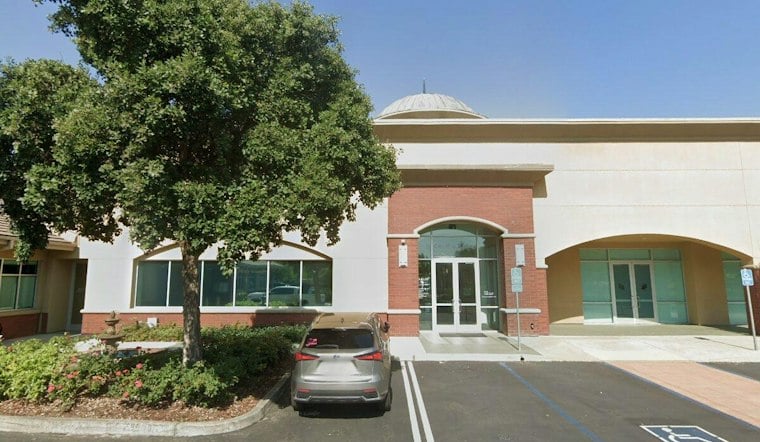
According to Reuters, Barrack held an equity stake in ACD-TI Oakley Investment LLC, a venture managed by TI Capital that is building a large housing project near San Francisco in Oakley, California. Under a March 2025 ethics agreement, Barrack was entitled to as much as 20 percent of the venture's profits, and he had previously held a paid consulting role with the project in 2024, the outlet reported. TI Capital is run by Ziad Ghandour, described by the news organization as Barrack's long-standing business partner.
Falcon Acquisition Corp., a blank-check SPAC co-sponsored by Barrack's family office and TI Capital Management, had filed IPO paperwork by March 2021, as detailed by the Los Angeles Times. A person close to Barrack told the news organization that Ghandour was Barrack's chosen and hand-picked partner, trusted to help implement President Trump's regional strategy of bringing Iraq and Syria closer to the United States.
A Pipeline Deal Years in the Making
The Kirkuk-Baniyas pipeline was built in 1952 by the Iraq Petroleum Company and once carried up to 300,000 barrels of crude per day from northern Iraq to Syria's Mediterranean coast, according to Kurdistan24. The line moved Iraqi crude for decades before Baghdad shut it in the 1980s; it was heavily damaged after the 2003 U.S. invasion of Iraq. Full-scale rehabilitation plans now aim to expand capacity to as much as 2 million barrels per day, according to Al Majalla.
In July 2026, Iraq and Syria signed memorandums of understanding with a consortium that includes TI Capital, Chevron and Qatari infrastructure firm UCC Holding to conduct feasibility studies on the project, the station's report notes. The agreement was signed in Washington during the U.S.-Iraq Business Council summit as part of a broader package of more than 50 bilateral economic and infrastructure agreements worth roughly $60 billion, according to Middle East Eye. The estimated $15 billion rehabilitation is projected to take at least four years to complete, per the same account.
Barrack raised the idea of bringing TI Capital into the regional project in May 2026 at the Milken Institute Global Conference in Los Angeles, where he and Ghandour participated in an invite-only panel on Middle East energy supply lines, the report states. The following month, on June 16, 2026, Barrack and Iraqi Prime Minister Ali al-Zaidi issued a joint statement saying Iraq would advance a memorandum of understanding with TI Capital to rehabilitate the pipeline — a statement that also urged Iraq to disarm non-state armed groups, according to The New Arab. Barrack pressed for TI Capital's inclusion in the pipeline project, according to two people cited in the Reuters report.
Ethics Experts Flag the Appearance Problem
Ethics experts have raised concerns about impartiality and the appearance of bias. Richard Painter, a former White House ethics lawyer, told the outlet Barrack's advocacy was a serious ethical problem and said he should have nothing to do with the pipeline and should completely recuse himself.
Ann Skeet, speaking to the same publication, said the ethical concern was the appearance of a conflict of interest.
The State Department told the wire service that Barrack has no affiliation, role or financial interest in the Kirkuk-Baniyas pipeline and that he was certified to comply with ethics rules. Barrack has committed to recusing himself from matters directly affecting ACD-TI Oakley Investment LLC's financial interests, and he signed an ethics agreement on March 7, 2025, to retain the Oakley assets rather than sell them.
Why Washington Wants a Mediterranean Bypass
The push to revive overland pipelines carries geopolitical weight beyond any single company's involvement. Middle East energy analysts note that reviving pipelines to the Mediterranean gives Iraq and neighboring states a strategic workaround to the Strait of Hormuz, according to Geopolitical Futures.
TI Capital's footprint in the region extends beyond the pipeline project. The Iraqi cabinet has also named the firm as part of a separate consortium assessing the Akkas gas field, described by the news organization as one of Iraq's largest undeveloped reserves.
For now, the dispute centers on appearances. Ethics experts argue his years-long partnership with Ghandour and his continuing equity interest in the Oakley housing venture raise questions about impartiality. Whether the State Department's account addresses Painter's call for recusal remains an open point of contention.





