

























































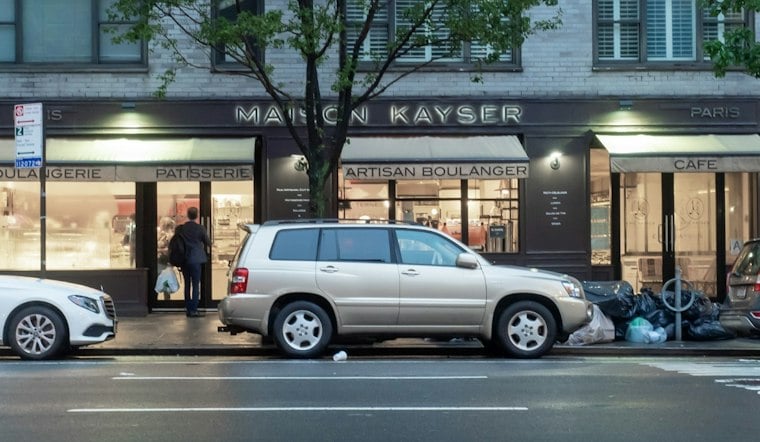
Janie’s Life-Changing Baked Goods has grown from a small baking business into a New York City bakery with a new Upper West Side home. Founder Janie Deegan has described hiring people with records like her own as part of the business’s approach.
Deegan quit drinking in June 2013 after experiencing homelessness, according to NBC Philadelphia. She founded Janie's Life-Changing Baked Goods in late 2015, CNBC reported. That year, a friend paid her $100 to make a birthday cake, and the orders grew from there, according to the outlet.
Deegan told WABC-TV that baking helped her rebuild confidence and practice the discipline of following steps—skills she said had eroded during her addiction.
How a Cookie Became the Bakery’s Signature
The bakery’s signature Pie Crust Cookie has a flaky crust base, pie filling and a buttery streusel topping, according to the NBC Philadelphia report. Deegan developed it in 2017 after her then-boyfriend suggested baked-good ideas for her to try, CNBC reported. In early 2020, she won Food Network’s baking competition Chopped Sweets, according to the outlet.
When the pandemic hit in 2020, Deegan removed cakes from the menu and focused on pie crust cookies and other products that could be shipped, NBC Philadelphia reported. CNBC reported that the bakery sold an average of 30,000 to 45,000 cookies a month, rising to 60,000 to 70,000 during its busiest stretches. The company recorded more than $1.3 million in total bakery sales in 2022, according to NBC Philadelphia; that figure is not cookie sales or a measure of current revenue.
A Bigger Home on the Upper West Side
The bakery’s Upper West Side expansion moved it from 212 West 80th Street to a 2,400-square-foot space at 434 Amsterdam Avenue, according to Commercial Observer. The outlet reported an asking rent of $200 per square foot and identified Deegan as the company’s CEO and founder. The company announced the new location on its website.
The bakery-café at 434 Amsterdam Avenue, near 81st Street, is Janie’s fourth bakery and its first with café seating, I Love the Upper West Side reported. Deegan told the outlet she still owns 100 percent of the bootstrapped business and plans to gradually bring cakes and pies back to the menu. Commercial Observer also reported that the company had operated locations at 82 Christopher Street and 2118 Second Avenue in East Harlem.
Hiring People Others Won't
Deegan described an open-door hiring approach in an interview with ABC7 New York, saying she hires people recovering from addiction and people coming out of prison, and considers applicants beyond their résumés. She told the outlet that addiction can affect anyone and that a person’s worst moments do not define them. The interview framed that approach as a way to challenge stereotypes about addiction and homelessness.
Other Paths Into Work After Incarceration
Deegan’s account describes hiring directly into her bakery. A separate model is the Center for Employment Opportunities’ New York City reentry program, which the U.S. Department of Health and Human Services’ Pathways to Work describes as offering preemployment classes, temporary paid jobs with city agencies, coaching, job development and post-placement services. The program description presents reducing recidivism and improving job prospects as aims, but does not provide outcome figures. A regional precedent for a different approach is Greyston Bakery in Yonkers. The Greyston Foundation says its Open Hiring model began at the bakery in 1982 and requires no interviews, background checks or résumés; the cited account does not provide results data.
What New York City’s Fair Chance Act Requires
For bakery jobs and other positions, the New York City Commission on Human Rights says employers generally cannot consider an applicant’s criminal history until after making a conditional job offer. It also says employers generally may not take adverse action based on that history unless the offense is directly related to the job or employing the person would pose an unreasonable risk to people or property, according to the Commission’s Fair Chance Act guidance and its explanation of the law.
That mission runs alongside a business that has grown well past its original kitchen footprint. About a third of the bakery's retail orders now come through third-party delivery apps, particularly late at night, according to a Square report, which also noted the bakery supplies cookies to Madison Square Garden and counts corporate clients including Facebook and Google. The same report said the company's website lets customers place orders up to 30 days ahead, while Deegan has told NPR she is working to get the pie crust cookies onto grocery store shelves.
The bakery has also found ways to tie its cookies to New York City's biggest civic moments. Deegan teamed up with New York Road Runners to create a special New York Marathon cookie, according to ABC7 New York, and runners who finish the race can bring their medal into one of Janie's stores the following week to get a free cookie with the purchase of a marathon cookie, per the same report.





