

























































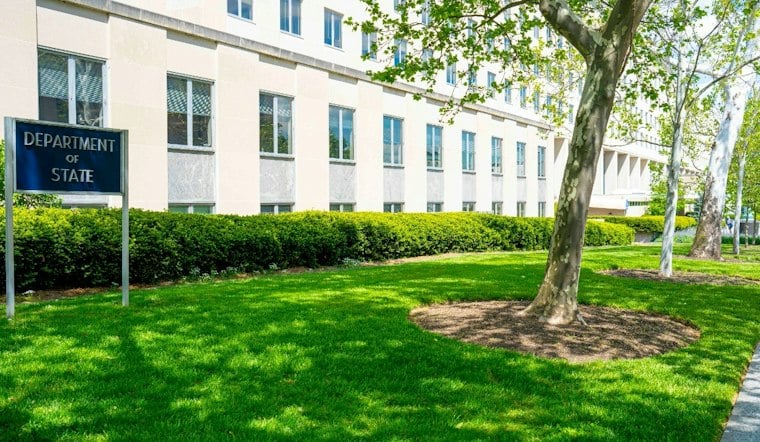
The United States has begun direct talks with Myanmar's military-installed government, reversing years of efforts to isolate the generals who seized power in a 2021 coup. The shift comes as Washington pursues two urgent goals: shutting down scam compounds that have defrauded Americans out of billions of dollars, and securing access to Myanmar's rare-earth mineral deposits that are critical to electric vehicles and wind turbines.
According to Reuters, Michael Vance, confirmed in August 2026 as the State Department's top intelligence official, has played a leading role in the outreach. Vance held talks with junta leader Min Aung Hlaing in Naypyitaw on September 15 and 16, 2026, aimed at securing the release of American businessman Adam Castillo, who had been detained at Yangon airport since June 11, 2026. Those meetings, per the same report, created an opening for further engagement beyond the hostage case. Min Aung Hlaing remains under U.S. sanctions for human rights abuses, the outlet notes.
Castillo credited President Donald Trump for his release, according to the Reuters account. His detention had already prompted back-channel negotiations among White House, National Security Council, and State Department officials, and U.S. and Myanmar officials met in Tokyo in June 2026 as part of that effort. Vance separately met with Myanmar's democratic opposition and ethnic armed groups, the report states.
A Deadly Airstrike Shadows the Diplomatic Opening
The renewed contact comes against a grim backdrop. The Myanmar military conducted an airstrike on a crowded marketplace in Rakhine State last month, killing more than 50 people and injuring scores more, per the same Reuters reporting. Washington has previously declared the 2016-2017 killings and expulsions of Rohingya Muslims a genocide, the outlet notes.
The State Department has said it engages with all groups in Myanmar on issues affecting U.S. interests, and that it continues to raise the need to cease violence and release political prisoners. Department spokesperson Tommy Pigott put it bluntly: “You don't solve problems by ignoring them. You solve problems by addressing them.” The State Department also continues to provide assistance to areas of Myanmar outside military control, according to the report.
Not everyone in Washington is on board. Representative Gregory Meeks criticized the shift toward engagement, saying the policy change was contrary to both U.S. values and interests, Reuters reports.
Scam Centers and Billions in American Losses
The FBI has had direct contact with Myanmar authorities over cyber scams originating from hubs inside the country, which have defrauded Americans out of billions of dollars, according to Reuters. A U.S. Department of the Treasury report published in September 2025 put a sharper number on the damage, estimating Americans lost more than $10 billion to Southeast Asia-based cyber scam operations in 2024 alone — a 66% jump over 2023 losses, according to the U.S. Department of the Treasury.
The human toll behind those numbers is staggering. A 2023 report by the United Nations Office of the High Commissioner for Human Rights estimated that roughly 120,000 people across Myanmar were held in forced-labor conditions inside cyber scam compounds, feeding an illicit regional industry generating up to $40 billion annually. Major scam centers such as Shwe Kokko and Myawaddy operate along the Thai-Myanmar border in territory controlled by military-aligned ethnic militias, the UN report notes.
Rare Earths and China's Tightening Grip
Beyond scam centers, U.S. officials have discussed access to Myanmar's heavy rare-earth deposits, which are used in electric vehicles and wind turbines, per Reuters. China is currently the main importer of those Myanmar deposits. Myanmar accounted for 16% of total global rare-earth element mine production in 2024, ranking as the world's third-largest producer behind China and the United States, according to the International Energy Agency. Its deposits in Kachin and Shan states are especially rich in heavy rare earth elements like dysprosium and terbium.
The stakes sharpened after China enacted sweeping export controls in April and October 2025 on 12 heavy rare earth elements and permanent magnet components, creating supply shortages for international automakers, per the same IEA data. China refines nearly all global heavy rare earth output, leaving Western tech and defense manufacturers reliant on a thin alternative supply chain — one in which Myanmar now looms large.
From Sanctions to Outreach: A Policy Reversed
The pivot marks a dramatic departure from the previous administration's approach. The Biden administration froze Myanmar's assets held at the Federal Reserve Bank of New York and imposed sanctions on senior Myanmar officers and military-linked businesses, according to Reuters. Executive Order 14014, signed February 10, 2021, days after Min Aung Hlaing's coup ousted civilian leadership, remains the legal backbone of that sanctions regime, per the Federal Register. In October 2023, Treasury's Office of Foreign Assets Control went further, issuing Directive 1 under that order to bar U.S. entities from providing financial services to Myanma Oil and Gas Enterprise, the junta's primary source of foreign revenue.
Congress had authorized non-lethal support for Myanmar's opposition in 2022 under what's known as the BURMA Act, enacted as part of that year's National Defense Authorization Act, according to the Center for Strategic and International Studies. That law authorized direct U.S. engagement with pro-democracy groups and non-lethal assistance to People's Defense Forces and Ethnic Armed Organizations. But the Trump administration cut most U.S. opposition-support programs in 2025, Reuters reports, clearing the way for the current outreach to the junta itself.
A Lobbying Campaign Paved the Way
The Myanmar government has hired lobbyists to press its case in Washington, and the roster includes a familiar name in American politics. Roger Stone began consulting for DCI Group on behalf of Myanmar's Ministry of Information in April 2026, according to Reuters. Stone was convicted in 2019, per Reuters' attribution, and was later pardoned by Trump.
The underlying contract is substantial: filings under the U.S. Foreign Agents Registration Act show Myanmar's Ministry of Information signed a one-year, $3 million lobbying agreement with DCI Group in July 2025, with Stone paid $50,000 monthly as a consultant, according to The Guardian. The contract officially tasked DCI Group with improving relations around trade, natural resources, and humanitarian relief. A DCI newsletter warned that Washington risked losing access to critical minerals without engagement with Myanmar, Reuters reports.
By August 2025, the junta had widened its Washington push further, hiring the McKeon Group alongside DCI Group to pursue sanctions relief and normalized ties ahead of elections the regime has planned despite controlling less than half of Myanmar's territory, according to O'Dwyer's. Myanmar had more than 3.6 million internally displaced people in 2025 and over 1.5 million refugees and asylum seekers abroad — a humanitarian toll that continues alongside the diplomatic thaw.



