

























































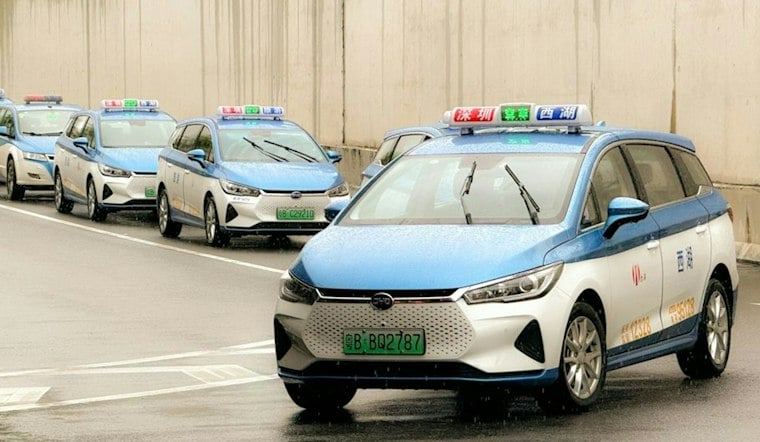
A fleet of 500 cyan-colored electric cars has hit the streets of Los Angeles, operated by full-time, W-2 drivers rather than gig workers, as Vietnamese ride-hailing company Green SM makes its first entry into the United States market. The vehicles, all VinFast VF 8 electric SUVs, are owned and maintained directly by the company, and riders can book them through an app, by phone or simply by waving one down on the street.
The launch marks a notable departure from the model used by Uber and Lyft, which rely on independent contractors driving their own cars. According to the Los Angeles Times, Green SM will start service in Los Angeles with 500 drivers, all employed as full-time staff rather than independent contractors, and the company allows riders to travel across L.A. County and south into Orange County. The Times, which dated the launch to Tuesday, reported that Green SM is a Vietnam-based ride-hailing service founded in 2023 with operations already spanning Asia and Europe, including India, Denmark and the Philippines. A separate account from Vietnamese outlet VnExpress places the launch a day later, on October 14, and describes it as the company's first presence in North America.
Green SM's U.S. leadership is framing the move as a chance to reset how ride-hailing treats its workforce. Christopher Walker, head of operations for Green SM U.S., said per the Times that the company's pricing will be competitive with Uber Comfort, setting fares based on time and distance much like its rivals. Walker also said Green SM arrives in Los Angeles with operational experience and a service culture built across its other markets. Hoang Thanh Hang, Green SM's U.S. chief executive, said the company aims to restore dignity to driving as a profession.
VinFast Vehicles and a Global Track Record
Every car in the Los Angeles fleet was made by VinFast, the top-selling vehicle brand in Vietnam, which completed its transition to building only electric vehicles in 2022, the Times reported. Green SM's own site describes its rides as eco-friendly journeys with zero emissions and no noise, according to greensm.com. The same VnExpress report notes that Green SM already runs electric taxi services in Vietnam, Laos, Indonesia, the Philippines, India, Kazakhstan, Denmark, the Netherlands and now the United States.
The company is leaning on scale to make its case to new riders. Per the outlet's account, Green SM says it has completed roughly 850 million rides and traveled nearly 6 billion kilometers globally, a record the company says has cut more than 800,000 tons of CO2 emissions. To court new customers in Los Angeles, the company is offering a 50% fare discount, capped at $12 per trip, for each rider's first five trips, the same VnExpress report states.
Crowded Streets, New Competition
Green SM's arrival lands at a moment when Los Angeles is experiencing a surge in transportation options, with robotaxi companies ramping up operations across Southern California, the Times reported. Waymo received approval to expand its autonomous-vehicle service across 18 California counties, according to the Los Angeles Times, with the California Public Utilities Commission authorizing the company to operate in San Diego and Sacramento as well as communities in Marin, Napa, Orange and Riverside counties. Waymo has also said it is preparing to launch rider-only service in San Diego while continuing to validate its technology in Sacramento, and Amazon's Zoox has already launched its first paid, driverless rides in Las Vegas.
Green SM's vehicles will compete not just with those autonomous fleets but with Uber, Lyft and traditional taxis for a slice of the city's ride-hailing demand. The Times also noted that California offers new incentives for drivers to buy electric vehicles, and that public officials are working to expand the region's public transit network ahead of the 2028 Olympic Games. For now, Green SM vehicles have not received approval to serve Los Angeles International Airport, the Times reported — a restriction notable given that Los Angeles World Airports requires all ground transportation providers to comply with its Ground Transportation Rules and Regulations, per the agency's own guidance. Riders curious about a company's standing with state regulators can check the California Public Utilities Commission's public listing of transportation network company permits, which includes each carrier's TCP number and current operating-authority status.





