

























































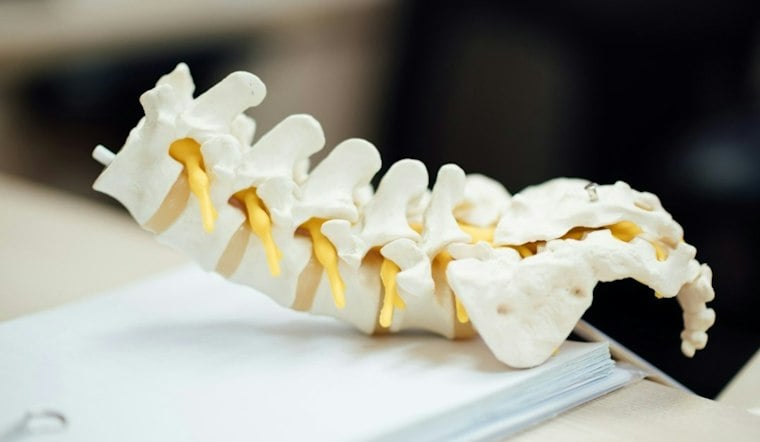
Brogan Walsh, a senior at Wachusett Regional High School, was born with scoliosis and underwent spinal tethering in hopes of returning to the football field. The procedure, which uses screws and a flexible cord instead of permanently fusing the spine, has been described in medical circles as a growth-friendly alternative for young athletes who still want to compete.
Walsh's story was first reported by CBS News Boston, which noted the teen underwent the operation specifically to get back to football. The procedure, formally known as vertebral body tethering, works by inserting small screws into several vertebrae along the outside of the spinal curve, then attaching and tightening a flexible cord to those screws, according to Duke Health. Unlike spinal fusion, which locks vertebrae permanently in place, tethering is designed to guide a still-growing spine toward a straighter shape while preserving movement.
A Fusion-Sparing Option for Growing Teens
The approach is considered a fusion-sparing alternative for managing idiopathic scoliosis in pediatric patients who haven't yet reached skeletal maturity, per a systematic overview published in the International Journal of Spine Surgery. That matters because candidates for the surgery must still be growing, since the procedure relies on that growth to help correct the curve, according to Children's Hospital of Philadelphia. Mass General Brigham lists anterior vertebral tethering among its advanced, growth-friendly treatment options for scoliosis patients.
The operation itself is not minor. It typically takes four to five hours and is performed through small incisions in the chest or abdomen, Children's Hospital of Philadelphia notes. Most children go home two to three days after surgery and are usually back in school within two to four weeks, according to Cincinnati Children's. A second operation can sometimes be necessary if the tether ends up too tight or too loose, or if the spinal curve simply doesn't respond to the treatment, the same hospital reports.
When Can Patients Actually Return to the Field?
Exactly when an athlete can safely return to competitive sports after tethering surgery is not a settled question, and medical institutions don't fully agree. Duke pediatric spine surgeon Robert Lark has said most children return to full activity, including sports like hockey or football, within two weeks of surgery, per Duke Health. Cincinnati Children's, by contrast, advises patients to limit extreme activity and sports for the first three to four months after the procedure. Children's Hospital of Philadelphia offers a middle path, stating that most children return to full activity and are cleared for competitive sports only after a six-week postoperative evaluation.
The dossier of medical sources does not specify which timeline might apply to Walsh, when the senior's surgery took place, or whether a return to the football field has happened or has been medically cleared. A proposed framework published on PubMed in 2026 argues that return-to-sport decisions after scoliosis surgery should weigh more than elapsed time alone, folding in clinical recovery, physical and psychological readiness, and graded, sport-specific exposure — though the authors note the framework is still evidence-informed and requires prospective validation rather than settled clinical practice.
The Trade-offs Behind a Growing Procedure
Vertebral body tethering is often framed as less invasive than fusion, with a faster recovery, according to Duke Health. But the same systematic overview in the International Journal of Spine Surgery found a mixed record: 73.9% of patients studied achieved clinical success, while 15.8% required unplanned reoperations and 52.2% experienced complications of some kind. The review also reported a 22% tether-failure rate and concluded that the overall evidence supporting VBT in adolescent idiopathic scoliosis is critically low, meaning the procedure should be used with caution.
Other young patients have navigated similar paths. Ausley Rudd became the first person in North Carolina to undergo the procedure in 2018, at age 12, per Duke Health's account. She returned to school the following month with no problems and went on to play volleyball; now 17, her spinal curve measures 20 degrees and she has no physical limitations, according to the same report. Whether Walsh's recovery will follow a comparable course isn't addressed in available reporting, and details about the Wachusett Regional senior's surgery date, surgical team, or current condition have not been made public.





