

























































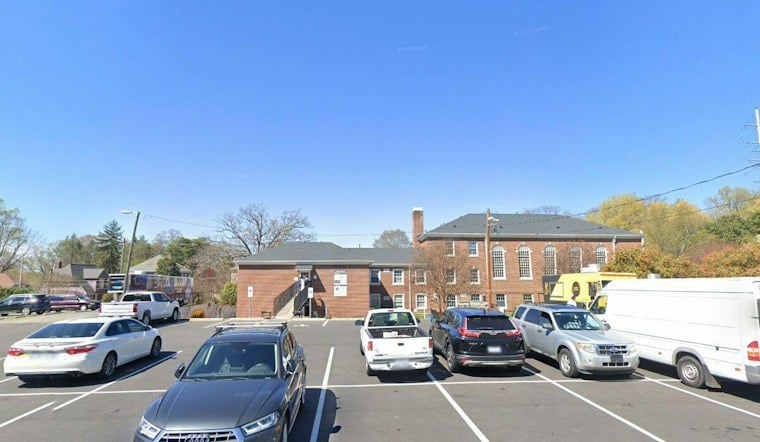
Every Wednesday afternoon from 2 to 4 p.m., a walk-in wound care clinic opens its doors inside City with Dwellings' downtown facility on Broad Street in Winston-Salem, offering free treatment to some of the city's most medically underserved residents. The effort was launched by Caroline Curtin and Taylor Sabato, two MD students at Wake Forest University School of Medicine. Curtin had previously visited a homeless shelter in Philadelphia several times per week, beginning at 5 a.m. to walk and run with residents.
According to The Business Journals, Curtin and Sabato launched what is described as the first student-run organization providing wound care for unhoused people in Winston-Salem, partnering with Atrium Health Wake Forest Baptist Medical Center to get the program off the ground. At their first walk-in clinic on August 19, the pair treated five patients, and volunteers continued providing wound care outside the downtown area for several days afterward, the outlet reported.
The need is significant. Unhoused people walk an average of 15 miles per day, according to research from City with Dwellings, and that kind of sustained walking can cause ulcers and necrotic wounds that go untreated for lack of access to routine medical care. Curtin and Sabato say their goal is to reduce infections and serious complications while supporting patients' dignity and well-being, per the same account.
A Growing Roster of Student Volunteers
The program has already drawn substantial interest from Curtin and Sabato's peers. About 40 of their Wake Forest University School of Medicine classmates signed up to volunteer at the clinics, according to FOX 8 WGHP. Sabato said the students are ready to begin hosting clinics regularly, the station reported.
Curtin said she wants to provide personal connection through care while using the skills she is developing as a medical student, per the Business Journals report. She previously volunteered at a homeless shelter in Philadelphia, visiting several times per week to help residents build routines, establish healthy habits and build community — experience she has carried into the Winston-Salem effort.
Sabato, who majored in public health as an undergraduate, said social determinants of health can significantly affect the patients the clinic is treating, according to the same report. The pair are now fundraising to provide care kits and purchase additional wound care supplies, and a mobile wound care clinic is in the planning stages, though it remains unclear how the team will fund that expansion once their fellowship year ends.
Part of a Statewide Fellowship Network
Curtin and Sabato's project operates under the North Carolina Albert Schweitzer Fellowship, which selected 31 graduate students for its 2026-27 class. Fellows design and implement year-long community service projects focused on gaps in healthcare access, partnering with community-based organizations and receiving community and academic mentorship along the way.
Established in 1994, the fellowship has trained more than 696 healthcare leaders across North Carolina by having graduate health students design and carry out 200-hour community health service projects, according to Campbell University. The program receives financial support from the Blue Cross and Blue Shield of North Carolina Foundation along with medical and health science schools statewide, including Wake Forest University Health Sciences, per UNC Health.
The street medicine program aims to connect patients with the Atrium Health Wake Forest Baptist healthcare system, which will serve patients' broader health needs beyond what volunteers can address on-site. That referral pathway reflects a national model: the Street Medicine Institute defines street medicine as health and social care delivered directly to unsheltered individuals in their own living environments, such as encampments, alleyways and under bridges, in order to minimize barriers to traditional clinical access, according to the National Health Care for the Homeless Council.
Building on an Existing Safety Net
City with Dwellings is a nonprofit that helps people transition from homelessness to stable housing, and the Broad Street facility already anchors several services for the community. The site has hosted foot and vision clinics and a skin cancer prevention program, and Wake Forest medical students also operate the DEAC Foot and Ankle Clinic there, which grew from mobile van outreach into a stationary clinic serving more than 30 unsheltered neighbors per session, according to City with Dwellings.
The organization also serves as the Coordinated Access System Lead for the Winston-Salem/Forsyth County Continuum of Care, operating peer-based outreach to encampments and tracking client engagements through the federal Homeless Management Information System, per the City of Winston-Salem.
The new wound care clinic is one of the services available to people experiencing homelessness in Forsyth County.



