

























































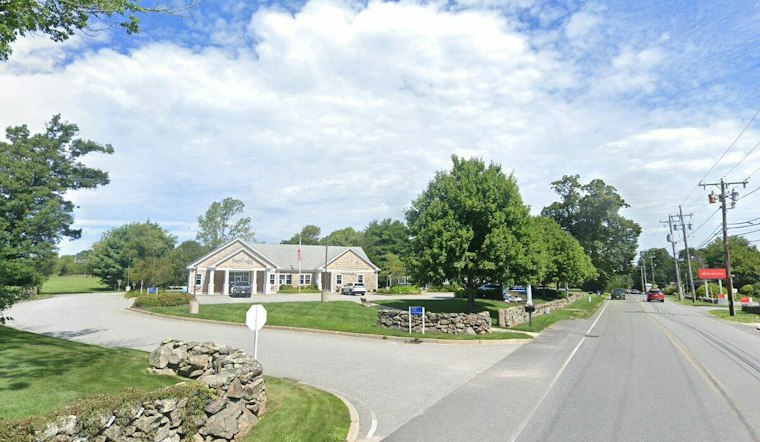
Thousands of donated handbags, wallets, scarves, and vintage jewelry pieces are heading to Westport United Congregational Church later this month, all priced starting at just a dollar, to raise money for a nonprofit that has spent three decades trapping, fixing, and releasing the region's community cats. The Purses for Paws fundraiser runs from 10 a.m. to 2 p.m. on October 24 at the church, located at 500 American Legion Highway, with free admission and free parking.
The sale benefits Habitat for Cats, a local nonprofit formed in the late 1990s by a group seeking to help feral and community cats, according to 1420 WBSM. Volunteer Rebecca Pink visited the station's Townsquare studio Sunday to talk about the organization's work and the upcoming sale, telling WBSM that this fifth Purses for Paws event could be the group's biggest yet. The 2026 inventory includes many designer and brand-name items, the station reports, alongside the thousands of pocketbooks, backpacks, vintage jewelry, and other accessories up for grabs.
Habitat for Cats was established in the mid-1990s as the first organization in Southeastern Massachusetts to adopt the Trap-Neuter-Return philosophy, according to Habitat for Cats, which notes that its early work involved trapping and sterilizing roughly 100 feral cats at the New Bedford hurricane dike. The group was created as an all-volunteer 501(c)(3) nonprofit to address abandoned and wild cat colonies across Bristol County, per the same organization.
How the Trap-Neuter-Return Process Works
Per the WBSM report, community cats are usually a generation removed from human contact and have largely been forgotten by the people around them, yet they still need spaying and neutering, ongoing care, and dedicated caretakers. The organization receives calls from residents who find several community cats gathering in their yards or near their property, the station's report notes, and after assessing each situation, volunteers humanely trap cats that are too unapproachable to handle otherwise.
Once trapped, the cats are brought to veterinary appointments for spaying and neutering before being returned to the communities where they were found, the station notes. Habitat for Cats also works with no-kill shelters to make kittens discovered during trapping available for adoption. Fundraising proceeds, including those from Purses for Paws, go toward covering the veterinary service costs tied to this cycle, and the group only holds this particular fundraiser every other year, collecting donations for it starting each spring.
Why Spay and Neuter Timing Matters
The urgency behind that veterinary spending is backed by national research. A national evaluation of 103,643 feral cats admitted to Trap-Neuter-Return programs found that 53.4 percent were intact females and 15.9 percent were pregnant at the time of surgery, according to a 2006 study published in the Journal of Feline Medicine and Surgery. Researchers in that study noted that feline pregnancy rates peak between March and April, with an average litter size of 4.1 fetuses, underscoring why timely surgery for free-roaming cats carries outsized impact.
That focus on unowned cats also reflects a broader pattern in pet ownership statistics. State pet population survey data from the MSPCA Dorr Research Study found that an estimated 94 percent of owned pet cats in Massachusetts are already spayed or neutered, according to the Cat Fanciers' Association, meaning unowned community cats account for the primary driver of feline overpopulation in the state. Any cat trapped by Habitat for Cats that is six months or older must also be vaccinated against rabies under Massachusetts law, a requirement built into the group's veterinary protocol, per Mass.gov.
Deep Roots in the Westport Community
While Habitat for Cats runs its Trap-Neuter-Return operations out of donated office space at 1322 Ashley Boulevard in New Bedford, provided by Panagakos Development owners Michael and Jen Panagakos, the organization's mailing address remains a North Dartmouth post office box, according to the group's own site. Its ties to Westport specifically run deep: Lees Market donates 1 percent of collected store sales receipts back to Habitat for Cats and hosts a food donation bin to help local cat caretakers, a partnership that generated $1,355.63 for the rescue in 2020 alone, the organization's newsletter states.
Westport's municipal government has also formally recognized the partnership. Town annual reports document an ongoing collaboration between Westport Animal Control, Habitat for Cats, and Animal Advocates to spay, neuter, and rehome stray and feral cats across town, with animal control officers coordinating directly with the nonprofit's trappers to handle cat complaints, according to the Town of Westport's 2014 annual report.
The organization has shown resilience during past disruptions, too. When in-person events like Purses for Paws were temporarily suspended during the COVID-19 pandemic, Habitat for Cats sustained its veterinary funding by holding virtual painting classes and selling hand-sewn face masks in Westport retail shops, with volunteers crafting the items specifically for sale in local gift stores during lockdowns, per the group's own newsletter archive.
As an all-volunteer 501(c)(3), Habitat for Cats directs all monetary gifts and event proceeds toward veterinary care, humane traps, and colony feeding supplies rather than paid administrative staff, according to the organization. For residents hoping to snag a bargain while supporting that work, Purses for Paws offers a low-cost entry point, with free admission, free parking, and thousands of items priced starting at just $1, according to the event listing on Eventbrite.





