

























































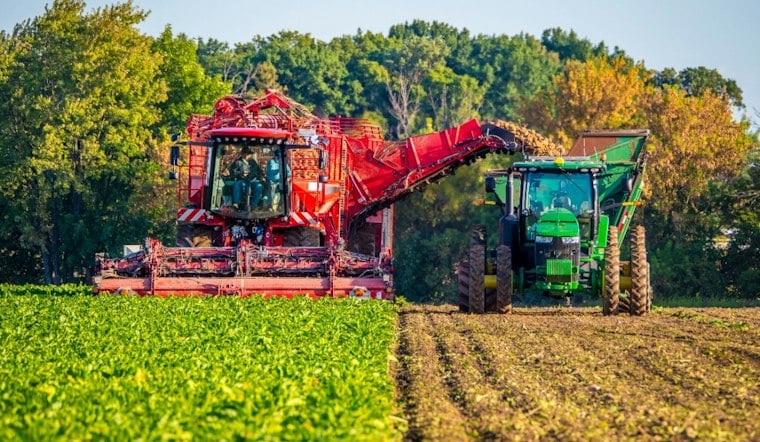
Gov. Gretchen Whitmer declared a state energy emergency on Monday, temporarily lifting Michigan's ban on dyed diesel for vehicles carrying farm or wood-harvester plates. The move lets those trucks and tractors legally burn the cheaper, untaxed fuel on public roads through no later than Dec. 31, as diesel prices in the state hit $6.49 a gallon.
According to Michigan Advance, the order suspends restrictions that normally bar vehicles with those plates from using public roads with dyed fuel in the tank, and only vehicles bearing an unexpired farm or wood-harvester plate are covered. Dyed diesel is untaxed fuel colored red to set it apart from the diesel most vehicles burn on the road, and it is typically reserved for off-road uses like tractors and logging machinery, the outlet reports. A year ago, Michigan diesel averaged $3.66 a gallon, compared to Monday's $6.49, per the same account.
Whitmer said the order was meant to ease pressure on the people who keep Michigan's agricultural economy running, allowing eligible vehicles to use dyed diesel on the state's highways without risk of penalty, the station's report notes. As MLive.com reports, the governor pointed to the Iran war as a driver of rising prices and said diesel costs were squeezing farmers and loggers during harvest season, even as she acknowledged she lacks control over federal actions on fuel policy.
A Coalition Push That Predates the Order
The relief follows a letter led by the Michigan Farm Bureau and cosigned by 19 other state commodity and agribusiness organizations, which asked Whitmer to issue an executive order providing 90 days of temporary relief, according to Michigan Farm News. The group estimated that higher diesel prices add $13.50 per acre to corn harvesting, $75 per acre to apple harvesting and $150 per acre to potato harvesting. Per MLive, the coalition that pressed for the change included 20 organizations and warned that record fuel prices were pressuring farmers, loggers and supporting businesses during harvest.
Michigan Farm Bureau president Ben Lacross praised the governor's order as providing relief during harvest, saying the savings help farmers and loggers bring in the harvest and keep agricultural products moving, per MLive's reporting. Justin Knepper said the switch to dyed diesel could save farmers and loggers upwards of 50 cents per gallon over the next three months, according to Michigan Advance.
Federal Action and a Wave of Other States
Whitmer's declaration follows similar moves taken by other states, Michigan Advance reports, and comes after President Trump issued an executive order on Oct. 5 directing federal officials to temporarily delay the federal tax on dyed diesel used on public roads and encouraging states to ease their own restrictions. Both Whitmer's order and Trump's order lift those restrictions through Dec. 31, per the outlet.
More than a dozen states had announced measures to help lower diesel costs this fall, according to Brownfield Ag News. Michigan Farm Bureau said five other states had already temporarily suspended enforcement of dyed-diesel restrictions for agricultural and forestry activities during harvest, and South Dakota and Iowa were among states reported to have eased restrictions or waived taxes on dyed diesel, as noted by PBS NewsHour. In Nebraska, Gov. Jim Pillen signed two executive orders on Sept. 24 waiving state penalties for highway use of dyed diesel for 90 days and allowing certain diesel-tax refunds, according to Nebraska Public Media.
Skepticism Over How Much the Fix Will Help
Not everyone expects the change to move the needle much. Farmers, truckers and economists say a move to cut taxes on diesel will provide little relief from record-high fuel prices, PBS NewsHour reports, noting that diesel averaged $6.30 a gallon nationwide on the Wednesday it cited, more than 70% higher than a year earlier. Michigan Farm Bureau separately said dyed diesel prices had increased more than 72% over a 10-month period.
Mark Griffin, president of the Michigan Petroleum Association and Michigan Association of Convenience Stores, said most gas stations do not carry dyed diesel and that its use would have little impact on the general public, since it is unavailable at most ordinary gas stations, per MLive. Michigan farm plates are reduced-cost plates for trucks and vehicles used in farming operations, while wood-harvester plates are reserved for trucks used in logging operations or transporting logging equipment, per the state.
Michigan law otherwise bars operating a vehicle on public roads or highways with dyed diesel in its fuel-supply tank, according to the Michigan Legislature. Whitmer's executive order suspends statewide the provisions of the Motor Fuel Tax Act barring the sale, use or holding of dyed diesel for taxable uses, but only for vehicles on public roads bearing an unexpired farm or wood-harvester plate, according to the State of Michigan. Michigan Farm News notes that the current move echoes a 2005 executive order from then-Gov. Jennifer Granholm, issued after fuel-supply disruptions tied to Hurricane Katrina.





