

























































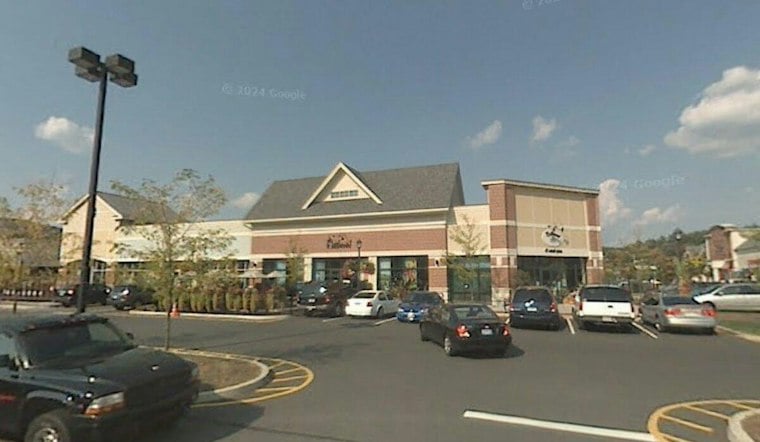
A food hall chain built on robotics, licensed celebrity-chef menus, and a central commissary system has quietly multiplied across Connecticut, growing from three storefronts in 2025 to 12 locations today, including one that just opened in Canton. Wonder, the venture founded by billionaire Marc Lore, now operates roughly 160 outlets stretching from New Hampshire to Delaware, and it is aiming for 400 locations before 2028, with plans to push into Texas this winter.
The company's newest Connecticut spot opened at the Shops at Farmington Valley in Canton on October 1, becoming the chain's 12th outlet in the state, as reported by the Hartford Courant. Wonder entered Connecticut in 2025 with locations in Fairfield, Milford and Stamford, then expanded through 2026 into West Hartford, Newington, Darien, New Haven, Trumbull, Westport, Hamden and Danbury. A hiring advertisement has also pointed to an anticipated South Windsor location, according to the same Courant report.
Wonder markets itself with the slogan “many restaurants, one order,” offering meals from cuisines including Mexican, Chinese, Thai, Mediterranean, Italian and Indian alongside pizza, salads, barbecue, poke and desserts, all prepared at a central commissary before being trucked to local storefronts for final cooking. The menu leans on licensed names like Marcus Samuelsson's StreetBird alongside company-created brands Alanza Pizza and Dabba, with entrees ranging from Bobby Flay steaks and Marc Murphy's lemon oregano salmon to lamb vindaloo, panang shrimp curry, and kids' options like chicken nuggets and mac and cheese.
From Food Trucks to a Multibillion-Dollar Bet
Wonder started in 2018 as a fleet of mobile food trucks before pivoting to app-based pickup and delivery, eventually opening its first fixed storefront in New Jersey in 2023, per the Courant's reporting. The company has since invested hundreds of millions of dollars in culinary and software engineers over five years, employing around 200 full-time staff in those roles as it worked toward a goal of fitting 30 different restaurant concepts into a space the size of an average McDonald's.
That ambition has been funded by a string of major deals. Wonder acquired the Blue Apron meal-kit business for $103 million in 2023 and bought Grubhub for $650 million in 2025, then announced a $450 million partnership with DoorDash in 2026. Separately, Restaurant Dive reported that Wonder sold Grubhub's campus dining business to DoorDash for $300 million while DoorDash made a $125 million equity investment directly in Wonder. In July 2026, Wonder raised $650 million in Series D funding at a $9 billion pre-money valuation, pushing its total capital raised since 2021 past $3 billion, with backers including Accel, Google Ventures, NEA and new investor ARK Invest ahead of a planned 2027 initial public offering, per the same Restaurant Dive report.
Robots in the Kitchen, No Master Chefs on Site
Unlike a traditional restaurant, Wonder does not employ a large team of master chefs at its local outlets. Instead, each location operates as a collection of ghost kitchens functioning as one operation, with a single small kitchen handling super-compact storefronts that skip wait staff and full-service amenities, according to the Courant. The company paid $186 million in 2025 to acquire Spyce and its Infinite Kitchen and Infinite Makeline technology, equipment Wonder says can assemble roughly 500 bowls per hour, per a Fortune video cited in the Courant's reporting.
Wonder rolled out the Infinite Makeline at its Midtown East location in New York in September 2026. A company spokesman said the system handles repetitive, high-precision assembly work and that its rollout did not reduce store-level headcount. Wonder North America CEO Tony Hoggett has described his goal as combining artificial intelligence, kitchen robotics and autonomous delivery into a single end-to-end food platform, according to the Food Institute. Hoggett, a former Amazon Senior Vice President of Worldwide Grocery Stores who managed Amazon Fresh, Whole Foods Market and Amazon Go, joined Wonder as Chief Operating Officer in October 2024, as Restaurant Business Magazine reported at the time.
Founder Marc Lore has promised the model delivers fast cooking with lightly trained labor. Lore previously co-founded Quidsi, the parent of Diapers.com, which sold to Amazon for $545 million in 2011, and Jet.com, which sold to Walmart for $3.3 billion in 2016 before he led Walmart's U.S. e-commerce business, according to GeekWire. Wonder's broader ambition, per the Courant, is to become a fully autonomous food system capable of planning, producing and delivering personalized meals at scale — an effort that also includes a 2026 partnership with drone firm Zipline to test autonomous meal delivery from its food halls, as detailed by Food On Demand.
Media Deals, Layoffs, and an IPO on the Horizon
Wonder has also moved to fold media and advertising into its ecosystem, acquiring digital food and lifestyle network Tastemade for $90 million in March 2025 as part of a strategy to build what the company calls a mealtime super app, according to Retail TouchPoints. The acquisition enables shoppable video programming that lets viewers buy featured meals directly through the Wonder app, per that report. Wonder has promoted the expansion under a 2026 advertising campaign titled “Food Without the Fight,” paired with the tagline “satisfy every craving, without compromise.”
The growth has not come without cuts. Wonder laid off 7% of its staff in 2026 while preparing for its planned 2027 IPO, telling Nation's Restaurant News it was streamlining at Grubhub. The company also filed a New Jersey WARN notice covering 533 production and distribution employees as it closed facilities in Cranford and Fairfield, consolidating regional supply operations into a single 160,000-square-foot plant in Swedesboro expected to open in November 2026 and employ about 550 workers at full capacity, Hoodline previously reported. That Swedesboro warehouse was previously operated by meal-kit giant HelloFresh, which laid off nearly 400 employees when vacating the site shortly before Wonder signed its lease, according to the Philadelphia Inquirer.
Critics Say the Model Commoditizes Dining
Not everyone is cheering the expansion. Jen Faigel, who advocates for independent restaurants in Greater Boston through Commonwealth Kitchen, described Wonder as “the continued commoditization of food,” arguing that companies like it are built to make money rather than feed people. Wonder has faced broader criticism over harming local independent restaurants and operating what detractors call a robotic, soulless business, alongside accusations that it dominates Grubhub listings to bury smaller competitors, per the Courant's reporting.
Wonder has said its Connecticut dishes are cooked, assembled and finished to order at local kitchens, using grilling, roasting, baking, frying, simmering and sous vide techniques, though some sauces and slow-cooked bases may be prepared ahead, according to a company statement cited by the Courant. A Wonder hiring advertisement has told prospective team members they would help bring Michelin-starred and celebrity chef menus to guests. As the chain pushes toward its 400-location target and a multibillion-dollar IPO next year, its Connecticut footprint — now a dozen towns deep and funded partly through private equity — stands as one of the clearest local test cases for whether the automation-heavy model can scale without losing what made restaurant dining feel personal in the first place.





