

























































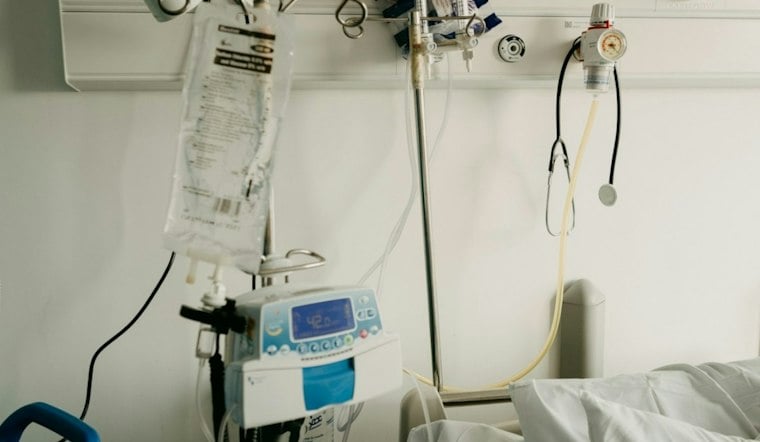
A year ago, 12-year-old Sofia de la Lastra of Yorktown was a healthy kid who loved painting her nails and swimming in her backyard pool. Today she spends ten hours a night hooked to a dialysis machine while she sleeps, and her family is asking the Hampton Roads community to consider becoming her living kidney donor.
Sofia was admitted to Children's Hospital of The King's Daughters in Norfolk on October 8, 2025, after her kidneys suddenly began failing, according to Williamsburg Yorktown Daily. She was diagnosed with two rare autoimmune diseases: anti-neutrophil cytoplasmic antibody vasculitis and Goodpasture syndrome, conditions that can cause the immune system to attack the body's own tissue and damage organs, per the same report. She started dialysis almost immediately after being admitted, and a subsequent kidney biopsy showed her kidney function was not expected to return absent a miracle.
A Diagnosis So Rare It's Barely on the Books
The combination Sofia was diagnosed with is extraordinarily uncommon. Medical studies published by the National Institutes of Health show that concurrent dual positivity for ANCA vasculitis and anti-GBM, or Goodpasture, antibodies occurs in fewer than one case per million people annually, often triggering rapid-onset renal failure that requires immediate hemodialysis. Sofia's mother, Melissa de la Lastra, said a common cold or even chemical exposure can trigger the autoimmune condition and set off rapid organ deterioration, the Williamsburg Yorktown Daily report notes.
Sofia now receives hemodialysis at CHKD three times a week, plus daily ten-hour peritoneal dialysis while she sleeps at home, according to the same report. Hemodialysis filters her blood through a machine, while peritoneal dialysis uses the lining of her abdomen to do the work instead. Since switching to peritoneal dialysis, Sofia takes two lower-dose blood pressure medications, down from more than six she needed while on hemodialysis alone.
Still a Kid, Despite the Machines
Her family describes her as currently stable, though she faces these conditions for life. A kidney transplant would still require a lifetime regimen of anti-rejection medications, the outlet reports. Thanks to her abdominal dialysis tube, Sofia can still swim in the ocean or her backyard pool, and she's homeschooled, though she can't travel overnight because of the volume of equipment her care requires.
Sofia still loves nail art, painting, dollhouses, swimming, rollercoasters, the Jonas Brothers, sloths and highland cows, and she says she wants to own a nail salon when she grows up, according to the Williamsburg Yorktown Daily. Through the Make-A-Wish Foundation, she received a Portuguese water dog puppy named Tallulah — children undergoing chronic hemodialysis for end-stage renal disease are medically eligible for such wish grants, according to CHKD. Sofia's family is now searching for a local organization to train Tallulah as a service animal.
Why Her Family Wants a Living Donor
Karl Neumann, program manager for Sentara's kidney pancreas transplant clinic, said living kidney donations are generally better than deceased organ donations. That view lines up with national clinical data: transplants using living-donor kidneys function for an average of 15 to 20 years, compared to 8 to 12 years for kidneys from deceased donors, according to Keck Medicine of USC.
Finding any kidney, living or deceased, remains a steep climb nationally. Federal Organ Procurement and Transplantation Network data from August 2026 show more than 109,000 people are listed on the national organ transplant waitlist, with kidney candidates making up over 90,000 of them, according to organdonor.gov. Under federal OPTN allocation rules updated in 2026, pediatric candidates under 18 do receive priority points for high-quality deceased donor kidneys with a Kidney Donor Profile Index score below 35%, which is meant to help children reach transplant faster than adult candidates, according to the Health Resources and Services Administration.
What Living Donation Actually Involves
Prospective donors go through health, psychological and social screening to ensure they're healthy enough to donate and stable enough to recover well, the Williamsburg Yorktown Daily reports. The surgery itself uses small incisions for a laparoscopic nephrectomy, which may be hand-assisted or robotic, and donors typically stay just one to two days in the hospital afterward, returning to work and their normal routines within two to three weeks.
Cost is not a barrier for willing donors. Living kidney donor candidates pay none of the medical expenses for testing, surgery or follow-up care, since those costs are covered under federal guidelines by the recipient's health insurance, according to Sentara Health. And donors are protected long-term too: under federal OPTN rules, a living donor who later develops kidney failure themselves is granted top-tier priority points on the national deceased donor waiting list. Neumann himself was a living kidney donor in 2019, per the outlet's reporting.
Sentara Transplant Center at Sentara Norfolk General Hospital is the only adult transplant facility serving Hampton Roads and eastern North Carolina, and has performed living donor kidney transplants since 1972, according to Sentara Health. CHKD, meanwhile, operates Virginia's only dedicated pediatric dialysis unit and pediatric-specific kidney transplant program, having completed its 100th pediatric kidney transplant in March 2024 after 19 years running the program, per CHKD. Living kidney donor screening is confidential and available online through Sentara for anyone in the region considering stepping forward for Sofia.
Sofia's family has set up sofiaswish.com with more information about her story and ways the community can help.





