

























































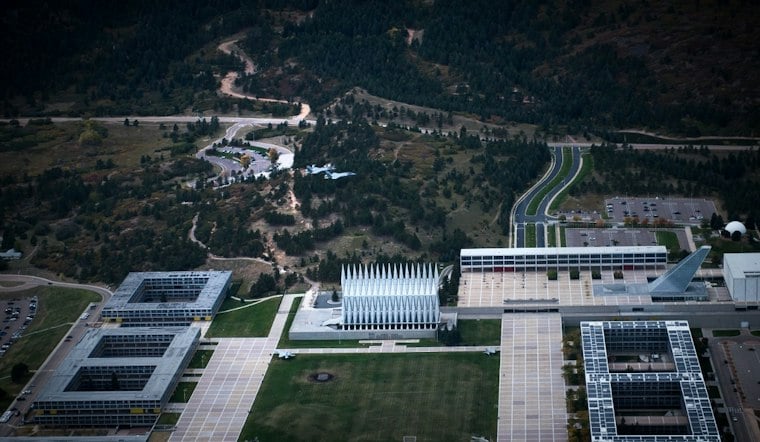
Four single-engine, two-seat aerobatic planes thundered over the U.S. Air Force Academy’s Cadet Wing during noon meal formation Thursday, marking the public debut of an aircraft the Academy says is unlike anything it has flown before. The T-19A Kestrel is the Academy’s first aircraft dedicated to powered aerobatic training, and its arrival sets up a new chapter for cadet airmanship in Colorado Springs.
According to the United States Air Force Academy, the four donated aircraft soared over cadets in a flyover that doubled as an acceptance ceremony. At the controls were some of the service’s top brass: Air Force Chief of Staff Gen. Ken Wilsbach, Academy Superintendent Lt. Gen. Paul Moga, Academy Provost Brig. Gen. James Valpiani, and Lt. Col. Evan Backes, a member of the initial training cadre. As reported by the Colorado Springs Gazette, Wilsbach himself flew in one of the arriving planes.
From Civilian Stunt Plane to Military Trainer
The T-19A Kestrel was previously known as the GB1 GameBird, a U.S.-produced plane that, per the AOPA, is a high-performance, two-seat, unlimited aerobatic aircraft designed and manufactured by Game Composites. The Gazette reports the plane cruises at roughly 230 miles per hour, and pilots can maintain control even when it slows below the speed typically required for level flight — a quality suited to the demanding maneuvers of competitive aerobatics.
Wilsbach described the feel of the cockpit in blunt terms, telling the Gazette, “If you're used to sitting in a Mercedes or BMW, you'll be right at home because that's the quality of these things.” The planes were not cheap: The War Zone reports the gift of the four aircraft was valued at $3 million, and the Air Force invested roughly another $400,000 to supplement the donation with initial spares, support equipment and aircrew gear, according to The War Zone.
Ongoing costs diverge slightly depending on the source. The War Zone describes the annual sustainment cost for the fleet as just over $1 million, while Breaking Defense reports the service expects to budget approximately $1 million a year to keep the aircraft flying.
A Donor's Pitch and a Fast Timeline
The push to bring powered aerobatics to the Academy traces back to Wilsbach himself, who proposed the idea, according to the Gazette. Donor Andrew McKenna raised the money and purchased the planes, signing a contract about a month after Wilsbach's proposal — a turnaround quick enough that Wilsbach said he did not expect delivery of the planes in less than a year, per the Gazette's reporting.
McKenna, who the Gazette reports formed a friendship with Superintendent Moga, described the aircraft as Formula 1 race cars and said cadets deserve the best. He credited his own background in aviation with teaching him responsibility, attention to detail, risk management and preparation — lessons he said he wants the Academy's cadets to learn as well.
Building Toward a Competitive Team
Six active-duty pilots from the Academy's staff and the 306th Flying Training Group were selected to form the initial training cadre, the Academy says. Cadet participation and a nationally competitive aerobatic and demonstration team are described as long-term goals rather than an immediate rollout.
Moga said the planes will supercharge the Academy's airmanship programs and give cadets a new challenge, according to the Academy's statement, adding that cadets will learn data processing, risk management, adapting under pressure and commanding airspace. Air Force leaders also expect the planes to serve as a recruiting tool at airshows and aerobatic contests, the Gazette reports. Wilsbach, for his part, urged cadets to approach the aircraft with discipline: “Learn how to master this machine, do it safely, manage your risk along the way. You take it on the road and bring back trophies.”
A Broader Push for Pilots
The Kestrel's debut arrives as the Air Force works through a persistent pilot shortage, though sources differ on its scale. Breaking Defense reported a shortfall of 2,000 aviators that officials expect will likely take years to resolve, while a Congressional Research Service report cited a 2024 estimate from the service's then-vice chief of staff putting the Air Force 1,900 pilots short of its identified requirement of 19,136. The two figures come from different timeframes and methodologies.
The Air Force is separately working to field the T-7 Red Hawk, a training jet intended to replace the aging T-38 Talon, Breaking Defense notes. The Academy already runs a sizable flight program beyond the new Kestrels — an Air Education and Training Command fact sheet describes the Academy's soaring program as year-round and calls it the largest glider operation in the world, per the Air Education and Training Command. The T-19A now adds a powered, aerobatic dimension to that airmanship pipeline, one the Academy hopes will eventually send cadets chasing trophies on the national competition circuit.


