

























































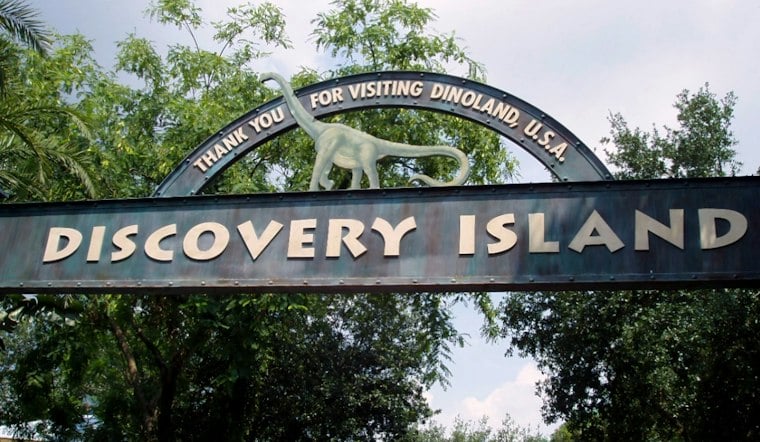
Disney's Animal Kingdom opened at Walt Disney World on April 22, 1998, launching without a single thrill ride and leaning instead on habitats built to feel less like a zoo and more like a journey into the wild. Nearly three decades later, the park is tearing out its dinosaur-themed corner to make way for something entirely different: an 11-acre land built around Encanto's Madrigal family and a reimagined Indiana Jones adventure.
The park's origins trace back to the late 1980s, when Michael Eisner proposed building an animal-themed park, according to AllEars.Net, with Marty Sklar then heading Walt Disney Imagineering. Imagineer Joe Rohde has said the idea was Eisner's from the start, telling The Walt Disney Company, “It was Michael Eisner's idea, and from day one I worked with partners to see it come to life.” Rohde said he became involved in the project in late 1989, and bringing it to life required, in his words, “intensive research to support the realism of the park and to learn the rules of the zoological and conservation world.”
Research Trips Shaped a Park Billed as Not a Zoo
That research took Rohde's team to Kenya, Tanzania, Zanzibar, Thailand, Nepal, Bali, India, Bhutan, Mexico, and East Africa, per the same AllEars.Net account, as the designers sought to experience the cultures and environments the park would eventually recreate. Disney marketed the result as a new species of theme park celebrating living, extinct, and mythical animals, promoting it under the tagline “Nahtazu,” meaning “not a zoo.” The land itself had a practical advantage too: Epcot construction crews had scouted the property in the early 1980s looking for space where future construction wasn't planned, and the site Animal Kingdom eventually occupied had sandy soil that drained well for planted foliage, even after being used to test fireworks displays before the park was built.
Landscape architect Paul Comstock was responsible for procuring and designing the park's greenery, including the layout for Kilimanjaro Safaris, built to evoke an authentic African savannah. Animal-care director Rick Barongi acquired a diverse assortment of animals and birds from around the country, while Zofia Kostykro helped plan the park more broadly. Disney formed an advisory committee of outside experts to oversee habitats, feeding, and veterinary care, a board that Roy E. Disney helped establish and that drew members from zoos, educational institutions, and conservation and wildlife foundations, according to AllEars.Net.
A Conservation Operation Running Around the Clock
Today the park is home to animals representing many species, and staff prepare diets and deliver food every day. Animal Kingdom's animals require care around the clock, 365 days a year. Disney says its Conservation Fund has directed more than $125 million to nonprofit wildlife groups, though a more recent report from Disney Parks Blog puts the figure at $141 million invested to date.
The fund has grown alongside a park that didn't open with a single thrill ride. Expedition Everest arrived in 2006 and Pandora – The World of Avatar in 2017, reshaping what had once been a strictly naturalistic lineup, and the Tree of Life Theater swapped out the long-running It's Tough to be a Bug! for Zootopia: Better Zoogether!, while Conservation Station features Bluey's Wild World, an interactive experience with games and dancing.
DinoLand Gives Way to Tropical Americas
Now the park's biggest transformation in years is underway. Tropical Americas will replace DinoLand, U.S.A., which fully closed in February 2026, according to MickeyVisit.com. The new 11-acre land is set in a fictional village called Pueblo Esperanza, or the village of hope, and will celebrate different cultures with attention to the environment, according to Disney Parks Blog. Disney said work was set to begin later in 2024, and the land is slated to open in 2027.
Pueblo Esperanza will include an animal-themed carousel and a large-scale counter-service restaurant replacing Restaurantosaurus, per AllEars.Net. The land's centerpiece will be the first-ever Encanto-themed ride-through attraction, officially titled Antonio's Fiesta de Encanto, featuring the Madrigal family and Antonio's rainforest room, Disney Parks Blog reports. Meanwhile, the existing Dinosaur ride is being reimagined as Indiana Jones and the Myth of the Jade Serpent, reusing the same ride system with a new storyline, according to Attractions Magazine.
Construction Progress and Open Questions
Progress has been visible through 2026. By July, crews were working on village theming, Casa Madrigal, and the carousel station, according to the same Attractions Magazine report, and by August, workers were welding the main entrance archway while a clock tower and marketplace structures rose above the construction walls, per Disney Tourist Blog. That same outlet has speculated that Tropical Americas could open in phases, with Pueblo Esperanza potentially debuting before the Encanto area and the Indiana Jones ride, though that remains speculation rather than a confirmed Disney plan.
As Animal Kingdom undergoes major changes, the park that opened more than 28 years and six months ago without a single thrill ride is once again reinventing a major corner of itself for a new generation of guests.




