

























































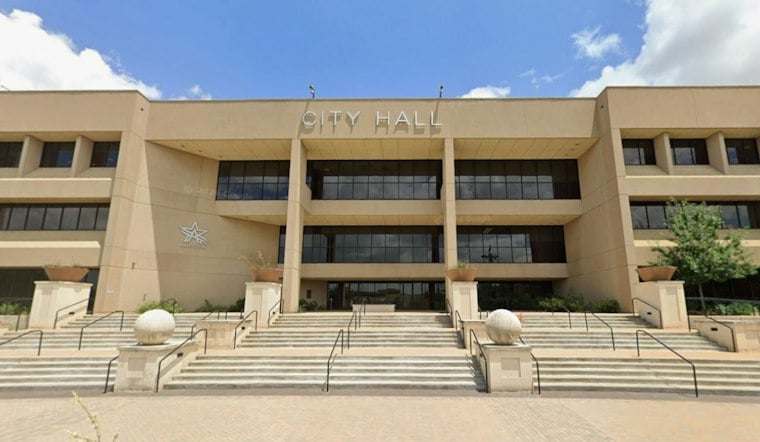
Arlington City Council voted unanimously Tuesday night to waive roughly $550,000 in development fees for The Knox, a planned workforce housing project that remains millions of dollars short of funding. The waiver and a new Neighborhood Empowerment Zone remove one hurdle for the two-phase development off South Watson Street near Carl Knox Jr. Park, but do not settle how the remaining gap will be closed.
The Knox is expected to include 82 multifamily units and 69 senior units, according to Fort Worth Report. Austin-based developer Structure Development asked the city to rezone about 6 acres of land from commercial to planned multifamily development zoning, and the City Council approved the original zoning request for the project in August 2025. Since then, the development has added extra land parcels beyond that initial request.
One of those additional parcels, located near the central apartment land, is currently a car wash. City staff identified the site for its potential to become what officials called an “additional community amenity.” Another parcel to the south was identified in June 2026 by Structure Development as a possible second access point, after city staff recommended in 2025 that the property have a second entrance because its original access point sits in the 100-year floodplain. Altogether, the land purchases and associated construction are estimated to cost between $1.8 million and $2.3 million.
A Funding Gap With No Settled Fix
The financing lined up so far includes roughly $17.4 million in Low-Income Housing Tax Credit equity and about $24.4 million in construction and permanent loans that are pending, according to the Fort Worth Report. City Manager Trey Yelverton told council members there is no settled solution for the remaining gap.
Yelverton said the fee waiver does not eliminate the shortfall; it signals the city's support for the investment. The developer plans to pursue the state's tax credit process, additional financing and cost savings, the report notes.
Before settling on the fee waiver, the city considered other options, including applying jointly with Structure Development for U.S. Department of Housing and Urban Development grants, tapping the city's venture capital fund, or directing the developer toward local banks for low-interest loans. City officials ultimately selected the empowerment zone option for its potential to spur development or redevelopment in the surrounding area.
Officials Point to Broader Payoff for the Area
Troy Williams, Arlington's director of community development, said the zone could help boost development in the surrounding area beyond The Knox itself. The Neighborhood Empowerment Zone also includes a strip mall south of the planned apartments and other vacant land, and Williams said long-term development benefits in the area could eventually recoup the fees the city is waiving now. He added that commercial development opportunities nearby could help spur redevelopment and form what he described as a gateway into the city.
Not every constituent is convinced. Council member Raul Gonzalez said he received an email from a resident questioning whether the city would ever recoup the waived fees and calling the arrangement unfair to taxpayers. Gonzalez said he nonetheless believes the project benefits the surrounding neighborhoods and the city as a whole.
The development fees being waived typically cover costs incurred by the city's Planning and Development Services Department, which has updated its fee schedule over the past two years in an effort to bring charges for application reviews and site inspections closer to the actual cost of providing those services.
What Happens Next
The Knox's development plan goes before the Planning and Zoning Commission on Nov. 18. This marks the first time the city has designated a Neighborhood Empowerment Zone since May 2021, when it created one in central Arlington for a different project, Kestrel on Cooper, which had faced a roughly $1.2 million funding gap of its own. Kestrel on Cooper is now a 90-unit mixed-income community in central Arlington, with 85% of its units affordable at 30%, 50% and 60% of area median income and the rest offered at market rate, according to Affordable Housing Texas.
The Knox is not the only major development Arlington has recently helped finance. In August, council members approved a far larger incentive package for a Downtown Arlington development, agreeing to provide roughly $19.5 million from the city and up to $16.4 million from the downtown area's tax increment reinvestment zone. In exchange, that developer must spend at least $123 million on a project that is planned to include at least 390 housing units, office and retail space, and a 600-space parking garage.
What County Housing Data Shows
A 2024 Census estimate puts 36.04091% of Tarrant County households in the cost-burdened category—spending 30% or more of income on housing. The measure includes renters and homeowners, according to FRED, the Federal Reserve Bank of St. Louis, which uses U.S. Census Bureau data. This countywide figure alone does not show how renter cost burden has changed over time, provide an Arlington-specific renter measure or compare renters with Texas overall.
The stakes for projects like The Knox are underscored by broader affordability pressures across the state. The National Low Income Housing Coalition defines renter households spending more than 30% of their income on housing costs and utilities as cost burdened, and those spending more than half of their income as severely cost burdened, according to the coalition's statewide data. For now, whether The Knox closes its own funding gap will depend on the tax credit process, financing arrangements and savings that Structure Development is still pursuing.




