

























































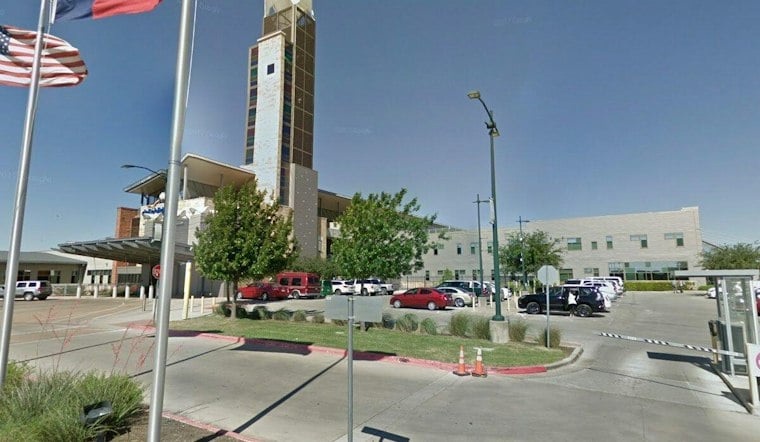
Dell Children's Medical Center has shut down its hospice-at-home program, eliminating what families say was Central Texas's only option for dying children to receive hospice care in their own homes. The shift moves care to an outpatient clinic setting, and at least one mother says she found out her daughter would lose home visits just two weeks before the change took effect.
Dell Children's at Home launched in 2022 as a way to bring hospice care directly into the homes of children facing terminal or life-limiting illness, according to the Austin American-Statesman. At the time, Dell Children's described it as the only pediatric hospice centered in a children's hospital in Texas, a milestone statesman.com reported when the program began. Dell Children's has not said publicly why it ended the home-based model, and the hospital has since removed its pediatric hospice webpage, per the Statesman's reporting.
Per Community Impact, care is now centralized at Dell Children's Comprehensive Care Clinic, located on the second floor of Austin ISD's Rosedale School campus. The clinic serves children 17 and younger with complex medical needs, offering specialized symptom management, coordinated clinic appointments and daily telephone check-ins in place of home visits. The outlet reports that complex-care referrals are already underway and that individualized transition plans have been created for each child, with families directed to call Dell Children's pediatric palliative care office at 512-324-0197 with questions.
A Mother's Two-Week Notice
Shannon McLennan, a nurse who previously worked at Dell Children's, told the Statesman she learned her 19-year-old daughter Oli would lose hospice care just two weeks before publication, and says she was not given a transition plan. Oli has a gene deletion affecting her sight and intestinal failure, and has received Dell Children's hospice care since March, according to the Statesman's reporting. McLennan said the decision was related to Medicaid hospice certification needed for reimbursement, though the hospital has not confirmed that explanation.
McLennan told the Statesman that Oli can transition to Hospice Austin's adult hospice program, but she says that leaves Austin-area children with no pediatric hospice option at all. She said it is unrealistic to expect parents to bring dying children to a clinic for care, recounting that she herself could not get Oli into a car. McLennan added that parents may be uncomfortable administering morphine or may not fully understand the dying process, and warned that children requiring hospice will have no choice but hospital care if they cannot receive it at home. She praised the Dell Children's team that cared for Oli even as she criticized the program's closure.
Staff Departures Behind the Scenes
The program's end follows leadership turnover documented by the Statesman. Dr. Patrick Jones, who joined Dell Children's in 2020 after previously starting a pediatric hospice system at Memorial Hermann Health System in Houston, left his employment with the hospital in March, the paper reported. He now works for a neonatology group providing NICU hospital coverage for Ascension Texas, which includes both Dell Children's and St. David's Healthcare hospitals. Dr. Tyler Badding has since taken over the hospice and palliative care role, with Dr. Badding and Dr. Dianna Yipp now listed in Dell Children's palliative care program, according to the Statesman.
Palliative care provides supportive services such as pain control for people with serious illness, while hospice focuses on comfort care for those with a life-limiting illness — and children can receive both at the same time, per the Statesman. Dell Children's own description of its program, via Ascension Texas, says it provides compassionate, family-centered palliative care that is appropriate at any stage of a serious illness.
A National Shortage Reaches Austin
Central Texas now has no pediatric hospice provider offering in-home care, according to the Statesman's reporting. Neither Texas Children's Hospital, which opened its Austin location in 2024, nor St. David's Children's Hospital, open since 2014, has a hospice program, the Statesman found. Hospice Austin provides routine home hospice care along with inpatient, respite and continuous care for adults, according to its own patient referral materials, but the organization does not have a pediatrician on staff and has no pediatric hospice program. Hospice Austin has said Central Texas needs additional pediatric hospice services and that it is discussing how best to support that need, per the Statesman.
The gap in Austin mirrors a problem playing out nationally. The National Alliance for Care at Home identified staffing as the top barrier to pediatric hospice care in a 2025 report, finding a shortage of pediatric doctors and nurses trained to provide the service, the Statesman reported. A separate 2025 study found that lack of trained personnel, low referrals and funding were the most common barriers to community-based pediatric palliative and hospice care, according to findings published at doi.org, which also noted that children remain underrepresented in community-based hospice organizations, with the gap widening outside metro areas.
Money Follows the Medicine
Reimbursement complicates the picture further. Medicaid covers 60.1% of children needing hospice or palliative care but often pays lower rates than private insurance or Medicare, the Statesman reported, and hospice care generally gets paid at a per diem rate negotiated by each insurer. Texas hospice agencies must be licensed home and community support services agencies and must hold a contract to provide Medicaid hospice services, per the Statesman's reporting. A related industry account found Medicaid was the most common reimbursement source among surveyed community-based pediatric programs, covering 47% of cases, according to the same study published at doi.org.````
Other 2025 industry data, reported separately by Hospice News, found that half of surveyed pediatric hospice and palliative-care providers cited a lack of trained pediatric professionals as the most significant barrier, while about 47% pointed to low referral frequency and 37% cited funding and reimbursement challenges. The National Alliance for Care at Home also reported that costs and reimbursement played a larger role in its 2025 findings than in its 2023 report, and said targeted investment in staffing, education, funding and systemic support could ease the current strain, according to the Statesman.
A Family's Push for a Permanent Home
Melissa Keller, whose daughter Abbey Keller died in 2019 at age 11, told the Statesman her family had continuity of care through a partnership between Dell Children's and Hospice Austin that shared a pediatric hospice and palliative care physician. Keller said low hospice reimbursements mean supporting the service requires philanthropy. Her family's Abigail E. Keller Foundation is raising $6 million for a pediatric palliative care, hospice and respite center in Texas and has begun offering social workers to help local families with children on hospice, per the Statesman.
The foundation's proposed facility, named Abbey House in honor of Keller's daughter, would provide a home-like setting for hospice and palliative care. The Statesman reported that the United States has seven homes like the one proposed, while Texas currently has none. Separate reporting from Hospice News indicates the project is projected to open sometime in 2027 with six to eight patient rooms plus respite beds, and that Dell Children's is among the potential providers under consideration, though no formal agreement has been made. CBS Austin has described Abbey House as Central Texas's first planned pediatric respite and hospice facility.
For now, McLennan said she hopes Texas Children's Hospital will eventually create a local hospice program or that Hospice Austin will restart pediatric services, according to the Statesman. Until then, families like hers are left navigating a system where, as she put it, dying children may have no choice but hospital care if they cannot get help at home.


