

























































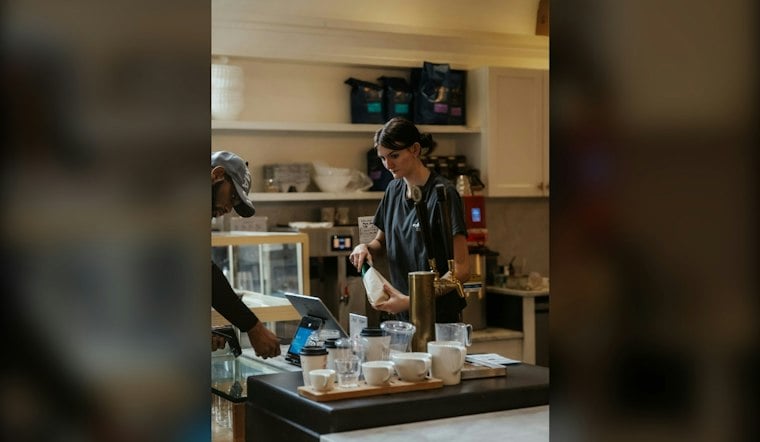
The Black Rifle Coffee Outpost at 3000 IKEA-RBFCU Pkwy in Live Oak is closing, part of a broader pullback in which the veteran-founded coffee company is shutting down 12 locations nationwide, a company representative confirmed. The move lands as Black Rifle posts a third-quarter net loss of $8.7 million and tries to steady a brand that has swung from Wall Street buzz to retreat in just a few years.
As reported by CultureMap San Antonio, the Live Oak Outpost is among the dozen company-operated shops now slated for closure. The company's parent, BRC Inc., disclosed in its third-quarter 2026 financial results that it had “initiated plans to close 12 company-operated Outposts, modified eight leases for locations we no longer intend to develop,” according to a filing posted by ir.blackriflecoffee.com. The company said the changes are meant to support franchise-led retail growth, lower capital requirements and create a more efficient cost structure.
The retreat comes even as Black Rifle's overall business grew on paper. Net revenue for the third quarter of 2026 rose 7.3% year over year to $108.0 million, up from $100.7 million in the same period of 2025, per the company's own figures. But Outpost revenue — the retail shops themselves — told a different story, falling 8.0% year over year to $5.4 million, down from $5.8 million a year earlier.
A Widening Loss and a Shrinking Café Footprint
The third-quarter net loss of $8.7 million marks a sharp deterioration from the $1.2 million net loss BRC Inc. reported in the same quarter of 2025. The company also flagged that the planned Outpost closures, combined with the divestiture of a non-core direct-to-consumer brand, are expected to create roughly $3 million in fourth-quarter revenue headwinds. Despite the losses, BRC Inc. reaffirmed its full-year 2026 outlook of at least 8% revenue growth and at least 35% Adjusted EBITDA growth.
Trade outlet World Coffee Portal described the dozen closures as nearly a third of Black Rifle's coffee shop network, calling it the clearest sign yet that the company's future lies more in wholesale than in physical cafés. The outlet reported that Black Rifle has commenced a turnaround strategy aimed at improving profitability, simplifying operations and increasing its focus on high-performing categories, with early actions concentrated on its underperforming coffee shop business.
From Green Beret Startup to Public Company Stumbles
Black Rifle Coffee was launched in 2014 by Evan Hafer, a former Green Beret and CIA contractor, alongside fellow veterans Mat Best and Jarred Taylor. The company built its brand around military and law-enforcement culture, naming roasts like Thin Blue Line and AK-47, and at one point featured a pumpkin spice blend topped with a grenade-shaped jack-o'-lantern.
The San Antonio area has deep ties to the brand's retail expansion. Black Rifle opened its first licensed branch in Boerne in 2019, then followed with a company-owned store in San Antonio in 2020. At the time, the company expected revenue to reach $230 million after the pandemic, and it hoped to raise $225 million by going public in 2021 — a deal it said could eventually open the door to more than 1,300 locations nationwide.
That growth came alongside controversy. Kyle Rittenhouse and participants in the January 6 Capitol riot were photographed wearing Black Rifle Coffee gear, and Hafer drew backlash of his own for condemning racists and the Proud Boys. The company had earlier countered Starbucks' 2017 pledge to hire 10,000 refugees in response to President Donald Trump's Muslim travel ban with its own plan to hire 10,000 veterans. The New York Times Magazine published a 2021 profile examining the brand's rise and the culture-war attention surrounding it.
Leadership Change and a Stock Price Reckoning
Hafer stepped down as CEO in 2023 and became executive chairman, handing the role to Chris Mondzelewski, a former Marine. Since then, Black Rifle Coffee's stock has bottomed out below $1 per share in 2026, and the company has said it gained compliance with the New York Stock Exchange through packaged coffee sales rather than its café business.
That shift toward packaged and wholesale coffee lines up with the company's latest moves. Alongside the 12 planned closures, Black Rifle is modifying leases on eight stores it no longer intends to develop, and the company has said these steps are meant to push it toward an asset-light operating model supporting franchise-led growth, reduced capital requirements and improved cost efficiency. For the Live Oak Outpost, and the San Antonio-area customers who have visited it since the company's regional expansion began, the closure marks a tangible end point in a retreat that, at the corporate level, is still unfolding.





