

























































Victor Grandy spent 26 years in federal prison for selling cocaine, walked out in 2019, and built a career as a painter and sculptor whose work has since appeared in Los Angeles galleries, been displayed in Florida, Oregon and New York, and been viewed in England, France and Denmark. What he still can't do freely is travel to see it: a federal judge restricted him from traveling on his own while under law enforcement supervision, and on Thursday the Ninth Circuit reversed the denial of his request for early termination, ruling that the mandatory minimum did not prevent the court from ending supervision early.
Appeals Court Sends Case Back To Los Angeles
A three-judge panel of the 9th U.S. Circuit Court of Appeals ruled 3-0 in favor of reconsidering whether Grandy's supervised release should end early, reversing a decision by U.S. District Judge Percy Anderson that kept him under supervision, according to the San Francisco Chronicle. The panel said Anderson's reasoning was flawed on several fronts, including that he misconstrued an extra-record source and relied on outdated guidance, according to the opinion hosted by law.justia.com. The court specifically found that Anderson erred by treating Grandy's notable success while under supervision as proof he still needed to be watched, rather than evidence favoring his release from oversight.
The ruling does not itself end Grandy's supervision. Instead, the panel sent the case back to the district court for further proceedings and, notably, declined to reassign it to a different judge on remand, per the same opinion. The court did not expressly order Anderson to lift Grandy's travel restrictions, the Chronicle's report notes, though it directed the Los Angeles judge to consider allowing him to travel to art shows alone.
From Life Sentence To Gallery Walls
Grandy was sentenced to life in prison in 1993 for his cocaine-sale conviction. His term was reduced to 26 years in 2019 under the First Step Act, and he was released from custody in 2019, beginning what was then a mandatory 10-year term of supervised release. A later change in law reduced that mandatory minimum from 10 to eight years, and the Ninth Circuit held that the mandatory minimum term in no way circumscribes a district court's authority to later terminate supervised release early, according to the opinion.
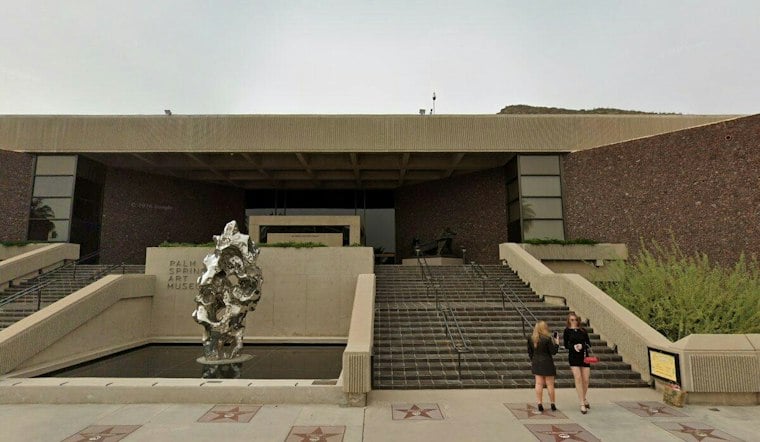
While incarcerated, Grandy studied art history, and after his release he volunteered with an artist, worked as an art handler at a museum in Palm Springs, and converted part of a friend's garage into his own studio. His paintings, which he signs L.W.D. — short for Little Walt Dog — often depict urban street life and sports. He held two solo shows at Los Angeles galleries in 2024, and his work has since been displayed in Florida, Oregon and New York, and viewed in England, France and Denmark.
A Catch-22 In The Supervision System
Grandy moved for early termination of supervised release in February 2025, but Anderson, who was appointed to the bench by President George W. Bush, ruled that he should remain under supervision. In a court filing, Grandy's attorney, deputy public defender Alexander Botoman, described him as exemplifying rehabilitation, per the Chronicle's reporting.
On the appeals panel, Judge Roopali Desai, appointed by President Joe Biden, wrote that successful reintegration should weigh in favor of early termination rather than against it, and said Anderson's approach creates a catch-22 for people seeking to end supervision early. The panel also found that Anderson misinterpreted a 2022 study on arrests of convicted drug traffickers during supervised release; the court said that report and others actually found only a small fraction of supervised drug traffickers were ever arrested again. Desai was joined on the panel by Judge Ryan Nelson, appointed by President Donald Trump, and U.S. District Judge Karen Schreier, appointed by President Bill Clinton and temporarily assigned to the appeals court.
Nationally, early termination is not an unusual outcome: among 53,087 supervision cases closed during the 12-month period ending September 30, 2025, 18% closed due to early termination, according to the U.S. Sentencing Commission.
The federal public defender representing Grandy declined to comment on the ruling, and the U.S. Attorney's Office in Los Angeles did not respond to a request for comment, the Chronicle reported. What happens next rests with the district court in Los Angeles, which must now reconsider Grandy's request under the appellate panel's instructions.




