

























































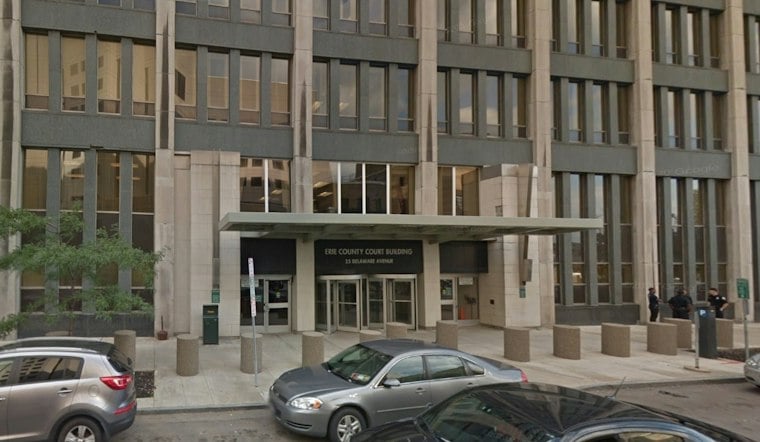
A jury acquitted Eric Brudecki of burglary in a case tied to Buffalo's Fruit Belt.
The split verdict came after about four hours of deliberation, The Buffalo News reported. Defense attorneys Tom Heubusch and Eric Soehnlein argued the case before Erie County Judge Kenneth Case.
Three felonies, then a misdemeanor
Brudecki had been indicted on first- and second-degree burglary and third-degree criminal possession of a weapon — three felony charges in all. The jury acquitted him of the burglary and weapons charges.
What remained was second-degree trespassing, a lesser-included offense the jury considered after acquitting him of a more serious charge. The conviction is a misdemeanor.
New York’s lesser-included-offense rule allows a jury to consider a lesser charge when a reasonable view of the evidence would support guilt on that offense but not the greater one; if either side requests the charge under those conditions, the court must submit it. When offenses are submitted as alternatives, the jury may convict on one, not multiple, and conviction on the lesser is treated as acquittal of the greater. The rule explains the legal framework, not the jury’s reasoning in Brudecki’s case.
New York law distinguishes trespass from burglary by intent: second-degree criminal trespass requires knowingly entering or remaining unlawfully in a dwelling and is a Class A misdemeanor. Second-degree burglary also requires intent to commit a crime inside, plus a qualifying circumstance such as the building being a dwelling; first-degree burglary requires that criminal intent and an aggravating factor such as a weapon or injury. Those legal differences mark what the split verdict did—and did not—establish.
The trespass conviction remains
The felonies that opened the case are gone. The remaining conviction is for trespass.





