

























































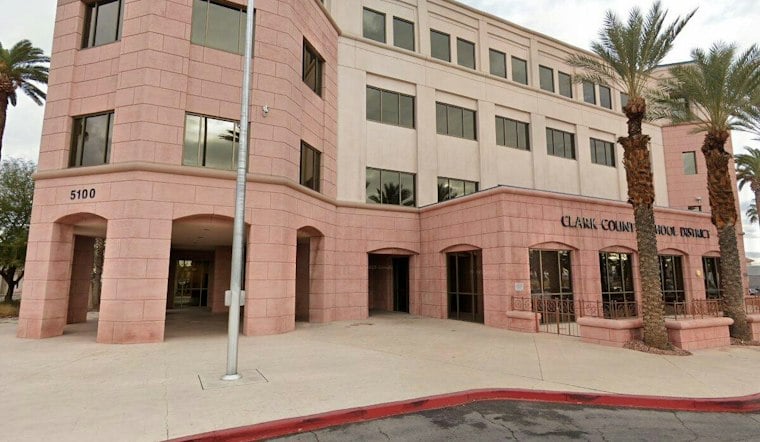
A Las Vegas attorney who has repeatedly sued the Clark County School District is now calling for the nation’s fifth-largest school district to be broken up entirely, arguing its sheer size has allowed training failures involving special-needs students to go unchecked for years. Attorney Gregg Hubley says the district has the resources to settle lawsuits but not to fix what causes them in the first place.
Hubley, whose firm Arias Sanguinetti Trial Lawyers currently has about eight open lawsuits against CCSD, made the case in an interview with KLAS 8 News Now. “They keep throwing money at the problem instead of trying to address the root cause,” he said, describing a pattern he says he has watched play out case after case. His argument centers on what he calls inadequate training for the teachers and aides who work directly with non-verbal and neurodivergent students.
Hubley points to his own litigation history with the district as evidence. He previously sued CCSD on behalf of JJ Wahrer, a non-verbal special-needs student, and his parents, securing nearly $10 million in a settlement that stands as one of the district’s largest payouts. In a case Hubley is currently handling, he says a teacher reportedly used force on a child who was not listening, and that the child, his client, was allegedly slammed into a wall by a teacher and suffered a concussion.
Training Numbers Become the Central Dispute
At the heart of Hubley’s argument is a sharp disagreement over how much training district staff actually receive. CCSD maintains that every support professional working with students with special needs completes 24 hours of required training during orientation, including 12 hours of Crisis Prevention Institute instruction, which the institute’s curriculum is built around de-escalation techniques meant to help educators manage challenging behavior and support academic success, according to the district’s statement to KLAS.
Hubley disputes that this training translates into real-world competence. Based on evidence he says he reviewed during discovery, he estimated that teachers and aides receive only six to 18 minutes a year of training in aversive interventions, and he said there is no one-on-one training at all. “Teachers and aides don’t get enough training,” Hubley said, arguing that this gap is what underlies the pattern of incidents involving non-verbal, neurodivergent children that he says he keeps encountering in his caseload.
The district, for its part, says support professionals have access to broader professional learning, including applied behavior analysis and reading interventions, and that job-embedded coaching is available to teachers through a service request, per the same district statement. CCSD said it cannot comment on pending litigation, a standard response given the open lawsuits Hubley’s firm has filed against it.
Hubley Alleges a Culture of Silence
Beyond training, Hubley described what he characterized as a culture of silence and protection among district employees, even though he noted that district employees are mandatory whistleblowers. He argued that CCSD’s scale is itself the obstacle to accountability. “CCSD is so large that it essentially governs itself,” Hubley said, framing the district’s size as the reason problems go unaddressed rather than a side issue.
The financial pressure of ongoing litigation adds weight to that argument. The district has spent $53 million this fiscal year on settlements and attorney fees, more than $23 million over its $30 million litigation budget, the station's report found. A former CCSD chief financial officer said the amount the district pays in settlements and attorney fees continues to increase year over year. Separately, a federal judge approved a proposed $10 million settlement in June for the parents of an autistic, non-verbal child who had sued the district, according to the same account.
A Decades-Old Debate Over District Size
Calls to break up Clark County’s massive school system are not new. Attempts to divide the district have surfaced periodically since the 1970s, according to Education Week. In 2015, Nevada lawmakers passed a law authorizing CCSD reorganization by the 2018-19 school year, with a nine-member advisory committee tasked with developing a plan, according to Education Week.
That effort was ultimately replaced when Governor Brian Sandoval signed AB 469 into law in May 2017, establishing the current statutory framework for large-district reorganization. The law defined a large Nevada school district as one serving more than 100,000 pupils, a threshold only CCSD met at the time, and gave the state superintendent oversight powers over any reorganization plan, according to the Nevada Legislature's interim committee records. A more recent push, reported by Nevada Current, sought to let incorporated cities opt out of CCSD entirely to form their own city school districts, with backers saying they submitted more than 220,000 signatures.
Litigation alleging systemic problems in special education is not limited to Hubley’s cases. A 2024 class-action lawsuit separately alleged a systematic failure by CCSD to address the needs of children with disabilities, citing staffing shortages and reliance on long-term substitutes and non-certified staff, according to FOX5 Vegas. Whether Hubley’s call for a breakup gains traction with lawmakers remains to be seen, but the financial and reputational pressure on the district shows no sign of easing.





