

























































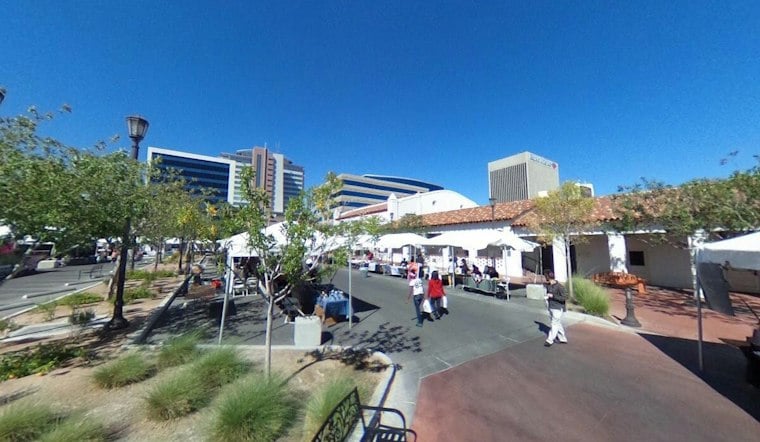
More than 3,000 high school students across Southern Nevada are officially categorized as homeless, and many of them keep showing up to class anyway, bouncing between friends' couches, relatives' homes, vehicles or the streets while trying to hold onto something that looks like a normal routine. That sobering figure framed a daylong summit Friday at the Historic Fifth Street School in downtown Las Vegas, where advocates warned that local shelter space for young people has already run out.
A Decade-Old Summit Confronts a Growing Need
The gathering marked the Nevada Partnership for Homeless Youth's 10th annual summit, drawing more than 100 students, business leaders and advocates, according to the Las Vegas Review-Journal. As reported by KSNV, the more-than-3,000 figure for homeless high schoolers was cited at the event, alongside the reality that these students often avoid being labeled homeless or treated differently even as they continue attending school. The event, held at the Historic Fifth Street School, centered on cooperation among providers trying to reach young people who lack stable housing and the resources to find it.
Joseph Baker joined advocates and service providers at the summit, describing his own experience as trying to keep going even as circumstances overwhelmed his life. He said he found help through the Nevada Partnership for Homeless Youth and now wants to offer that same support to others. Arash Ghafoori, the organization's CEO, said unaccompanied homelessness means young people lack a parent, guardian or anyone else caring for them, and he said a recent study suggests the number of young Nevadans experiencing that kind of homelessness could exceed 30,000.
Shelter Space Runs Out as Needs Pile Up
Kim Moore, youth services director at HELP of Southern Nevada, said young people dealing with housing instability may move between friends' homes without knowing where they will sleep next. Per the same organization's account relayed at the summit, HELP's Shannon West Homeless Youth Center serves roughly 400 young people annually and offers case management, meals, housing, education and employment support, but the center is currently at capacity. The group's own website describes the center as able to house up to 150 youth ages 18 to 24 when full, though it is not established that this is the specific capacity figure tied to the shelter described as full at the summit.
KSNV reported that when the help center is full, staff still provide resources and try to connect young people with another provider rather than turning them away empty-handed. Moore told the gathering that needs vary widely from person to person, including work boots, replacement identification, mental health care, and help accessing developmental-disability services. She said each young person requires an individualized case plan, underscoring how resource-intensive the work can be even before housing enters the picture.
Schools Try to Fill the Gap Without Providing Housing
One organization trying to meet daily needs without offering shelter is Project 150, which supports 75 Clark County high schools, according to Lily Noyes, the organization's executive assistant, per KSNV's report. Noyes said the nonprofit helps more than 6,000 students overall, including those experiencing homelessness and others facing financial hardship, providing free food, clothing, hygiene products and school supplies. Project 150's own program materials describe ready-made food delivered weekly to all 75 Clark County high schools and family meal bags sized to fit inside a student's backpack, available at Betty's Boutique on weekdays.
Students seeking help need only show proof of high school enrollment, Noyes said, with no appointment or application required. The organization packages its supplies in unbranded bags so students can accept assistance discreetly, and it operates two Las Vegas boutiques. Project 150 does not provide housing directly, but it connects students with organizations that do, leaving shelters like HELP's Shannon West center as a critical link in the chain for those who need somewhere to sleep.
Numbers That Depend on How You Count
How many Nevada youth are actually affected shifts depending on who is counting and how. A 2025 statewide report found that nearly 3,000 unaccompanied Nevada youth accessed homeless services in the year assessed, according to Las Vegas Sands, while a broader estimate in the same report put the number of youth under 24 who could experience homelessness or lack stable housing in any given year at 33,443, as reported by Nevada Current. Nevada's Homeless Management Information System separately identified 2,834 youth ages 12 to 24 experiencing homelessness in 2024, down slightly from 2,868 the year before, the outlet reported.
Clark County School District's own figures tell a related but distinct story: the district identified about 13,500 students meeting the federal definition of homelessness in the most recent school year reported, up from about 12,000 in 2021-22, and officials said the true number may be even higher, according to The Nevada Independent. Among youth using homelessness services statewide, 41% identified as Black and 25% as white, Nevada Current's report found. The same report noted a stark shortage of youth-specific shelter beds statewide: just 430, with none located in any of Nevada's 15 rural counties.
Ghafoori called on the state for additional attention and resources to expand the kind of collaborative work showcased at the summit, pointing to stronger partnerships among providers and more opportunities for young people with lived experience to help shape solutions. He also pressed for dedicated statewide funding and greater public- and private-sector investment, arguing that the current patchwork of school programs, nonprofits and shelters is stretched thin against a need that, by some measures, touches tens of thousands of young Nevadans every year.


