

























































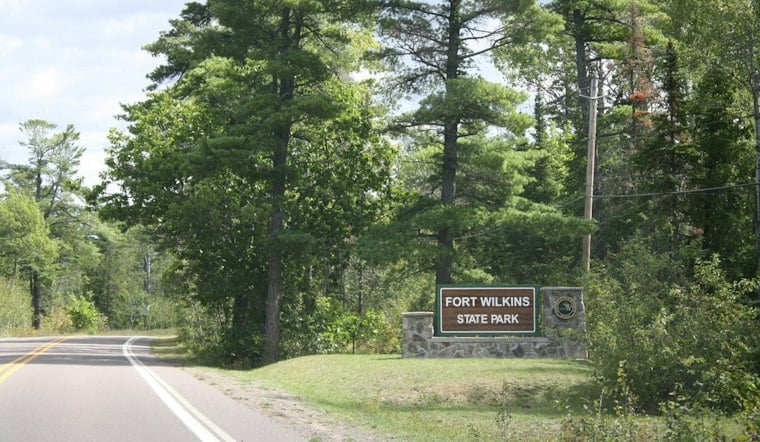
Michigan's Department of Natural Resources closed on 10,000 acres of forest, wetland and freshwater streams at the tip of the Keweenaw Peninsula on Nov. 5, permanently folding the land into Fort Wilkins Historic State Park. The purchase relied on roughly $11.2 million in grant funding and builds on a years-long effort to keep the remote Upper Peninsula property out of private hands.
The newly acquired Keweenaw Point State Lands sit on the northern edge of the Upper Peninsula, bordering Fort Wilkins Historic State Park to the south, according to a report from the Lansing State Journal. The DNR says the land will now be managed as part of the state park, with a mission focused on public recreation and natural resource protection. The purchase drew on the Land and Water Conservation Fund, the Michigan Natural Resources Trust Fund and the Land Exchange Facilitation Fund, per the same account.
A Forest Decades in Corporate Hands
The push to protect this stretch of forest dates back to 2021, when more than 32,000 acres known as the Keweenaw Heartlands went up for sale after over a century under corporate ownership, the state journal's report notes. The Nature Conservancy stepped in the following year, buying the property as a temporary owner with plans to transition it toward public control. The Keweenaw Community Foundation says that 2022 purchase removed the land from private, corporate ownership for the first time in over 150 years.
Since then, the conservation group, the DNR and a Heartlands community advisory committee have worked to hash out a long-term governance and management plan for the sprawling property, according to the Keweenaw Community Foundation. Helen Taylor said people feared that fragmenting the land could damage recreational trails, public access, the local economy, and natural and cultural resources, according to reporting cited in the FOX 2 Detroit coverage of the deal. Scott Bowen said the DNR joined the effort because it aligned with the agency's mission and offered a model for responding to large-scale private land divestment, per the same coverage.
What's Left of the Heartlands
The Nature Conservancy described the broader Keweenaw Heartlands forest as containing more than 37 miles of rivers and streams, 4,500 acres of wetlands, and 79 miles of motorized and non-motorized trails, the Lansing State Journal reports. Sources differ on what happens to the acreage outside this week's transfer. The state journal's report says an additional 22,000 acres will remain in The Nature Conservancy's interim ownership while the organization and the DNR pursue further funding. A September report from The Mining Gazette described a different framework, saying roughly 21,000 acres were intended for local public management and governance, with 10,000 acres closest to the point eventually transitioning to DNR ownership.
An earlier account from Michigan Public had described a phased purchase, noting that an earlier 4,494-acre transaction was meant as the first of two phases, with nearly 10,000 acres expected to end up under state ownership once both were complete. That phasing isn't fully spelled out in the available record, but this week's 10,000-acre closing lines up with that earlier target.
Part of a Bigger Pattern in the U.P.
The Keweenaw deal follows a broader push by the state to lock down public access to Upper Peninsula forestland. In March, Michigan closed on a conservation easement with Lyme Timber covering 73,000 acres of working forest in the Michigamme Highlands, according to MLive. That nearly $20 million easement, closed by the DNR on March 20, 2026, guarantees permanent public access to the land even though it remains under private ownership.
Large-scale land consolidation by outside investment firms has made such deals more urgent for conservation groups and the state. Bridge Michigan has reported that as of the end of 2023, The Rohatyn Group's holdings represented about 5% of all of Michigan's privately owned forestland, underscoring how much of the state's timberland has shifted into the hands of a small number of corporate owners in recent years.
For now, the DNR has acquired 10,000 acres at Keweenaw Point and will manage the incoming acreage as a state park. What becomes of the remaining Heartlands acreage, and under whose long-term governance, remains unresolved in the public record.





