

























































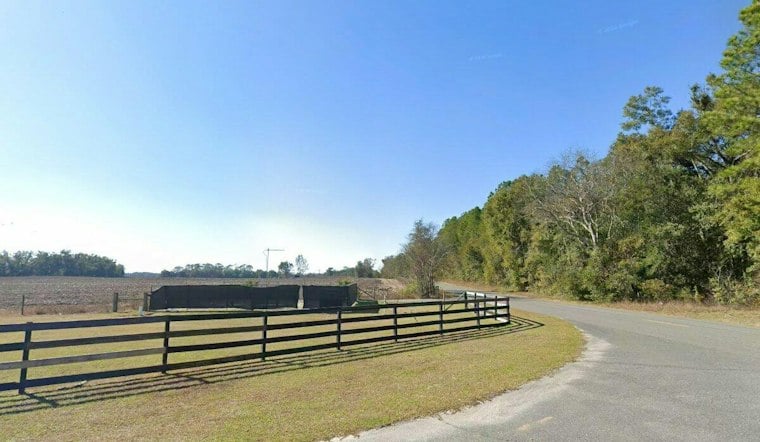
Newberry city commissioners voted unanimously on Monday to approve two ordinances clearing the way for Newberry Ridge, a development that could bring up to 1,250 homes to roughly 225 acres east of Champions Park. Commissioner Tony Mazon was absent from both votes after arriving late to the meeting.
The first ordinance changed the property's land use from mixed to medium-density residential, a designation that allows up to eight dwelling units per acre, according to Mainstreet Daily News. The second ordinance rezoned the land from agricultural and mixed use to planned residential development. Trey Fragala, who represented applicant Florida Land Development Partners 1, LLC, told commissioners the proposed density for the project actually works out to 5.5 units per acre.
City Manager Jordan Marlowe emphasized that Newberry Ridge is not some brand-new proposal dropped on the city out of nowhere. He said the development has had zoning approval for more than 20 years and had already received future land-use and zoning approvals before this latest round of changes. Marlowe said city staff asked the applicant to update plans that were roughly 30 years old based on community feedback, and that the applicant worked with the city over the last year to produce what he considers a better plan for Newberry.
Road, Sidewalk and Buffer Requirements Built Into the Deal
The rezoning comes with a list of conditions attached. The commission required the developer to provide a boulevard-style roadway substantially consistent with the preliminary development plan, with no median required. Individual residential lots will not be allowed direct vehicle access onto that boulevard; instead, access will run through designated subdivision neighborhood streets.
Sidewalks must be built on both sides of the boulevard, and canopy and understory trees and shrubs will be required to screen the rear yards of homes that sit next to it. Final design and landscaping details will be worked out during construction plan review, per applicable engineering standards.
Commissioner Mark Clark asked whether a 40-foot buffer between Newberry Ridge and the neighboring property to the north would be cleared. Fragala said there are no current plans to clear-cut the buffer, though he acknowledged some trees could be removed if they interfere with utilities — a scenario he described as highly unlikely.
State Review Looms Over a Busy Year for Newberry Growth
Newberry Ridge is just one piece of a much larger building boom underway in the fast-growing city. Earlier reporting from Mainstreet Daily News noted that because the Newberry Ridge land-use change applies to a site larger than 50 acres, the plans will also go before the state for review, and that the project is now expected to be built in phases over 10 years rather than the five years originally proposed, according to that same outlet's prior coverage of a related 3-2 commission vote on the land-use change.
That earlier account also noted the development's scale contributes to what the outlet reported as more than 2,000 homes approved by the city this year, a tally that includes the CountryWay II project. Reports on CountryWay II's exact size have varied: one account described it as up to 500 detached single-family homes on roughly 160 acres with an estimated gross density of about 3.14 dwelling units per acre, according to Alachua County Today, while Mainstreet Daily News separately reported the same 160-acre site could include up to 636 units. CountryWay II is also planned to include a north-south collector road giving residents of that development and Newberry Ridge access to State Road 26.
Newberry has approved other large housing projects nearby in recent months as well. A separate proposal west of Champions Park would convert 160 acres at 25409 SW 30th Ave. from agricultural zoning to Residential Low Density for 500 single-family homes; that ordinance passed 4-1, with Commissioner Rick Coleman dissenting, Mainstreet Daily News reported.
Under Florida law, the land-use change's path through state review follows a defined process. A regional planning council, an affected person, or a local government may request review of a transmitted plan amendment within 30 days of its transmission, according to the Florida Legislature. Absent such a request, a local government may proceed to adopt the amendment.




