

























































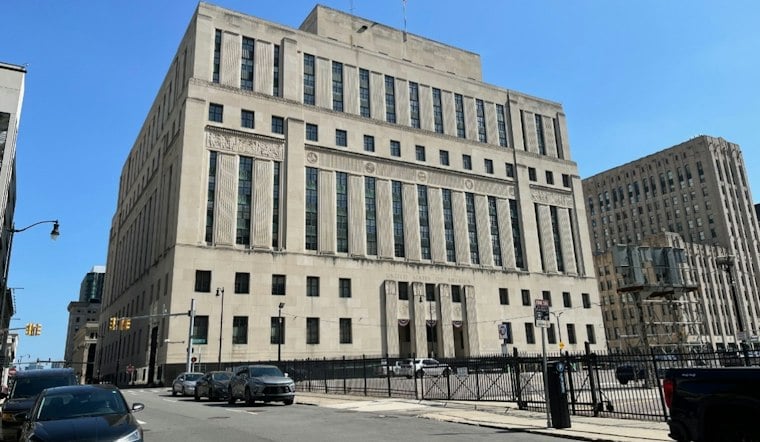
A 49-year-old Northville man has pleaded guilty to orchestrating two related conspiracies to fraudulently obtain COVID-19 pandemic relief funds and federal tax credits, admitting his role in schemes that prosecutors say produced millions of dollars in false claims. James Davis entered his plea in federal court to one count of conspiracy to commit wire fraud and one count of conspiracy to defraud the government with respect to claims.
U.S. Attorney Jerome F. Gorgon Jr. announced the plea, according to CBS News Detroit. Court records cited by the station say Davis recruited people who provided personal identifying information in exchange for a share of the fraudulently obtained funds. Separately, the U.S. Attorney's Office for the Eastern District of Michigan describes Davis as having orchestrated two related conspiracies to fraudulently obtain COVID-19 pandemic relief funds and federal tax credits.
Two Schemes, Millions in Claims
Federal prosecutors allege Davis recruited people for a scheme that submitted fraudulent sick and family leave credit and employee retention credit claims. Authorities also allege that Davis and others obtained or attempted to obtain Paycheck Protection Program loans for businesses that were not entitled to receive them, according to the same account. Conspirators allegedly claimed that people and businesses qualified for tax benefits when they did not, authorities allege.
Prosecutors claim the two schemes together produced $6,225,593.55 in false claims, while $4,398,366.01 in fraudulent benefits were actually received, per the CBS Detroit report. Those two figures represent different measures of the alleged fraud — the total amount claimed versus the amount that was paid out.
Sentencing Set for March
Davis is scheduled to be sentenced on March 8, 2027. He faces a maximum prison term of 20 years on the wire-fraud conspiracy count and up to 10 years on the conspiracy-to-defraud-the-government count, the station reported. Under federal statute, a conviction for defrauding the government with respect to claims carries a penalty of up to ten years in prison, a fine, or both, while another federal law establishes that a conspiracy conviction carries the same penalties as the underlying offense. No sentencing outcome has been determined; the March date marks only when the sentence will be handed down.
Part of a Broader Pattern in Michigan
Davis's case adds to a string of pandemic-fraud prosecutions involving Michigan residents. A Michigan man was sentenced on October 20, 2026, to 70 months in federal prison for his role in a scheme to defraud the Paycheck Protection Program, according to the U.S. Attorney's Office for the District of Delaware. Earlier, on February 6, 2025, another Michigan man was sentenced to 32 months in federal prison for fraudulently seeking nearly $1 million in PPP loans guaranteed by the Small Business Administration under the CARES Act, per the U.S. Department of Justice.
The scale of pandemic relief programs helps explain why fraud cases like these continue to surface years later. The CARES Act, which created both the Employee Retention Credit and the Paycheck Protection Program, prohibited employers from claiming the ERC while also obtaining a PPP loan, according to the U.S. Government Accountability Office. The GAO has also noted that more than $525 billion of an eventual $800 billion in PPP funds had been distributed, underscoring the sheer size of the relief effort that fraud investigators have been working to untangle ever since.




