

























































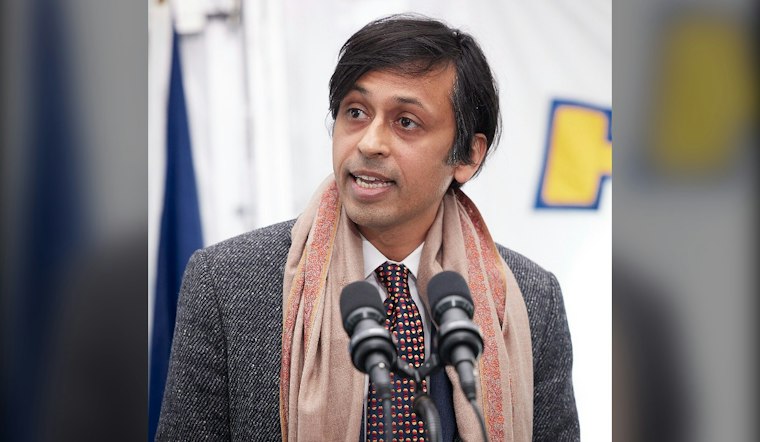
Pennsylvania State Sen. Nikil Saval wants to give Philadelphia a new way to pay for its museums, libraries, theaters, parks and recreation centers: a bump in the city's sales tax. The Philadelphia Democrat announced the proposal Thursday, which would authorize the city to raise its sales and use tax specifically to create a dedicated funding stream for arts, culture and community assets.
The proposal names museums, galleries, theaters, parks, recreation centers, libraries and other public assets as potential beneficiaries, according to Saval's announcement. As The Philadelphia Inquirer reports, the tax would generate an annual funding pool for recipients, and Saval has floated the idea that the increase could land around one penny per dollar, though that detail has not been finalized.
Saval's announcement points to Philadelphia's arts and culture sector as a $2.2 billion economic engine for the city, and frames the proposal as a response to recent losses that have rattled the local cultural scene. He cited the closure of the Academy of Natural Sciences of Drexel University's museum in September, as well as the earlier demise of the University of the Arts, as evidence of the need for a dedicated funding mechanism, according to his announcement and the Inquirer's account.
A Pittsburgh Model Decades in the Making
The proposal is modeled on Allegheny County's Regional Asset District, a program established in 1993 that Saval's office holds up as proof of concept. Pennsylvania lawmakers passed Act 77 that year, enabling Allegheny County to adopt a one-percent local-option sales tax, with half of the proceeds distributed through the district to regional assets, according to RAD Works Here. Saval's announcement credits the Allegheny program with generating more than $5.5 billion over the past three decades.
In Pittsburgh, those dollars have funded civic, recreational, sports and cultural facilities, libraries, and other entities determined by the district's board, and have enabled some institutions to offer reduced or free memberships, according to the senator's announcement.
What Comes Next in Harrisburg and City Hall
Saval plans to introduce the concept now and formal legislation in the new year, and the Inquirer reports he has already had conversations with Philadelphia City Council members and city officials about pursuing the proposal. Under his framework, Philadelphia City Council and the mayor would ultimately have to approve any bill enacting the tax, and the Inquirer notes that approval could come as soon as 2028, with the measure potentially taking effect by the end of 2027.
The push arrives as Philadelphia's cultural sector grapples with a broader financial squeeze. A 2026 study from SMU DataArts, drawing on data from more than 4,400 nonprofit cultural organizations across ten U.S. cities, found that Philadelphia experienced financial contraction between 2019 and 2024, reflected in declining revenue and tightening bottom lines, according to culturaldata.org. Across the full study cohort, average attendance in 2024 remained 44% below 2019 levels while program occurrences fell 31%, and local government support covered only about 5% of average organizational expenses that year.
Philadelphia's own numbers look even tighter. Local cultural-agency funding covering local arts organizations' expenses fell from 7% in 2019 to just 1% in 2024, according to a report on the study by The Art Newspaper. Saval's proposal would create a dedicated arts and culture funding mechanism for Philadelphia, if it clears City Hall and the state legislature.




